🔥 CesiumAstro Raised $730 Million to Launch 737 Satellites That Run AI in Orbit
CesiumAstro closed a $730M Series D at a $4.5B+ valuation to build Synchronicity, a 737-satellite constellation with onboard AI compute.

An Austin satellite maker you’ve probably never heard of just pulled off one of the biggest space raises of the year, and it did it by promising to put something unusual into orbit: computers that think on their own.
Let’s get the number on the table first: $730 million. That’s what CesiumAstro closed this week — $630 million in equity led by Janus Henderson, plus a $100 million debt facility from the US Export-Import Bank and JPMorgan — in a Series D that values the company at more than $4.5 billion (Via Satellite, Payload).
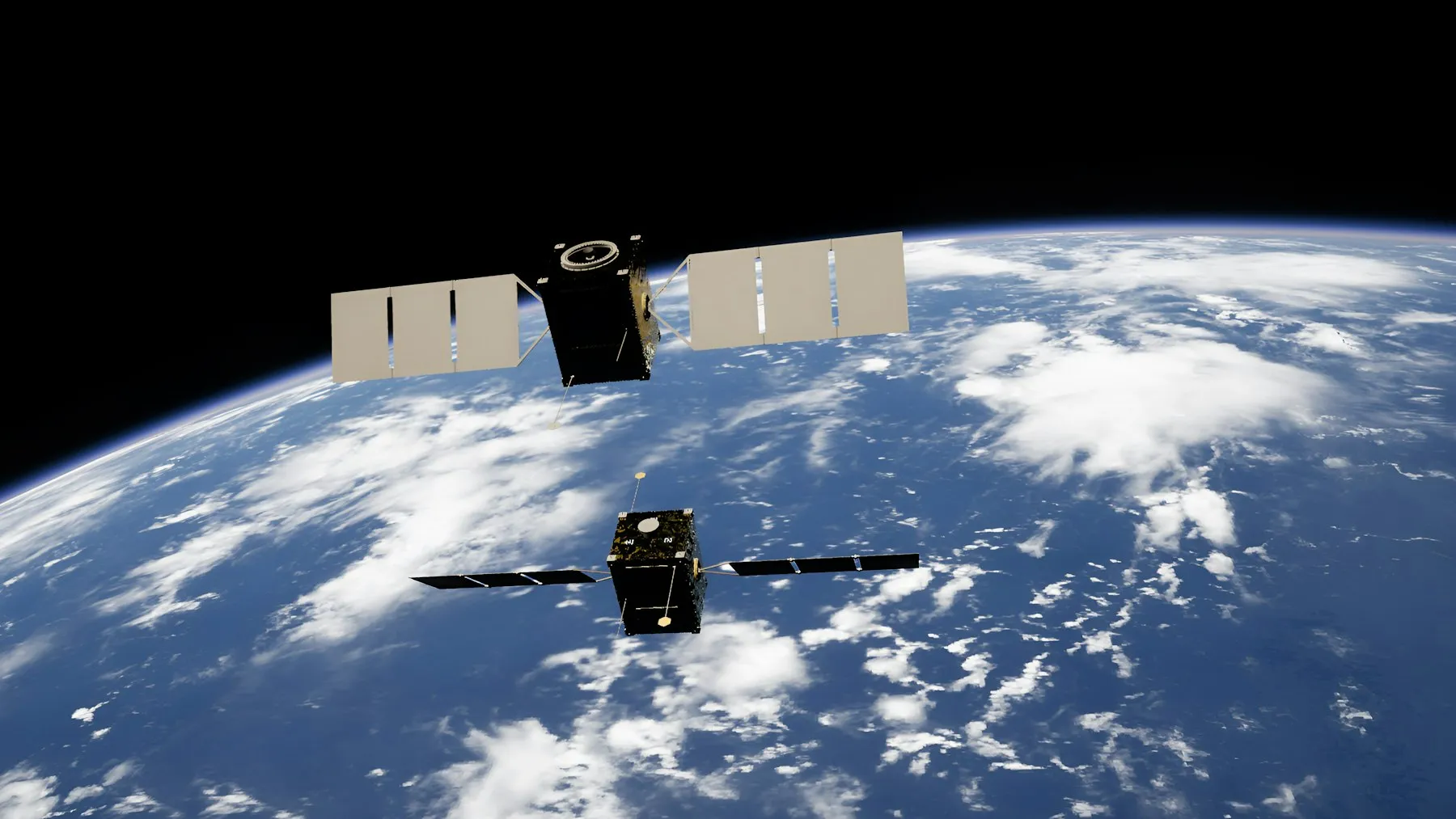
The money funds a single, audacious idea called Synchronicity: a planned constellation of 737 satellites that don’t just bounce signals back to Earth, but carry onboard compute to process data where it’s collected — in space.
The thesis is simple. The next satellite race isn’t only about how many you launch. It’s about how smart each one is once it’s up there.
🧠 Why This Matters
For two decades, the satellite business ran on a brutal trade-off. You could build an exquisite spacecraft that cost a fortune and took a decade to test, or you could move fast and launch something dumber. CesiumAstro’s pitch is that it no longer has to be a choice — and investors just wrote a nine-figure check on that bet.
Founder and CEO Shey Sabripour put the old math plainly:
You can build a satellite like you used to that’s a billion dollars and bullet proof, but you’ve taken a decade to test it out.
His company built its first Synchronicity satellite, Element-1, in two and a half years, and flew it in October on SpaceX’s Transporter-18 rideshare (Payload). That speed is the whole product. When a satellite can run software updates and crunch data in orbit, it can adapt to a mission that didn’t exist when it launched — which is exactly what defense and commercial customers increasingly want.
📊 Deep Dive
CesiumAstro didn’t start as a satellite company. It began nearly a decade ago as a phased-array antenna maker, then moved into ground systems, and only recently into building full spacecraft. Along the way it bought three companies in a single year to fill in the stack: Jariet Technologies (RF system-on-chip semiconductors), 1Aardvark (mission software), and Vidrovr (AI for signal analysis) (Via Satellite).
Synchronicity is where all of that points. The constellation is designed as a non-geostationary system broadcasting across Ku-, Ka-, and V-band frequencies, with a dynamically managed, multi-beam architecture and edge compute on board — aimed at commercial, sovereign, and national-security customers (Payload).
Here’s how the raise stacks up against the field:
- CesiumAstro / Synchronicity: 737 satellites planned, with a target of 350 in orbit by 2032 — the newcomer, betting on onboard intelligence rather than raw numbers.
- SpaceX / Starlink: already past 10,000 satellites in orbit and owning roughly two-thirds of all active spacecraft (KeepTrack) — the incumbent that measures its lead in five figures.
- Amazon (Project Kuiper / Leo): a planned 3,236-satellite network (Echo Press) — the deep-pocketed challenger still early in deployment.
The investor list tells its own story. Alongside Janus Henderson sit Insight Partners, Sands Capital, Magnetar, NewSpace Capital, Sumitomo Corporation of Americas, and Woven Capital, Toyota’s venture arm (Via Satellite). Crossover funds and strategic corporates don’t usually show up for a science project; they show up when they think there’s a market.
⚠️ The Catch
Raising $730 million is the easy part. Launching 737 satellites is not.
CesiumAstro has flown exactly one Synchronicity spacecraft so far. Element-1 is the first of eight planned satellites, with launches secured only for 2028–2029 — and the company has openly said it hasn’t settled how the full constellation gets to orbit, and is still weighing launch partnerships (Payload). Going from eight to 350 by 2032 means a launch cadence the company has not yet demonstrated.
Then there’s the neighborhood. Competing for connectivity dollars against a rival with more than 10,000 satellites already overhead is a steep climb, and “smarter satellites” is a promise that has to survive contact with real orbital hardware. The $4.5 billion valuation prices in a constellation that mostly doesn’t exist yet.
🎯 What Happens Next
Watch the factory floor. CesiumAstro says it will spend about $500 million over five years expanding manufacturing in Austin, including 270,000 square feet of new production space, and plans to add 550 jobs by 2030 (Payload). That’s the tell for whether this is a constellation or a slide deck — you can’t build 737 satellites without somewhere to build them.
The next eight spacecraft, slated for 2028–2029, are the real proving ground for the in-space compute idea. If they work, the 350-by-2032 target starts to look plausible. If they slip, so does the valuation.
Synchronicity is the culmination of the technology stack we have methodically built since CesiumAstro was founded.
— Shey Sabripour, CEO and founder
🧩 Bigger Picture
The satellite industry spent the 2010s learning to make spacecraft cheap. The 2020s are about making them useful without a ground station micromanaging every move. Edge compute in orbit means a satellite can filter a firehose of sensor data and send down only what matters — a big deal when you’re serving defense customers who care about latency and resilience, not just bandwidth.
CesiumAstro is making a vertically integrated bet: own the antennas, the chips, the software, and the spacecraft, so the whole thing can be upgraded as missions change. That’s a different philosophy from stamping out identical units by the thousand. Whether it beats scale is the open question of the decade in orbit.
For now, one Austin company has $730 million and a very specific promise. The next few years will show whether 737 is a constellation or a very expensive round number.
Sources
- CesiumAstro Raises $730M Series D to Fund Synchronicity Constellation — Via Satellite
- CesiumAstro Raises $730M, Reaches Valuation Above $4.5B — Payload
- CesiumAstro raises $730M Series D at more than $4.5B — Dealroom
- Starlink Satellite Count Hits 10,087 — KeepTrack
- Amazon’s Project Kuiper will place 3,236 satellites in orbit — Echo Press
❓ Quick answers
How much did CesiumAstro raise and at what valuation?
CesiumAstro raised a $730 million Series D (announced the week of Nov. 5, 2026) — $630M equity led by Janus Henderson plus a $100M debt facility — at a valuation above $4.5 billion (source: Payload / Via Satellite).
What is the Synchronicity constellation?
Synchronicity is CesiumAstro's planned 737-satellite network broadcasting across Ku-, Ka-, and V-band with onboard edge compute; the company targets 350 satellites in orbit by 2032.
Has CesiumAstro launched any Synchronicity satellites yet?
One. Element-1, the first of eight planned spacecraft, launched in October 2026 on SpaceX's Transporter-18 rideshare, with the next launches secured for 2028-2029.