🔥 A Former Disney Star Just Raised $375 Million to Build the Internet's Missing Half
Northwood Space raised a $375M Series C at a $2B valuation on Nov 2, 2026, co-led by a16z and DFJ Growth, to mass-produce satellite ground stations.
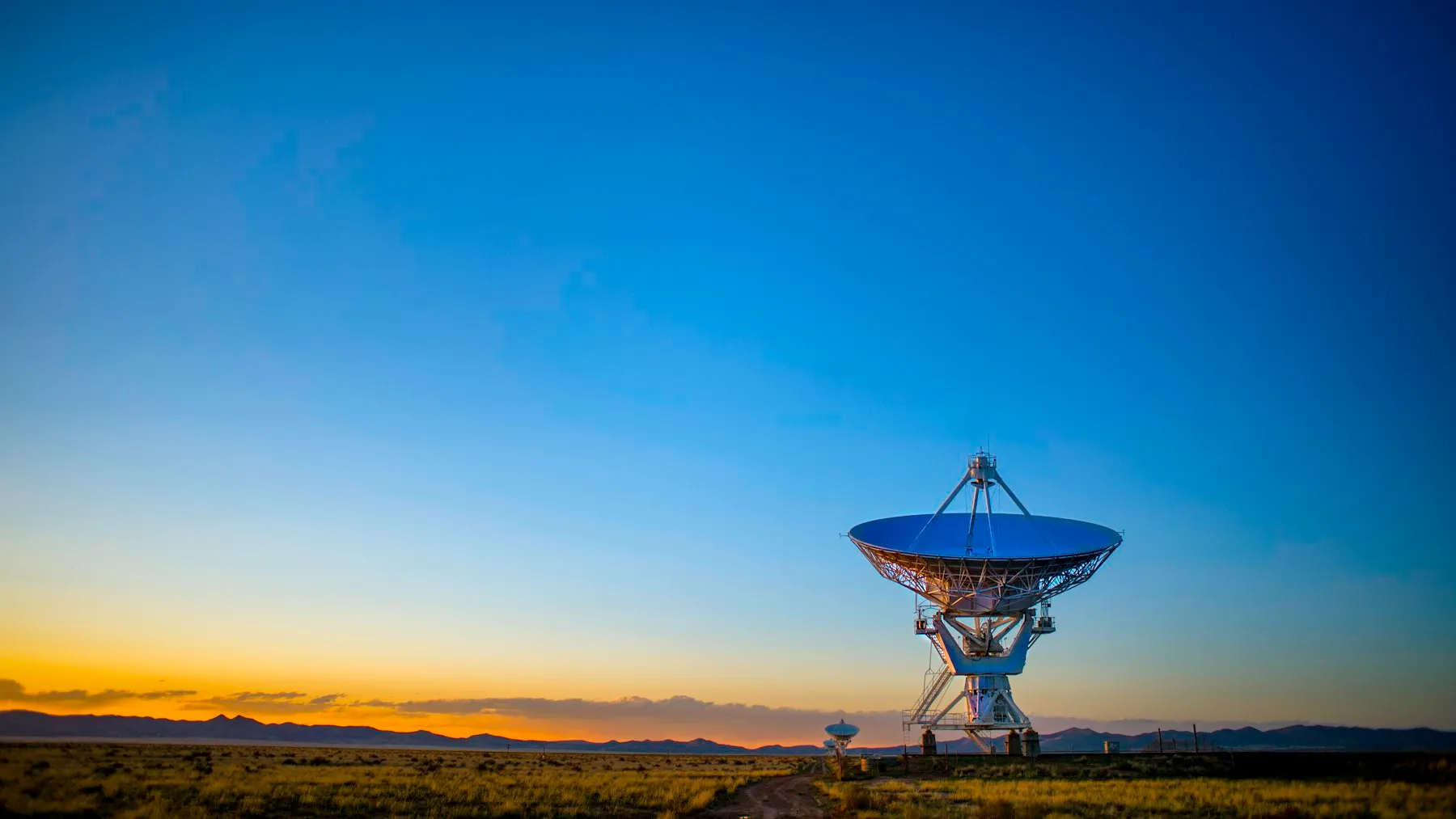
Everybody obsesses over the rockets. Nobody thinks about the dishes on the ground that have to catch what the rockets put up there. That gap is now worth $2 billion.
On November 2, 2026, Northwood Space — a four-year-old startup run by a former Disney Channel actress — closed a $375 million Series C at a $2 billion valuation (Payload, Via Satellite). Andreessen Horowitz and DFJ Growth co-led it. Returning in the cap table: In-Q-Tel, the venture arm of the US intelligence community. That last name tells you this isn’t a vanity space play.
Here’s the number that actually matters, though: 29. That’s how many antennas Northwood has physically built in the past year. A $2 billion valuation resting on 29 machines is either the smartest bet in space infrastructure or a very expensive leap of faith.
The thesis in one line: satellites are multiplying faster than the ground can listen to them, and whoever industrializes the listening wins.
🧠 Why This Matters
There are now more than 12,000 active satellites in orbit, most of them launched in the last five years. Every one of them is useless unless something on the ground can talk to it — send commands up, pull data down. That “something” is a ground station, and for decades each one was a bespoke, bolted-to-concrete megaproject that took months or years to stand up.
Northwood’s pitch is to turn that into a product you order off a shelf. CEO and co-founder Bridgit Mendler — yes, the Good Luck Charlie lead, who left acting, stacked up degrees including an MIT doctorate, and started a satellite-comms company in 2024 — put it bluntly:
“In the time it typically takes for an antenna vendor to provide a quote to a customer, we produced a half dozen dishes.”
If that holds, the economics of space shift. The bottleneck on using an orbiting satellite stops being the hardware on the ground and starts being how fast Northwood’s factory can stamp out antennas. That’s the difference between a construction project and a manufacturing line — and manufacturing lines scale.
📊 Deep Dive
Northwood builds two things, and the split is the whole strategy. Portal is a phased-array antenna — a flat panel of electronics that steers its beam with software instead of motors, and can juggle up to six satellites at once. In one test, ten Portals ganged together matched the performance of a traditional 20-foot dish. Prism, unveiled in June, is the heavy hauler: a parabolic dish for multi-gigabit links to a single satellite at a time.
Both roll off a 185,000-square-foot factory in Torrance, California, built to crank out hundreds of units a year. The money is there to pour fuel on that line.
Here’s how this round stacks up:
- $375M Series C at a $2B valuation — the headline, announced Nov 2, 2026.
- $100M Series B in January 2026 — meaning this is Northwood’s second nine-figure raise in under a year.
- $500M+ raised in total across the company’s short life.
- $49.8M three-year US Space Force contract, awarded earlier in 2026, to support the military’s Satellite Control Network.
- 140 employees today, with a plan to add 400 more over three years across Torrance and Washington, DC.
There’s also a separate, undisclosed multi-year credit facility from HSBC Innovation Banking for working capital — the kind of debt line you take on when you’re buying a lot of raw materials and building a lot of metal.
Mendler’s favorite analogy is furniture. The old way of doing ground stations, she says, is a custom couch — built once, to order, slowly. Northwood wants to be the “IKEA couch”: standardized, flat-packed, shipped fast, assembled on site. One unnamed customer reportedly got a 7.3-meter antenna fielded in a matter of days.
⚠️ The Catch
A $2 billion valuation on 29 built units is a bet on a factory, not a track record. Northwood has proven it can make antennas; it has not yet proven it can make hundreds of them, reliably, at the cost it needs — and hardware companies are where optimistic timelines go to die. Stamping out radios that work in a lab is one thing; running a global network of them through rain, heat, and interference is another.
The competition isn’t sleeping, either. Amazon’s AWS Ground Station and Microsoft’s Azure Orbital already rent out antenna time by the minute, backed by two of the deepest balance sheets on Earth. Norway’s KSAT operates one of the largest existing ground networks, with the “hundreds of sites” Mendler says she wants to surpass. Northwood is betting that owning the hardware, not just reselling access, is the durable edge. Maybe. The incumbents can also just build factories.
Then there’s the customer concentration. A $49.8 million Space Force contract is a terrific anchor, but “a ton of government interest,” in Mendler’s words, is still mostly interest. Defense dollars are sticky once they land and glacial until they do.
🎯 What Happens Next
Watch the factory output, not the funding headlines. The entire story rides on whether Northwood can move from 29 units to hundreds per year without quality cracking. If the Torrance line hits its stride in 2027, that $2 billion number will look cheap. If it stalls, the valuation becomes the story for the wrong reasons.
The second thing to watch is commercial customers. Government work validates the tech, but the market that makes this a $2 billion company is the thousands of commercial satellite operators who currently stitch together ground access with duct tape and spreadsheets. Northwood needs those logos.
🧩 Bigger Picture
Space keeps teaching the same lesson: the glamorous half gets the headlines, and the boring half gets the margins. Launch got commoditized when SpaceX industrialized the rocket. Northwood is making the same move one layer down — turning the antenna from a monument into a SKU.
And the quiet tell is who’s writing checks. When a16z, DFJ Growth, and the intelligence community’s venture fund all line up behind antennas rather than rockets, the smart money is saying the scarce resource in space is no longer getting up there. It’s being heard once you arrive.
The rockets will keep getting the applause. The dishes are where the next fortune gets made.
Sources
- Payload — Northwood Space Raises $375M Series C at $2B Valuation
- Via Satellite — Northwood Space to Scale Ground Network Build-Out With $375M Raise
- Quartz — Northwood Space reaches $2 billion valuation
- Tech Startups — Startup Funding News Today, November 2, 2026
- The Hollywood Reporter — Former Disney star Bridgit Mendler’s space startup
❓ Quick answers
How much did Northwood Space raise and at what valuation?
Northwood Space raised a $375 million Series C at a $2 billion valuation on November 2, 2026, co-led by Andreessen Horowitz and DFJ Growth (Payload).
Who is Northwood Space's CEO?
Bridgit Mendler, the former Disney Channel actress who co-founded the company in 2024 and holds an MIT doctorate, is CEO of the satellite-comms startup (The Hollywood Reporter).
What does Northwood Space build?
It makes satellite ground-station antennas — the Portal phased array, which talks to up to six satellites, and the Prism dish — from a 185,000 sq ft Torrance, California factory, and holds a $49.8M US Space Force contract (Via Satellite).