🔥 Six Satellites, $250 Million, and a Real Shot at Dethroning GPS
Xona raised $250M at a $2.45B valuation to build Pulsar, a low-Earth-orbit rival to GPS with centimetre accuracy and signals 100x stronger.
Let’s get the number on the table first: $250 million. That’s what Xona Space Systems just raised in a Series D round, at a $2.45 billion valuation, to build something you probably assume already works perfectly — a global positioning network (Via Satellite).
The round, announced October 22, was led by Future Ventures and its co-founder Steve Jurvetson, the longtime SpaceX board member. Forbes reported Future Ventures alone put in $78.5 million (Forbes). It lands days after Xona put six satellites into orbit on a SpaceX rideshare — its largest launch yet.
The pitch is simple and a little unnerving: the GPS in your phone, your car, your bank’s timestamp server, and a fighter jet’s navigation system all lean on satellites designed in the 1970s, flying 20,000 kilometres up, broadcasting a signal so faint it’s roughly the strength of a car headlight seen from space. Xona thinks it can do far better from much closer in.
The bet: whoever owns the backup to GPS owns a quietly enormous piece of infrastructure.
🧠 Why This Matters
GPS is free, ubiquitous, and dangerously easy to break. The signal is so weak by the time it reaches the ground that a cheap jammer can drown it out, and spoofing — feeding a receiver fake coordinates — has become common enough that commercial airline pilots now report it routinely near conflict zones.
Xona’s argument is that billions of devices depend on a signal that can be jammed or spoofed, and that upgrading government-run systems is slow and expensive. Its answer, a constellation called Pulsar, flies in low-Earth orbit instead of medium-Earth orbit — far closer to the ground, which means a dramatically stronger signal.
How much stronger? Xona claims signals up to 100 times more powerful than GPS, strong enough to punch through to receivers indoors (The Next Web). And because Pulsar broadcasts in L-band — the same frequency band GPS uses — it can slot into many existing receivers with a firmware update rather than new hardware.
📊 Deep Dive
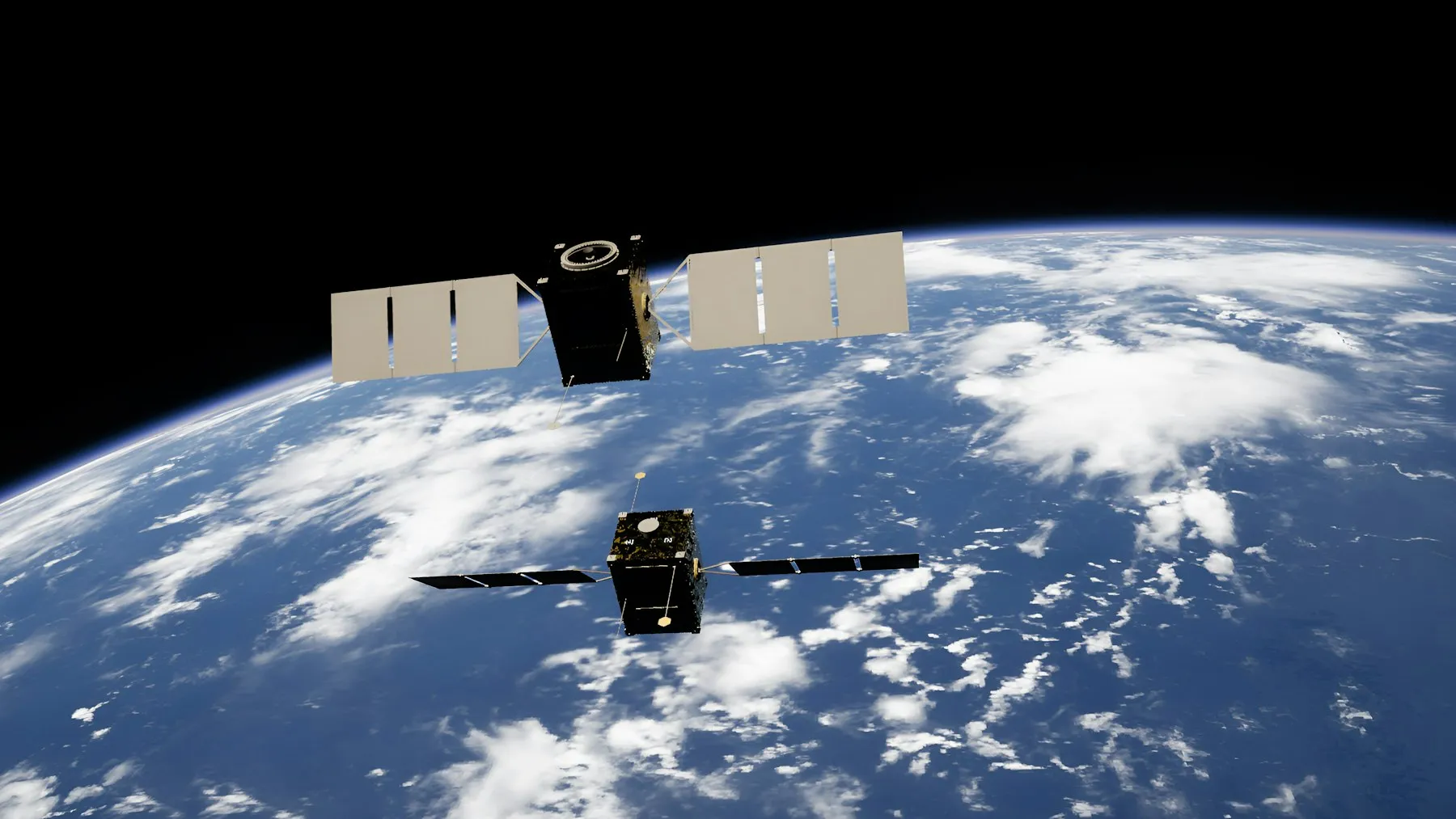
Xona isn’t selling a slide deck. It launched six satellites this month on SpaceX’s Bandwagon rideshare into mid-inclination orbit. Four were built by Belgian manufacturer Aerospacelab to run the first beta service; two were designed and built in-house at Xona’s factory in Burlingame, California, to validate the architecture for scaling up.
Here’s how the Pulsar pitch stacks up against the GPS you use today:
- Orbit: Pulsar sits in low-Earth orbit; GPS flies at roughly 20,000 km, in medium-Earth orbit.
- Signal strength: Xona claims up to 100x stronger than GPS — enough to reach indoors and resist jamming.
- Accuracy: Xona claims centimetre-level positioning. A company blog says one test beat two centimetres across more than 500 transmissions, versus the several-metre accuracy of standard civilian GPS.
- Constellation: More than 250 satellites planned; the FCC authorized the full network in August 2026. GPS runs on about 31 operational satellites.
- Compatibility: Broadcasts in L-band, so it can integrate into existing GPS receivers via firmware rather than a hardware swap.
The money has been stacking up fast. The $250 million Series D follows a $170 million Series C just seven months earlier, pushing Xona past $570 million raised since it was founded in 2019. CEO and co-founder Brian Manning, a former SpaceX engineer, told Forbes the pace has been startling.
“We started the year with technically an empty warehouse, and now we have a functional satellite factory.” — Brian Manning, co-founder and CEO, Xona
Jurvetson framed the leap in blunter terms:
The company “advanced from a validation mission to deploying the foundation of an entirely new global navigation network.” — Steve Jurvetson, co-founder, Future Ventures
⚠️ The Catch
The claims are, for now, Xona’s own. The centimetre accuracy and the 100x signal figure come from company testing, not independent audit, and the real service hasn’t started — beta is slated for early 2027 in several countries, on just four satellites.
Then there’s the gap between six satellites and 250-plus. Manning says the factory is aiming for several satellites a week, which is the kind of production rate that’s easy to state and hard to sustain. Building a global navigation network means near-continuous launches for years, and every one is a chance for things to go sideways.
And Xona isn’t operating in a vacuum. GPS is free and already inside nearly every device on Earth, which is a brutal incumbent to dislodge. Convincing aviation regulators, logistics giants, and defense buyers to route critical navigation through a startup’s constellation is a long, paperwork-heavy climb — regardless of how clean the signal is.
🎯 What Happens Next
Watch three things. First, the early-2027 beta — whether those four satellites deliver the accuracy Xona advertises in the real world, not a test range. Second, the launch cadence: Xona needs to turn “six in orbit” into a steady production line, and the next few launches will show whether the Burlingame factory can actually hit rhythm.
Third, and most telling, who signs up. Xona is targeting aviation, logistics, critical infrastructure, and defense — sectors that move slowly but pay enormously once they commit. A named anchor customer in any of them would say more than any funding round.
🧩 Bigger Picture
There’s a pattern here, and Jurvetson’s involvement gives it away. The Starlink model — pack cheap satellites into low-Earth orbit, iterate fast, undercut legacy systems built for a slower era — is being pointed at one piece of infrastructure after another. First broadband. Now positioning and timing.
Positioning is the invisible utility almost nothing modern works without: payment networks, power grids, and cell towers all quietly depend on GPS’s atomic-clock timing, not just its map dot. If a jammed or spoofed signal can take any of that down, a hardened commercial alternative stops looking like a luxury and starts looking like a seatbelt. Whether Xona is the company that delivers it is still unproven — but $250 million says a lot of smart money is done waiting for the government to fix it.
The 1970s gave us GPS and bell-bottoms. One of them was overdue for a replacement.
Sources
- Xona Prepares to Start Navigation Service in Beta With Recent Launch and $250M Raise — Via Satellite
- Xona raises $250M at a $2.45B valuation to build a rival to GPS — The Next Web
- Exclusive: SpaceX Investor Backs $2.45 Billion Startup Taking The Starlink Model To GPS — Forbes
- Startup Funding News Today, October 23, 2026 — Tech Startups
- FCC Approves Xona Application for 258-Satellite Constellation — SDxCentral
❓ Quick answers
How much did Xona Space Systems raise?
Xona raised $250 million in a Series D announced October 22, 2026, at a $2.45 billion valuation, led by Future Ventures (Via Satellite).
What is Xona's Pulsar network?
Pulsar is a low-Earth-orbit satellite navigation system built as a jam-resistant alternative to GPS, claiming signals up to 100x stronger and centimetre-level accuracy (The Next Web).
When will Xona's GPS alternative be available?
Xona plans to begin beta service in several countries in early 2027 using four of the six satellites it launched in October 2026 (Via Satellite).