🔥 SpaceX Caught Starship Falling Back From Orbit. The Booster Wasn't So Lucky.
SpaceX caught its Starship upper stage at the launch tower after an orbital flight for the first time ever on 14 Nov 2026, though Booster 22 was lost in the Gulf.
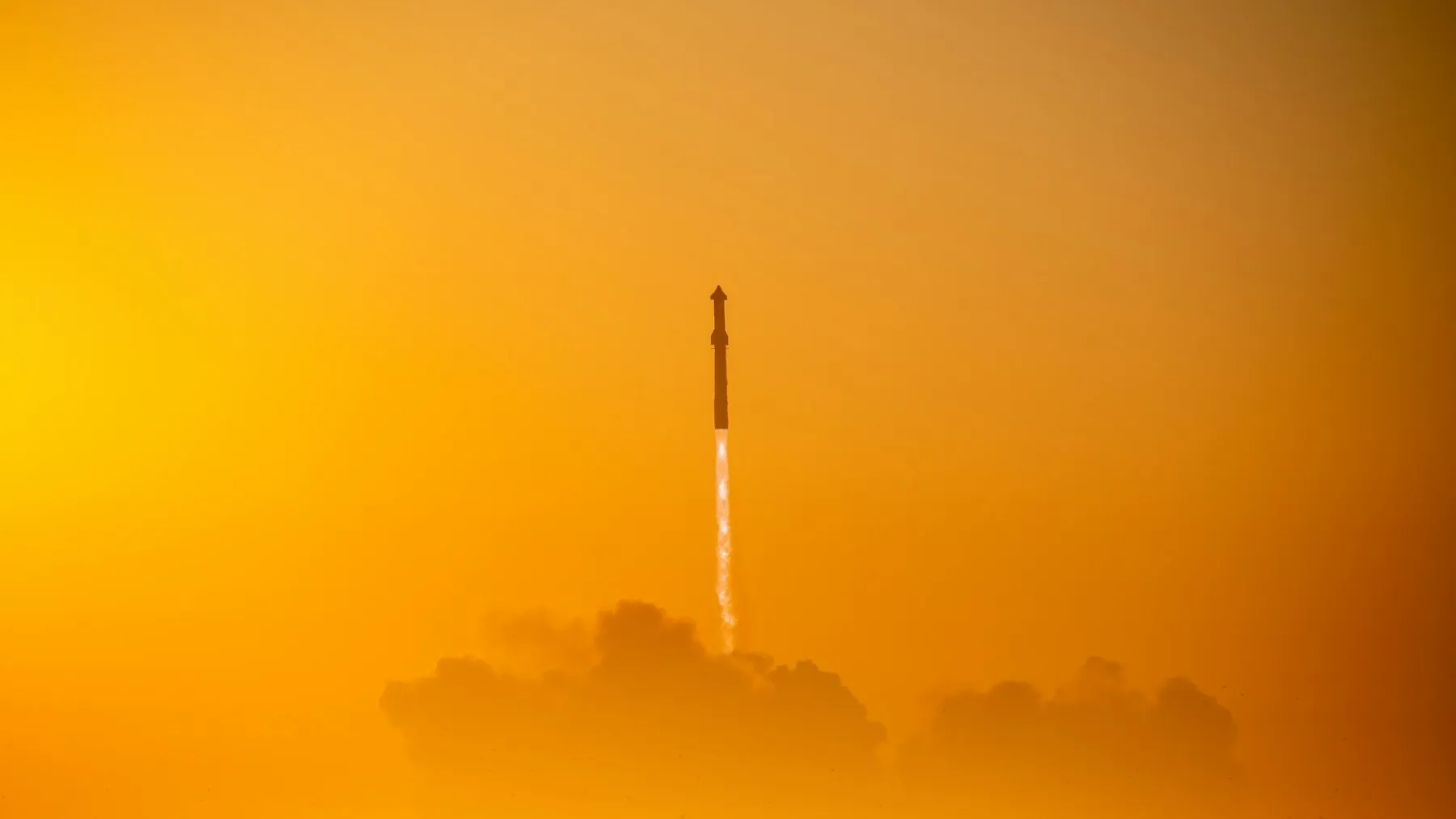
Let’s get the number on the table first: zero. That’s how many times anyone had ever plucked a spacecraft out of the air as it dropped back from orbit, right up until about 3:20pm Texas time on Saturday.
Then SpaceX did it. A 50-metre stainless-steel upper stage called Ship 42 came back over the Gulf of Mexico, slowed itself to a hover beside its own launch tower, and let two giant mechanical arms close around it. Starbase erupted (Space Policy Online).
The same flight that pulled off the catch of the decade also dumped a booster into the sea an hour into the mission. Both things are true, and both matter.
Reaching orbit was last year’s miracle. Catching the thing on the way home is the one that actually changes the maths.
🧠 Why This Matters
A rocket you throw away is a very expensive firework. The entire SpaceX thesis, going back to the first Falcon 9 landings, is that you only get cheap space when the hardware comes home and flies again the next week. Boosters have been doing that for years. The upper stage, the bit that actually goes all the way to orbit and has to survive a 17,000mph reentry through its own plasma, never had.
That’s the piece that just fell into place. On Flight 15, Ship 42 launched Friday evening, spent roughly 22.5 hours in space across about 14 orbits, then flew itself back to the exact pad it left from and got caught (Teslarati).
There’s a very practical reason SpaceX is in a hurry here. Starlink’s new V3 satellites are too big for Falcon 9: their solar arrays stretch roughly 60 metres end to end. The only way to put thousands of them in orbit is to fly Starship, and fly it often. You cannot fly a rocket often if you have to build a brand-new one every time.
📊 Deep Dive
This was Starship’s second orbital flight. The first, back in September, ended early after an engine problem, so there was real pressure riding on this one.
The mission itself was a full working day, not a test lob:
- The payload: All 26 Starlink V3 satellites deployed through the ship’s payload door about 40 minutes after liftoff, the first full operational Starlink load Starship has ever carried (Hardware Busters).
- The inspection trick: Three of those satellites carried cameras pointed back at the ship, photographing its heat shield in orbit so engineers could make a go/no-go call before committing to reentry.
- The booster (Booster 22): Launched the stack, then aborted its own tower catch and splashed down in the Gulf. Lost.
- The ship (Ship 42): Survived reentry, flew to the tower, and was caught. First ever.
Put simply: SpaceX had caught boosters at the tower three times before (on Flights 5, 7 and 8). It had never caught the part that comes screaming back from orbit. Saturday was the first time the hardest half of the problem got solved.
NASA Administrator Jared Isaacman called the catch “almost magic.”
⚠️ The Catch
Here’s the part the triumphant headlines skip past. Flight 15 only caught one of its two stages, and the booster was supposed to be the easy one.
Booster 22, the first of the beefier V3 Super Heavy boosters, was meant to fly home about six minutes after liftoff. Instead its own guidance and navigation system flagged that it wasn’t where it should be, cancelled the catch, and diverted the booster to an offshore splashdown (KeepTrack). Observers at Starbase heard the sonic boom and watched it break apart over the water. Elon Musk later said the booster had run short on propellant because its engines slightly underperformed.
That’s an expensive lesson, but it’s arguably the system working as designed. A booster that isn’t sure where it is has no business aiming itself at a tower with people and a second rocket nearby. SpaceX is still investigating the cause.
“This booster loss does not change our timeline to reach high volume, fully reusable Starship flights.” — Elon Musk
Translation: the ship catch was the thing they genuinely didn’t know they could do. The booster, they’ve done before and will do again.
🎯 What Happens Next
The whole point of Saturday was to turn Starship into something you can refuel and refly, so expect SpaceX to lean hard into cadence from here. Ship 42 is now a recovered vehicle that engineers can take apart and inspect, which is worth far more than any test that ends in the ocean.
Two threads to watch. First, the booster: SpaceX needs to understand why Booster 22’s engines came up short before it risks another tower catch with the heavier V3 design. Second, the Starlink pipeline: those 60-metre V3 satellites are the commercial engine that pays for all of this, and every successful Starship flight is 26 more of them in orbit.
If SpaceX can start catching both stages reliably, the flight rate stops being limited by how fast it can build rockets and starts being limited by how fast it can refurbish them. That’s a completely different kind of ceiling.
🧩 Bigger Picture
Step back and the significance is hard to overstate. For the entire history of spaceflight, the orbital stage, the bit that does the actual hard part, has been single-use. Even the Space Shuttle dropped its giant external tank every single time and needed months of refurbishment between flights.
A fully reusable, rapidly reflyable orbital rocket has been the holy grail since the 1960s. Saturday was the first real evidence that the second stage, not just the booster, can come home in one piece and be used again.
Reusability, not reaching orbit, was always the open question. On Flight 15, half of it got answered. The other half went for a swim.
Sources
- SpaceX catches a Starship — Space Policy Online
- SpaceX makes history, catching Starship from orbit for the first time — Teslarati
- Starship Flight 15 reaches orbit with 26 Starlink V3 satellites — Hardware Busters
- Starship Flight 15 booster catch called off — KeepTrack
- SpaceX catches Starship upper stage for 1st time ever — Space.com
❓ Quick answers
Did SpaceX catch Starship from orbit?
Yes. On 14 November 2026, SpaceX caught the Starship upper stage (Ship 42) with the Starbase tower arms after an orbital flight, the first time an orbital second stage has ever been caught (Space Policy Online).
What happened to the Starship booster on Flight 15?
Booster 22 cancelled its own tower catch after detecting a guidance and navigation problem and diverted to a splashdown in the Gulf of Mexico, where it was lost (KeepTrack).
How many Starlink satellites did Starship Flight 15 deploy?
It deployed all 26 Starlink V3 satellites about 40 minutes after the 13 November 2026 launch, Starship's first full operational Starlink load (Hardware Busters).