🔥 Path Robotics Hit $2.45 Billion by Betting on the 360,000 Welders America Doesn't Have
Path Robotics raised a $300M Series E at a $2.45B valuation on 10 Nov 2026, led by Georgian, to scale physical AI for welding.
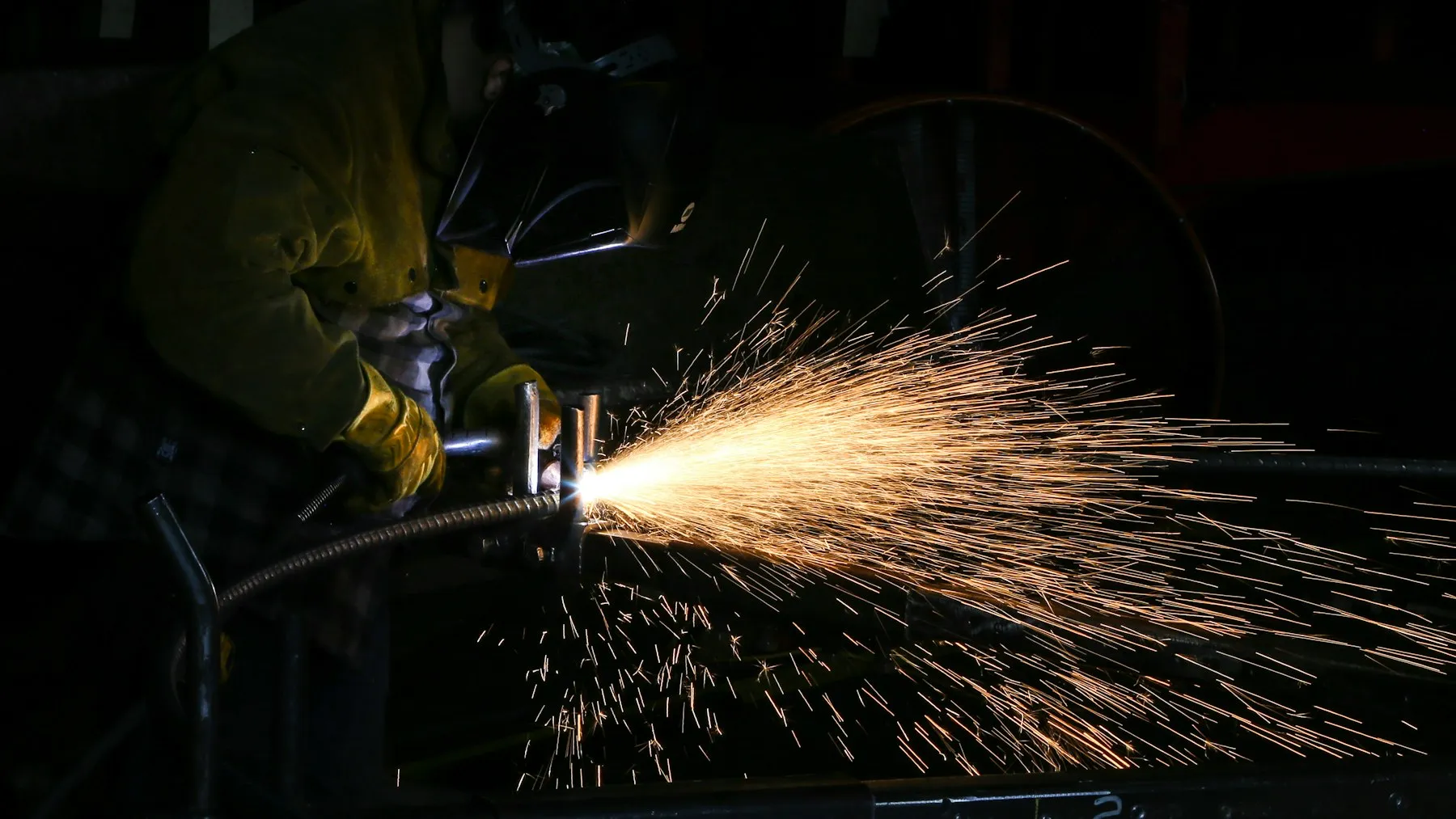
Path Robotics builds robots that weld. On paper, that’s a narrow pitch for a company that just landed a very wide valuation.
Let’s get the number on the table first: $300 million. That’s the Series E the Columbus, Ohio company closed on 10 November, at a $2.45 billion post-money valuation (SiliconANGLE). The round was led by growth-equity firm Georgian, with Tiger Global, Addition, Drive Capital and Yamaha Motor Ventures returning, and D. E. Shaw Ventures and NAVER Ventures writing first cheques (Business Wire via Yahoo). It pushes the total Path has raised since 2018 past $610 million.
Here’s the part worth sitting with. A company whose robots mostly do one task on the factory floor is now worth more than plenty of publicly traded industrial firms its size. The market isn’t really paying for welding. It’s paying for the welders America stopped training.
The thesis: Path’s valuation is a bet that physical AI turns commercially real in the ugliest corner of the factory first.
🧠 Why This Matters
Welding is a job the United States is running out of people to do. The American Welding Society projects the country will need roughly 360,000 welding professionals by 2027 to keep pace with demand and retirements (AWS). The average welder is aging out faster than trade schools can replace them, and the work itself - hot, loud, smoky, physically brutal - is a hard sell to anyone under 25.
Now stack a shipbuilding and defense manufacturing push on top of that gap. Someone has to lay the beads on hulls, utility poles, power generators and armoured vehicles. Path’s pitch is blunt: if you can’t hire the welders, you rent the robots.
“We started with welding because it is one of the hardest jobs on the factory floor to automate.” — Andy Lonsberry, co-founder and CEO, Path Robotics
📊 Deep Dive
Most welding robots are dumb arms following a pre-programmed path. They break the moment a part sits a millimetre off, because real steel warps, flexes and shifts as the torch heats it. Path’s answer is an AI model called Obsidian, fed by four torch-mounted lasers and a pair of cameras that watch the metal deform in real time and adjust the weld as it goes (SiliconANGLE). To train it without burning through steel, the company built a “weld world model” that generates simulated welding jobs by the thousand. In April it added Rove, a four-legged robot that carries that intelligence into shipyards instead of bolting it to a fixed station.
The traction behind the round:
- Round size: $300M Series E, up from a $100M Series D in 2024 (The Robot Report)
- Valuation: $2.45B post-money, which several outlets report as nearly quadrupling its prior mark (The Next Web)
- Revenue: annual recurring revenue up roughly 17-fold over 18 months (company-reported, unaudited)
- Headcount: up 97% year over year, targeting 400 employees by year-end
- Anchor contract: a $600 million performance-based production agreement with shipbuilder HII, signed earlier this year
- Marquee customers: HII, Lockheed Martin and defence startup Saronic
That HII line matters more than the valuation. A $600M production agreement with the largest military shipbuilder in the US is the kind of backlog that turns a robotics demo into a business.
⚠️ The Catch
Seventeen-times revenue growth sounds enormous, and it is a percentage, not a dollar figure. Path hasn’t disclosed the base it grew from, and 17x of a small number is still a small number. The prior valuation wasn’t disclosed either, so “nearly quadrupled” is reporting, not an audited jump.
Then there’s the gap between the pitch and the product. Lonsberry wants to automate the whole factory, but Path’s robots still overwhelmingly weld. Heavy manufacturing runs on long sales cycles, capital-heavy deployments and customers who do not rip out a working line for a startup’s say-so. Physical AI remains far less proven at scale than the software kind, and $2.45 billion prices in a lot of the “beyond welding” story that hasn’t shipped yet.
🎯 What Happens Next
The near-term plan is more Rove in shipyards, more hiring toward that 400 headcount, and a push to extend Obsidian past welding into adjacent factory tasks. Georgian partner Emily Walsh joins the board, a signal the lead investor expects to be hands-on.
“Our goal isn’t to automate one step, but to automate the entire factory.” — Andy Lonsberry, Path Robotics
Watch whether the HII deal expands and whether a second defence-scale contract lands. One marquee agreement is validation; two is a category.
🧩 Bigger Picture
Path’s round is part of a broader shift in where robotics money is going: away from gleaming humanoids doing demos, toward unglamorous machines that do dull and dangerous jobs with a clear buyer attached. The reshoring and defence-manufacturing wave has given industrial automation a customer base that writes nine-figure cheques, and investors are chasing it.
The context is global. By the International Federation of Robotics’ count, most of the world’s newly installed industrial robots go into Asia, and China installs the largest share. Path is aimed squarely at the opposite problem: a US industrial base that wants to build more at home and doesn’t have the hands to do it.
That’s the real tell in this round. The money isn’t betting that robots are cooler than people. It’s betting there won’t be enough people.
Sources
- SiliconANGLE — Industrial automation startup Path Robotics raises $300M
- Business Wire via Yahoo Finance — Path Robotics Announces $300M Series E at $2.45B Valuation
- The Next Web — Path Robotics raises $300m at a $2.45bn valuation
- The Robot Report — Path Robotics raises $100M to automate welding (Series D background)
- American Welding Society — Job Outlook for Welders
- Tech Startups — Startup Funding News Today, November 11, 2026
❓ Quick answers
How much did Path Robotics raise in its Series E?
Path Robotics raised $300 million in a Series E at a $2.45 billion post-money valuation on 10 November 2026, led by Georgian (SiliconANGLE).
What does Path Robotics do?
It builds AI-powered autonomous welding robots, including an AI model called Obsidian and a four-legged robot called Rove, for industrial and defence manufacturers like HII and Lockheed Martin.
Why is Path Robotics worth $2.45 billion?
Investors are betting on a US welder shortage the American Welding Society projects at about 360,000 workers by 2027, plus a $600 million production agreement Path signed with shipbuilder HII.