🔥 A Robot That Prints Houses Just Raised $200 Million — at a Lower Price Than in 2022
3D-printing construction startup ICON raised a $200M Series D co-led by BlackRock and Baillie Gifford at a $1.4B valuation — below its ~$2B 2022 peak.
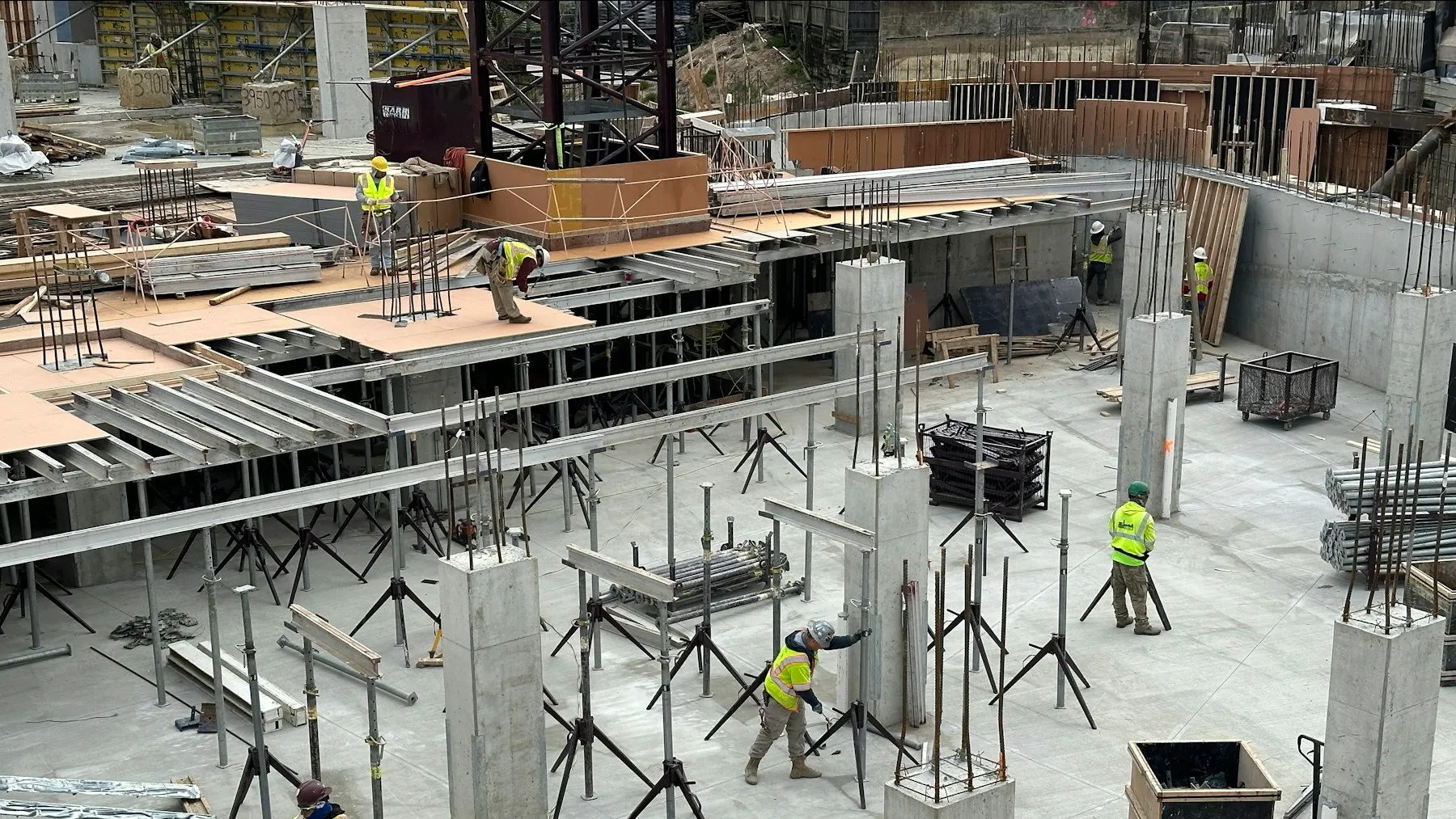
A construction robot the size of a gantry crane has now printed more than 270 homes and structures. On Tuesday, the company behind it convinced two of the most conservative money managers on the planet to write it a very large check.
Austin-based ICON raised $200 million in a Series D round co-led by Baillie Gifford and funds managed by BlackRock, the company announced October 13 (Construction Dive). The deal values ICON at $1.4 billion and brings its total funding to roughly $700 million (Dealroom).
Here’s the part the press releases glide past: ICON was already worth nearly $2 billion back in February 2022, when a Tiger Global–led round valued it there (TechCrunch). So the headline number is big and the valuation is lower than it was four years ago. Both things are true, and that tension is the whole story.
🧠 Why This Matters
When Baillie Gifford and BlackRock co-lead a round, that’s a signal worth reading. These are the firms that backed Tesla, SpaceX and Amazon early and then sat still for a decade. They don’t chase hype cycles; they buy things they expect to still exist in 2040. Having them anchor a construction-robotics round says the category has graduated from demo-day novelty to something an index-fund giant will underwrite.
And the timing isn’t random. The U.S. is short an estimated several million housing units, labor on job sites keeps getting scarcer and more expensive, and insurers are fleeing wildfire and hurricane zones. ICON’s pitch lands squarely on all three: a machine that pours concrete walls faster, with fewer workers, in a form that shrugs off weather.
“Construction automation has crossed from potential into proven reality,” said co-founder and CEO Jason Ballard. “This round puts that reality in builders’ hands.” (3D Printing Industry)
The thesis: the money isn’t a bet on a prototype anymore — it’s a bet that ICON can go from printing hundreds of homes to printing hundreds of thousands.
📊 Deep Dive
ICON doesn’t just print houses as a service; it’s increasingly selling the machines. The new cash funds its Titan system — a multi-story robotic printer meant to go out to third-party builders — plus Olympus, the next-gen platform tied to the company’s long-running NASA moon-and-Mars work (3D Printing Industry).
The walls themselves are the selling point. ICON’s FormCrete material, by the company’s own numbers, reads very differently from a standard stick-frame wall:
- Wind rating: over 175 mph for FormCrete walls, versus about 40 mph for conventional stick framing
- Fire rating: more than 2 hours, versus roughly 0.5 hours for stick framing
- Build time: about six weeks faster on an average home
- Cost: roughly 40% below the national average, per ICON’s internal cost modeling
- Track record: 270+ homes and structures printed across five states and two countries
The customer list is the real proof-of-life. Homebuilding giant Lennar put up a whole neighborhood of ICON-printed homes at Wolf Ranch in Georgetown, Texas. Community First! Village in Austin used the tech for more than 100 homes for people who had been experiencing homelessness. And the U.S. Army broke ground in January 2026 on 10 barracks at Fort Bliss. ICON’s government arm, ICON Prime, has pulled in more than $370 million in public contracts (3D Printing Industry).
⚠️ The Catch
Now the asterisk. A $1.4 billion valuation is a terrific outcome for most startups and a markdown for this one. ICON was flirting with $2 billion in early 2022, which means investors are paying less for a bigger, more proven company today than they were for a smaller, less proven one back then.
That’s the hangover from the 2021–2022 venture binge, when valuations ran ahead of revenue across the board. It’s also a reminder that 3D-printed construction has been “about to change everything” for the better part of a decade without actually changing most of it. The vast majority of American homes are still framed by hand, by people, with lumber.
The economics are still unproven at scale, too. The 40%-cheaper and six-weeks-faster figures come from ICON’s own modeling, not an independent audit — and the big savings tend to show up on the concrete shell, not on the plumbing, wiring, roofing and finish work that eat most of a home’s budget. A faster wall is not automatically a cheaper house.
🎯 What Happens Next
Watch whether ICON can sell printers, not just print houses. Running your own build sites is a services business with thin margins and heavy capital needs. Shipping Titan systems to Lennar and the next ten national builders is a product business — higher margin, faster to scale, and exactly the kind of story BlackRock and Baillie Gifford are paying for.
Expect ICON to lean hard into weather-resilient markets — Texas, Florida, wildfire-prone stretches of the West — where “175 mph wind rating” and “two-hour fire rating” translate directly into lower insurance premiums and an easier sell. The company says it’s on track to quadruple revenue in 2026; the next raise will be judged on whether that actually happened.
🧩 Bigger Picture
Strip away the robot and this is a story about who builds the physical world. Software ate media, retail and finance; it has mostly bounced off the job site, where productivity has barely budged in decades. A machine that reliably lays walls at scale is the wedge that finally lets automation into one of the economy’s largest, stubbornly analog sectors.
ICON won’t do it alone — Denmark’s COBOD, Germany’s robotics crowd, and a growing field of rivals are all chasing the same concrete. But a down-round unicorn with 270 buildings on the ground, a Lennar partnership and the U.S. Army as a customer is no longer selling a vision. It’s selling a track record, at a discount.
The machines are printing houses. The only question left is how fast the price of a home follows the price of the company down.
Sources
- Construction Dive — 3D-printing giant Icon raises $200M
- Dealroom — Icon raises $200M Series D at $1.4B valuation
- 3D Printing Industry — ICON raises $200M to manufacture Titan 3D printers
- TechCrunch (Feb 2022) — ICON raises $185M at a ~$2B valuation
❓ Quick answers
How much did ICON raise in its 2026 Series D?
ICON raised $200 million in a Series D co-led by BlackRock-managed funds and Baillie Gifford, announced October 13, 2026 (Construction Dive).
What is ICON's valuation now?
The Series D values ICON at $1.4 billion, down from the nearly $2 billion it reached in a Tiger Global-led round in February 2022 (Dealroom; TechCrunch).
How many homes has ICON 3D-printed?
ICON says it has printed more than 270 homes and structures across five states and two countries, including a Lennar neighborhood in Georgetown, Texas (3D Printing Industry).