🔥 An AI That Chews Through 15 Billion Moving Parts in Minutes Just Raised $250 Million
Vinci raised a $250M Series B at a $1.5B valuation (Oct 6, 2026) to run physics simulation inside the hardware design loop.
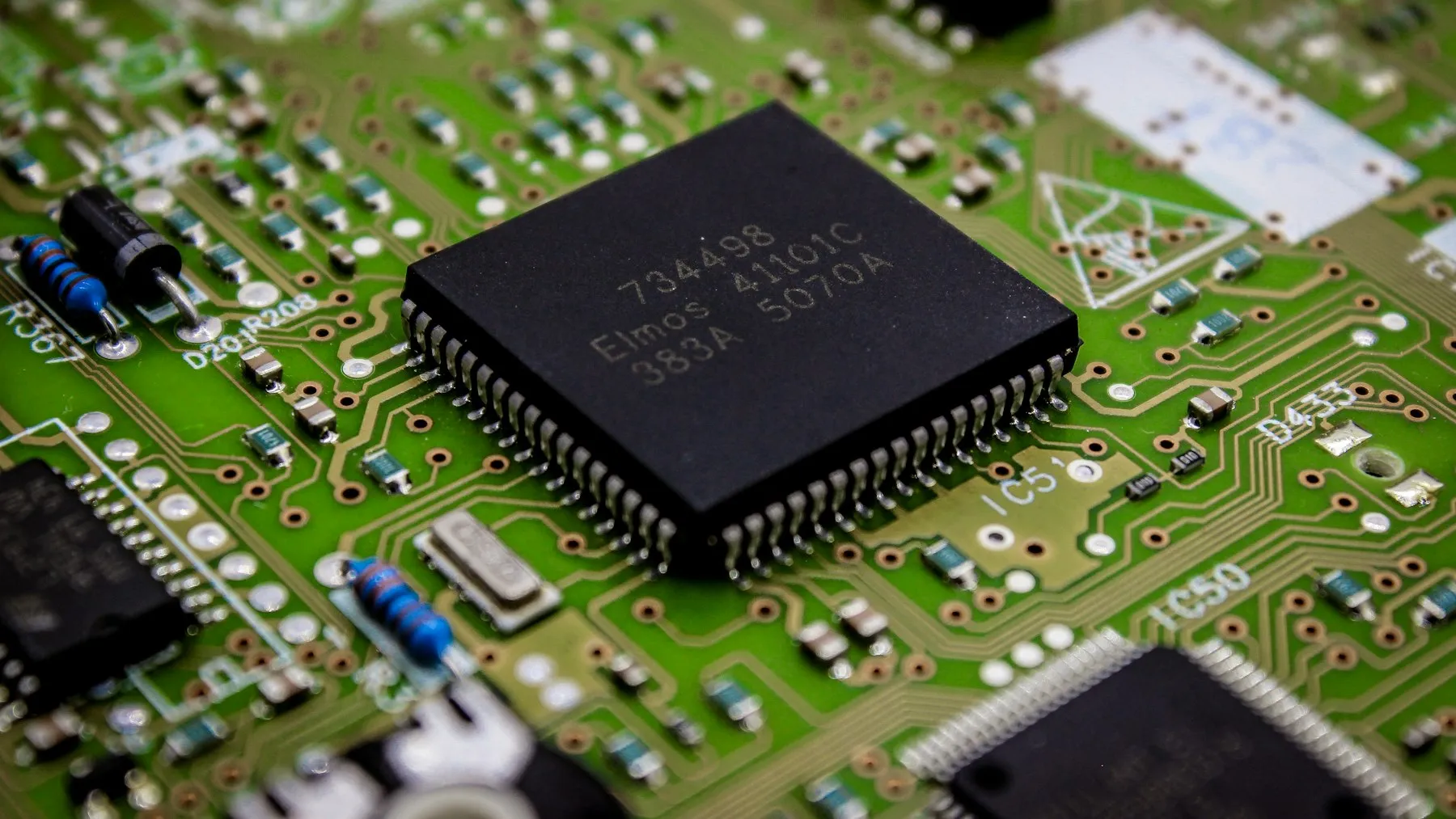
Every piece of hardware you own was, at some point, a guess. An engineer drew a chip, a battery pack, or a wing, then waited hours — sometimes days — for a physics solver to tell them whether it would overheat, warp, or crack. By the time the answer came back, they’d often already moved on to the next version.
A Palo Alto startup called Vinci wants to kill that wait, and investors just handed it a very large check to try.
Let’s get the number on the table first: $250 million. That’s Vinci’s Series B, which values the company at $1.5 billion and was announced on October 6 (BusinessWire). For a company that only came out of stealth last December with $46 million to its name, that’s a roughly 6x jump in disclosed funding in under a year (Converge Digest).
The thesis is simple to state and hard to pull off: make physics simulation fast enough to run inside the design loop instead of after it.
🧠 Why This Matters
Hardware engineering has a timing problem. The simulations that tell you whether a design actually works — heat flow, mechanical stress, fluid behavior — are so computationally heavy that engineers run them sparingly, usually near the end, when changing anything is expensive. So the industry does the physics last, which is exactly backwards from where it would help most.
Vinci’s pitch is that AI can move that check to the front. The company says its platform analyzes designs ranging from hundreds of millions to more than 15 billion degrees of freedom in minutes, rather than the hours or days a traditional solver takes (Pulse2). Degrees of freedom are, roughly, the number of independent variables a simulation has to track — so 15 billion is the kind of scale you hit on a full manufacturing-grade chip or system, not a toy model.
If that speed holds up, the workflow flips. You stop drawing and praying. You draw, you see the heat map, you redraw — in the same sitting.
📊 Deep Dive
Vinci calls its core idea Continuous Physics Reasoning, and the “continuous” is the whole point. Instead of discrete checkpoints where work stops and a solver runs overnight, the company wants physics prediction running alongside the design the entire time (Converge Digest).
Under the hood, it’s four pieces stitched together: automated design preparation, agentic orchestration, a Foundation Model for Physics, and GPU-native physics kernels. The part engineers will care about most is that it runs zero-shot — meaning it works on a brand-new design without being trained or fine-tuned on that customer’s specific data first (BusinessWire).
Here’s how the old way stacks against what Vinci says it’s selling:
- Traditional solvers: hours to days per run, so physics checks happen late and rarely
- Vinci’s claim: minutes per run, so checks move into the active design phase
- Traditional AI surrogates: usually need training on your specific parts first
- Vinci’s claim: zero-shot on new designs, no customer-specific fine-tuning
- Starting domain: thermal, thermo-mechanical, and convective fluid behavior — aimed first at semiconductors
- Where it runs: behind the customer’s firewall, per the company
The round itself is a who’s-who. It was co-led by Advent, Temasek, and Xora, with AMD Ventures and Madrona joining, alongside existing backers Eclipse and Khosla Ventures (BusinessWire). AMD’s involvement is the tell — a chipmaker putting money into a tool for designing chips.
“Vinci has the potential to become a foundational technology for a new era of hardware engineering.” — Alek Ferro, Technology Investor, Advent
Co-founder and CEO Dr. Hardik Kabaria frames the $250 million as a down payment on something bigger than a faster simulator.
“Continuous Physics Reasoning is where that journey begins.” — Dr. Hardik Kabaria, co-founder and CEO, Vinci
⚠️ The Catch
Now the sobering part. Almost every impressive figure above is Vinci’s own. The 15-billion-degrees-of-freedom-in-minutes claim, the accuracy, the zero-shot behavior — these are company assertions, not independently verified benchmarks (Converge Digest).
That matters more in physics than in most AI pitches. A chatbot that’s 90% right is useful. A thermal simulation that’s 90% right can green-light a chip that cooks itself in the field. Engineers trust established solvers precisely because they’re slow and deterministic; an AI that’s fast but occasionally confidently wrong is a harder sell than a demo makes it look.
There’s also a customer gap. Vinci says it’s deployed on “flagship production engineering programs” and validating with hardware firms across the US, Europe, and Asia — but it names none of them (Converge Digest). The most prominent name attached to the company, AMD, is also one of its investors. Independent, named customers would say a lot more than another round will.
🎯 What Happens Next
The money is earmarked for expansion — more kinds of physics, more kinds of hardware. Today it handles thermal, thermo-mechanical, and convective fluid behavior, starting in semiconductors. The roadmap points at memory, advanced computing, vehicles, aircraft, and satellites (Pulse2).
The longer-term ambition is the bit that justifies a $1.5 billion tag: moving from predicting how a design behaves to recommending changes, juggling competing engineering constraints, and eventually generating designs straight from a human’s intent (Pulse2). That’s the difference between a very fast calculator and an engineering copilot. Vinci is selling the first and pricing in the second.
Watch for two things: a named marquee customer, and any third-party benchmark that pits Vinci against a legacy solver on the same part.
🧩 Bigger Picture
Software ate design tools a decade ago. The hardware side — the solvers, the meshing, the overnight simulation jobs — mostly didn’t change, because the math is brutal and the stakes are physical. Vinci is one of a wave of startups betting that foundation models can finally crack that, and the capital agrees: with this round, the company’s total disclosed funding sits around $296 million (Converge Digest).
If it works, the payoff isn’t a cooler demo. It’s hardware that gets designed in days instead of quarters, because the physics stops being the thing you wait for and starts being the thing you design with.
For now, the simulation is fast, the valuation is real, and the proof is still loading.
Sources
- Vinci Raises $250M Series B at $1.5B Valuation (BusinessWire press release)
- Vinci Raises $250M at $1.5B Valuation for Continuous Physics Reasoning (Converge Digest)
- Vinci Raises $250 Million Series B At $1.5 Billion Valuation (Pulse2)
❓ Quick answers
How much did Vinci raise and at what valuation?
Vinci raised a $250 million Series B at a $1.5 billion valuation, announced on October 6, 2026 (BusinessWire).
Who led Vinci's Series B?
It was co-led by Advent, Temasek and Xora, with AMD Ventures and Madrona joining and existing investors Eclipse and Khosla Ventures participating (BusinessWire).
What does Vinci actually do?
It runs AI-driven physics simulation ('Continuous Physics Reasoning') during hardware design, claiming to analyze up to 15 billion degrees of freedom in minutes instead of hours or days, starting with semiconductors.