
🔥 A Beanie That Types Your Thoughts Just Raised $50 Million
Palo Alto startup Sabi raised a $50M seed led by Khosla Ventures for a non-invasive brain-reading cap that turns imagined words into text.
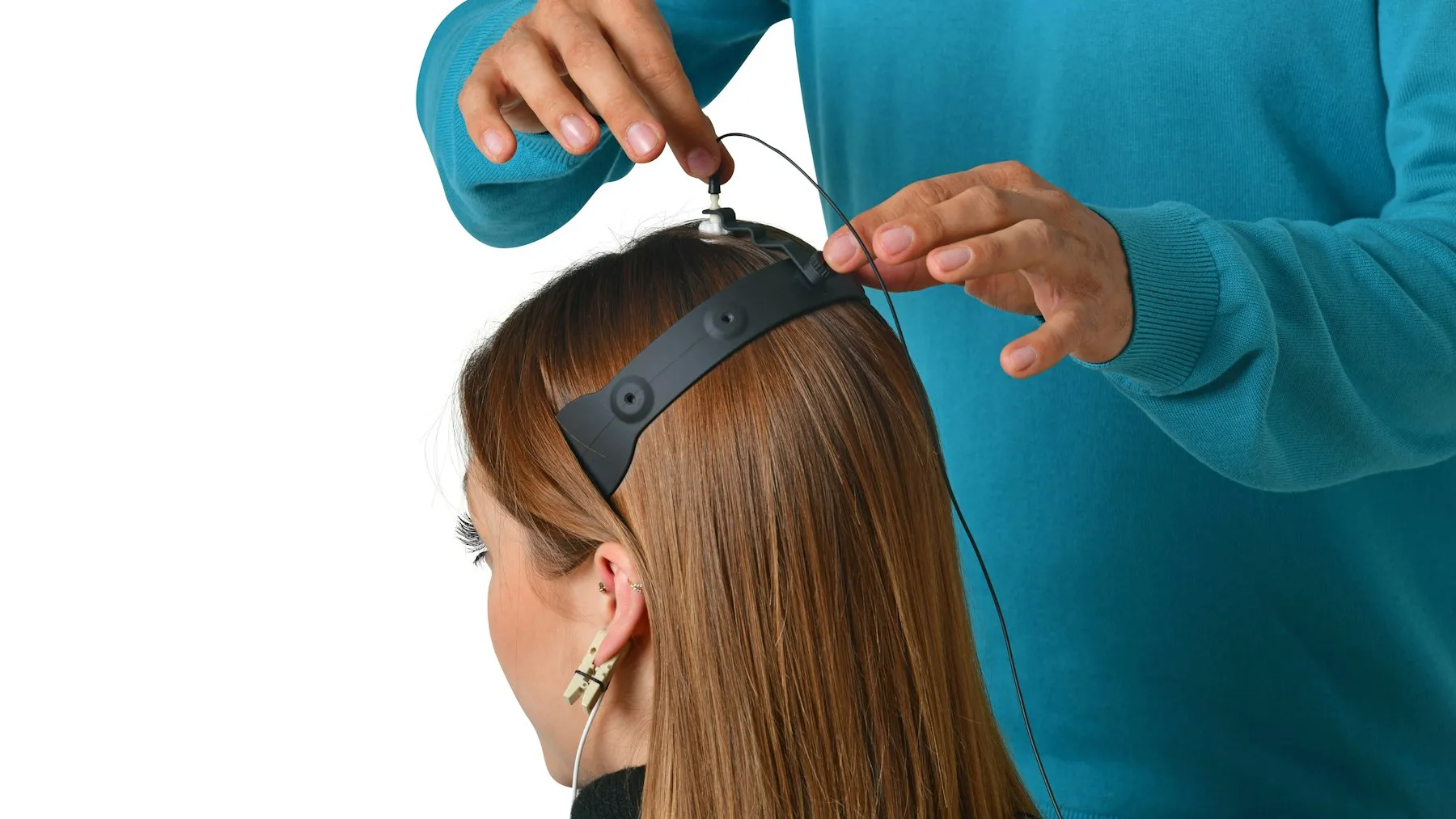
Someone just put a brain-computer interface inside a hat, and investors wrote a very large check for the idea.
Let’s get the number on the table first: $50 million. That’s the seed round a Palo Alto startup called Sabi closed on October 9, led by Khosla Ventures, with Accel, DST Global, Initialized Capital and former OpenAI product chief Kevin Weil all putting money in (Crypto Briefing, Dealroom). Reports peg the valuation at around $600 million, though Sabi hasn’t confirmed that figure (AI Weekly).
What the money buys is a beanie — not a surgical implant — stuffed with tens of thousands of tiny sensors that read your brainwaves through your skull and turn the words in your head into text on a screen. No drilling, no operating room, no Neuralink.
The pitch is simple enough to fit on a hat: think it, and it types.
🧠 Why This Matters
Brain-computer interfaces have mostly been a surgery story. The headline-grabbing demos — a paralyzed patient moving a cursor, typing with their mind — have generally come from electrodes placed inside or directly on the brain. That works, but it requires a neurosurgeon and a very good reason to open someone’s skull.
Sabi is betting that you can skip all of that and still get something useful by reading signals from the outside with electroencephalography, or EEG — the same basic method hospitals have used for decades, miniaturized and multiplied. The company claims its cap packs up to 100,000 chip-scale EEG sensors, each between 1 and 5 millimeters, close enough together to pull a usable signal through hair and bone (TrendingTopics, Crypto Briefing).
If it works as advertised, a consumer BCI you can pull on like a hat is a different kind of product than anything that needs an incision. That’s why a round this size landed on a company that, by its own account, only came out of stealth in April 2026.
“We are building a faster interface that does not require surgery or a laboratory.” — Rahul Chhabra, Sabi CEO and co-founder (TrendingTopics)
📊 Deep Dive
Here’s the mechanism. The sensors measure the faint electrical chatter your neurons give off. On its own, that signal is noisy and low-resolution — EEG through the skull is like trying to follow a conversation through a wall. Sabi’s answer is twofold: flood the problem with sensors, then throw a big AI model at the mess.
That model is the part the company is most excited about. Sabi says it trained a “Brain Foundation Model” on roughly 100,000 hours of neural data collected from about 100 volunteers, which it describes as the largest disclosed neural-decoding dataset of its kind (Dealroom, AI Weekly). The target: decode imagined words into text at about 30 words per minute.
How that stacks up against the alternatives:
- Sabi’s cap — non-invasive EEG, no surgery, up to ~100,000 sensors, ~30 words per minute as an initial target.
- Surgical implants (the Neuralink category) — far cleaner signal and faster demonstrated typing, but they require brain surgery and a medical reason to justify it.
- A competent typist — around 40 words per minute on a keyboard, for comparison. Sabi isn’t faster than your hands yet; it’s aiming to be hands-free.
- Older consumer EEG headbands — a handful of electrodes and crude outputs, mostly good for detecting whether you’re calm or focused, not for reading words.
The team’s résumés lean into the ambition: co-founder and CTO Atmadeep Banerjee co-authored MindEye, a study on reconstructing images people were looking at from non-invasive brain scans, and the broader staff pulls from Kernel, Apple, Microsoft, Meta and Nike (TrendingTopics). Sabi also says it built its own EEG chip, which it claims ran more than 50 times more power-efficient than an off-the-shelf Texas Instruments part in internal tests.
“The grandest and most core application of brain-computer interface is to communicate directly with the computer with thoughts.” — Vinod Khosla, via Forbes (AI Weekly)
⚠️ The Catch
Almost every number here is a company claim, and that’s the thing to hold onto.
Sabi has not published a measured decoding accuracy, a per-user calibration time, or a price (Crypto Briefing). The 30-words-per-minute figure is a target, not a benchmark. The 100,000-sensor cap is a spec sheet, not a shipped device. And reading brain signals through the skull is genuinely harder physics than reading them from an implant — Sabi concedes it’s trading signal quality for the convenience of no surgery, and is trying to buy that quality back with sensor count and model size. Whether that trade actually lands at usable, reliable text is the entire bet.
Then there’s the data. A hat that continuously reads your brain is the most intimate sensor anyone has tried to sell you. Sabi says brain data is encrypted at the sensor and processed while still encrypted, so its servers never see raw signals, and it’s committed to external audits. Those are promises worth watching get kept.
🎯 What Happens Next
Sabi says a first prototype is slated to appear at CES in Las Vegas in January, with early units going to people on a waitlist (TrendingTopics). The beanie comes first; a more discreet baseball-cap version is meant to follow.
That CES demo is the moment the claims meet a room full of skeptics. A live, unscripted “think a sentence, watch it type” would be the thing that turns $50 million of faith into a product. A canned video would tell you the physics isn’t there yet.
Watch three things: a published accuracy number, how long the cap needs to learn an individual user’s brain, and whether anyone outside Sabi gets to try it on.
🧩 Bigger Picture
The money flowing into brain interfaces has mostly chased the surgical path, where the signal is clean and the barrier is a scalpel. Sabi is a sizeable bet on the opposite bargain — accept a messier signal, and make it up in sensors and software — which is exactly the kind of wager that gets more tempting as AI models get better at pulling patterns out of noise.
It’s also a reminder of where the AI race is drifting. The frontier labs are fighting over how models answer. A growing cluster of startups is fighting over how you talk to them at all — by voice, by agent, and now, apparently, by thought. A hat that types what you’re thinking is either the next input device or an expensive hat. January should start to tell us which.
For now, the only verified number is the one on the check.
Sources
- Crypto Briefing — Sabi raises $50M to build a wearable brain-computer interface
- Dealroom — Sabi raises $50M for a thought-reading beanie
- TrendingTopics — Sabi’s brain-reading cap raises $50 million
- AI Weekly — Sabi raises $50M seed led by Khosla for brain-reading cap
❓ Quick answers
How much did Sabi raise and who led the round?
Sabi raised a $50 million seed round announced October 9, 2026, led by Khosla Ventures, with Accel, DST Global, Initialized Capital and former OpenAI product chief Kevin Weil participating (Crypto Briefing, Dealroom).
Does Sabi's brain-computer interface require surgery?
No. Sabi's device is a wearable beanie that reads brain activity from outside the skull using up to 100,000 miniature EEG sensors, so it needs no implant or surgery (Dealroom).
How fast can Sabi turn thoughts into text?
Sabi targets roughly 30 words per minute as an initial typing speed, using a 'Brain Foundation Model' trained on about 100,000 hours of neural data from around 100 volunteers (AI Weekly, Crypto Briefing).