
🔥 Enigma Just Put $71 Million on a Bet That the Robot Isn't the Hard Part
Enigma exited stealth with a $71 million seed - one of robotics' largest first checks - on a contrarian bet: the bottleneck isn't smarter robots, it's making them usable.
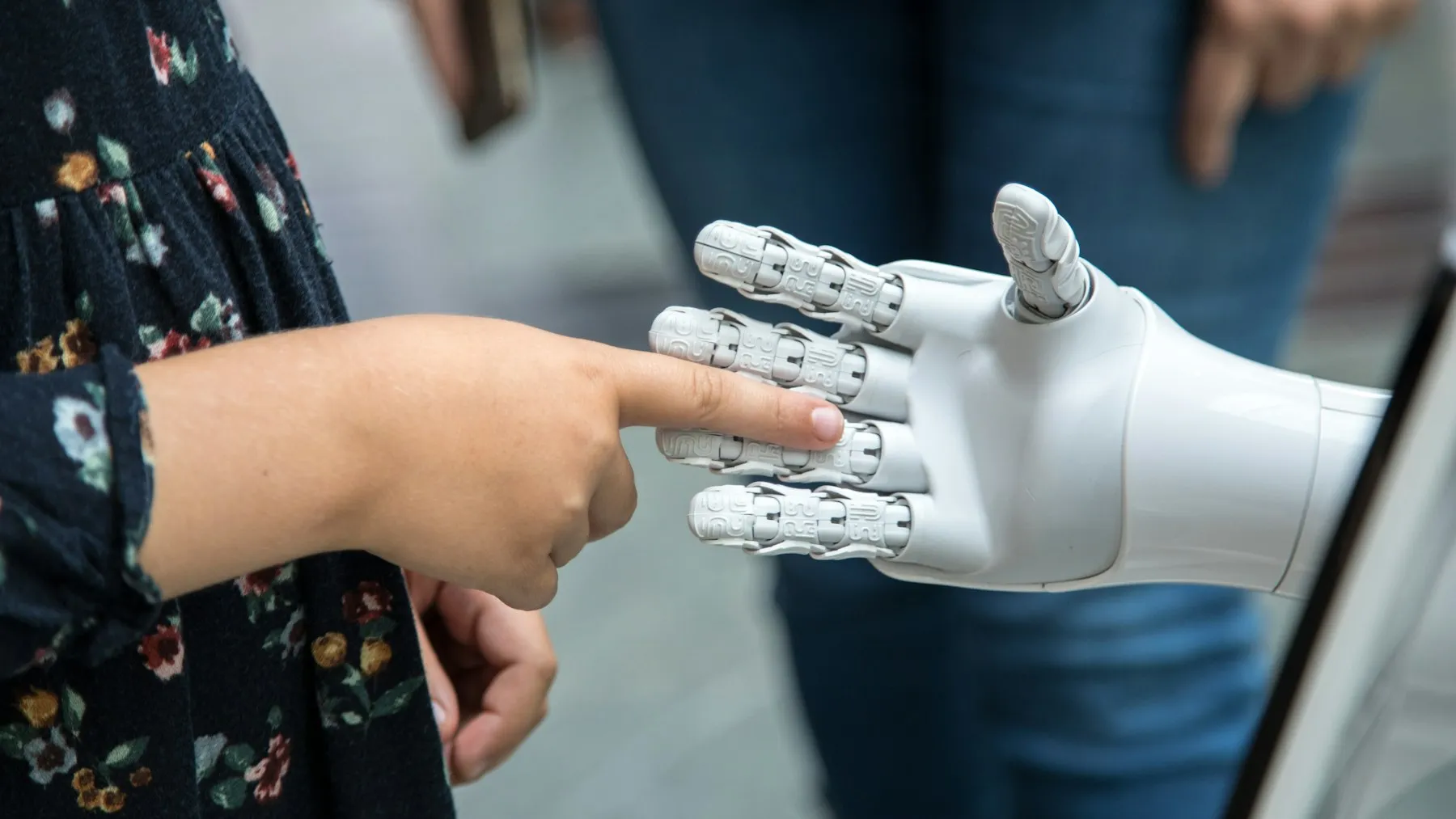
An Israeli-American startup you’d never heard of a week ago walked out of stealth on July 27 with a $71 million seed round — one of the fattest first checks the robotics world has seen — and a genuinely contrarian pitch: the reason robots aren’t in your life yet has almost nothing to do with the robots.
The company is called Enigma, and that $71 million is the number to sit with. Seed rounds are supposed to be small — a couple million to prove you’re not crazy. Enigma raised roughly what a decent Series B looks like, before shipping a single product, from Index Ventures and Ribbit Capital as co-leads, with Sarah Guo’s Conviction and a roster of angels drawn from OpenAI, Anthropic, xAI, Cognition, DeepMind and Wiz.
What did they buy? A theory. Enigma thinks the industry has spent years making robots smarter when the actual bottleneck is making them usable. That’s the whole bet.
🧠 Why This Matters
Robotics money is pouring in — startups pulled in roughly $23 billion in 2026 so far, already closing in on 2025’s $26 billion full-year total, per PitchBook data. Most of that capital chases the same dream: a humanoid that folds your laundry, stocks the warehouse, minds the elderly.
But almost every dollar is aimed at the body and the brain — better actuators, bigger foundation models, more training data. Enigma is aiming somewhere unglamorous and unfashionable: the steering wheel. Its founders argue that a robot which can technically do a task is worthless if a normal human can’t get it to do that task without an engineering degree.
“If you had to do your dishes and spent 15 minutes explaining to a robot where to put everything, everyone reaches the point of ‘Forget it, I’ll just do it myself.’”
— Jonathan Jacobi, Enigma co-founder and CEO
That’s the thesis in one sentence, and it’s the kind of observation that sounds obvious only after someone says it out loud.
📊 Deep Dive
Enigma was founded by Jonathan Jacobi (CEO, formerly at Microsoft and Check Point) and Gal Niv (CTO), who met inside Unit 8200, Israel’s signals-intelligence outfit — the same talent pipeline that produced a long line of security startups. Niv was reportedly one of the unit’s youngest cyber operations managers. They spent about eleven months quietly assembling a team spanning AI research, robotics, physics, math and systems engineering before flipping the lights on.
The product has two pieces. First, robot-agnostic foundation models — software meant to run across different hardware, so you’re not locked into one manufacturer’s arm, and trained in a way that leans less on manually labeled datasets. Second, and more attention-grabbing: a public platform, Robots.online, that lets anyone remotely pilot Enigma’s real physical robots in real time. The company runs more than 100 robots across hangars in Israel and California, and has had them painting, running chemistry experiments, and — because why not — sword fighting. Every session is training data on how humans actually try to make a machine do what they want.
To see why the $71 million raises eyebrows, line it up against the field:
- Enigma: $71M — a seed round, no product shipped, focused on the control-and-software layer.
- Apptronik: $520M at a $5 billion valuation (February 2026) to build its Apollo humanoid.
- Humanoid (the company): $152M at a $1.35 billion valuation (July 2026), Europe’s first pure-play humanoid unicorn.
- Figure AI: reportedly valued around $39 billion, the current heavyweight of the hardware race.
Notice the pattern: everyone else is selling a body. Enigma is selling the layer that sits between the human and whichever body wins.
⚠️ The Catch
A $71 million seed is a vote of confidence and a target painted on your back at the same time. Enigma has no revenue product yet, no disclosed valuation, and a plan to spend the money on GPUs and researchers — exactly what a hundred other labs are also doing right now.
The “interface layer” thesis is elegant, but it’s also unproven as a business. If the humanoid makers decide the control software is core to their moat, they’ll build it in-house rather than license it. Foundation models for robots are also brutally data-hungry, and while Robots.online is a clever way to harvest human-interaction data, a browser demo of remote-controlled arms is a long way from a system a hospital or a retailer will trust unsupervised. The named target sectors — entertainment, retail and healthcare — are three very different, very demanding customers to serve at once.
🎯 What Happens Next
Watch three things. One: whether Robots.online graduates from a curiosity into a real data flywheel — the more people pilot those robots, the better the models should get, and that loop either spins up or it doesn’t. Two: the first paying pilot. A signed deal in any one of those three sectors would turn the thesis from a slide into a case study. Three: hiring. Enigma says the cash goes to research and engineering headcount, and in this market the strongest signal a young lab can send is who agrees to join it.
Expect the humanoid-hardware crowd to keep grabbing the headlines with bigger valuations. Enigma is playing a quieter position — and if it’s right, it’s the more durable one.
🧩 Bigger Picture
Step back and the Enigma raise is a marker for where “physical AI” is drifting. The last two years were about proving robots can do things. The next stretch is about whether ordinary people and ordinary businesses can actually deploy them without a systems integrator on retainer.
“No matter how capable robots get, if they aren’t intuitive to use, most people never will.”
— Jonathan Jacobi, Enigma co-founder and CEO
That reframing matters because it changes what “winning” looks like. If the hard problem is usability rather than raw capability, the eventual winner in robotics might not be whoever builds the strongest machine — it might be whoever builds the layer that makes any machine easy to boss around. Enigma just raised $71 million to be that layer.
Robots have never been short on muscle or IQ. What they’ve always lacked is a decent set of instructions — and someone finally raised nine figures to write them.
Sources
- TechCrunch — Enigma raises $71M to make controlling a robot as easy as adjusting the volume
- Calcalist (Ctech) — Israeli AI robotics startup Enigma emerges from stealth with $71 million seed round
- citybiz — Enigma Emerges From Stealth With $71 Million Seed Round to Build AI Foundation Models for Robotics
- Briefs.co (PitchBook data) — Robotics Startups Raised $23B in 2026, Closing in on All of 2025
- CNBC — Apptronik raises $520 million at $5 billion valuation for Apollo robot
- Forbes — Humanoid Raises $152 Million At $1.35 Billion Valuation: Europe’s Newest Robot Unicorn