🔥 The FDA Just Approved America's First DNA-Injection Immunotherapy, and Inovio's Stock Tripled in a Day
The FDA granted accelerated approval to Inovio's Voceryq on Oct 30, 2026 — its first-ever product and the first plasmid DNA immunotherapy approved in the US.
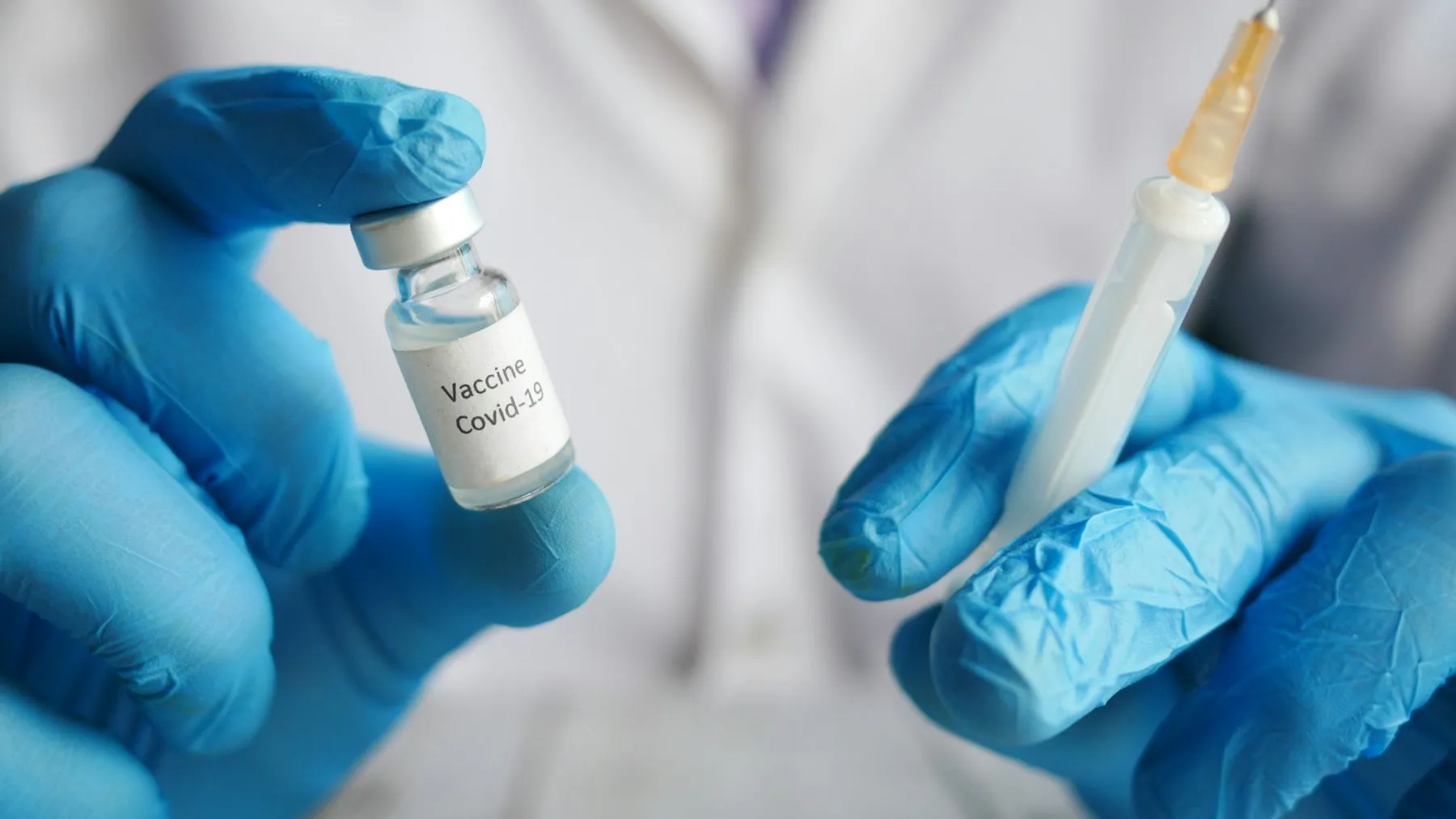
For the people who live with recurrent respiratory papillomatosis, the calendar has long been organized around operating rooms. Warts keep growing back in the airway, and the fix has been to keep cutting them out — sometimes four, five, six times a year, each time with a scalpel near the vocal cords.
Let’s get the number on the table first: on October 30, 2026, Inovio Pharmaceuticals won FDA accelerated approval for Voceryq, and its stock jumped more than 200% in a single session — trading as high as $2.76 after closing the day before near $0.60 (StockTitan). Rival Precigen, which already sells a competing therapy, dropped about 27% (BigGo).
The market reaction is loud, but the quieter detail is the one that matters: Voceryq is the first plasmid DNA-based immunotherapy the FDA has ever approved (FDA). A class of medicine that has spent two decades as a research promise just cleared the regulator.
The thesis is simple: a company that was nearly out of cash just turned a 32-person trial into the first FDA nod for an entire drug platform.
🧠 Why This Matters
Recurrent respiratory papillomatosis, or RRP, is rare — roughly 14,000 Americans live with it, with about 1,800 new adult cases a year (Tech Times). It is caused by the same low-risk HPV strains, types 6 and 11, behind common warts. In the airway, those growths are anything but common: they crowd the larynx, and the standard treatment is repeated surgical removal.
Every one of those surgeries is a gamble with your voice.
“Every surgery carries the risk of laryngeal injury.” — Dr. Simon Best, Associate Professor of Otolaryngology at Johns Hopkins and a lead investigator on the trial (StockTitan)
That is the problem Voceryq is built to shrink. Instead of cutting the growths out again and again, it trains your own immune system to recognize and clear the HPV-infected cells — so the warts stop coming back and the scalpel stays in the drawer.
📊 Deep Dive
Here is how it actually works. Voceryq delivers two pieces of engineered DNA into muscle: one carries the blueprints for HPV-6 and HPV-11 proteins, and the other carries IL-12, an immune-boosting signal. The injection is followed immediately by electroporation — a quick electrical pulse from Inovio’s CELLECTRA 5PSP device that opens tiny pores in the cell membrane so the DNA can get inside. Four doses, spread across nine weeks (FDA).
The pivotal data came from RRP-001, an open-label study with no control arm. Of 32 adults enrolled, all 32 finished. The efficacy group was the 26 patients who had endured three or more surgeries in the prior year — a median of 4.5 surgeries each, some as many as eight.
The headline result: 27% of them (7 of 26) needed no surgery at all in the year after treatment (FDA). For a group averaging more than four operations a year, zero is a big word.
Voceryq is not alone in this tiny market. Precigen’s Papzimeos got there first. Here is how the two stack up:
- Voceryq (Inovio): plasmid DNA + electroporation; accelerated approval Oct 30, 2026; 27% complete response (7/26 patients) (FDA).
- Papzimeos (Precigen): adenoviral-vector immunotherapy; full approval Aug 2025; roughly 51% complete response (about 18 of 35 patients) (Drugs.com).
- The delivery gap: Voceryq needs a dedicated electroporation device at the point of care; Papzimeos is a more conventional injection.
- The approval gap: Papzimeos has confirmed clinical benefit; Voceryq is approved on an intermediate marker and still has to prove it.
Different trials, different patients, different timing — so a head-to-head read is unfair. But the gap in reported complete-response rates is real, and so is Papzimeos’s year-plus head start.
⚠️ The Catch
Accelerated is doing heavy lifting in that press release. The FDA cleared Voceryq on a reduction in surgeries — an intermediate endpoint — not on proven long-term benefit. Inovio now has to run a confirmatory trial, with a draft protocol due by the end of 2026 and FDA alignment expected by mid-2027 (StockTitan). If that study disappoints, approval can be pulled.
Then there’s the balance sheet. Inovio had about $36.7 million in cash plus roughly $18.3 million from a July raise — enough to fund operations only into late Q1 2027 (Tech Times). A one-day stock pop doesn’t put money in the bank. Launching a drug — hiring reps, placing CELLECTRA devices, training clinics — does the opposite.
And the trial was small and uncontrolled. Thirty-two people, no placebo group, a company that says such spontaneous remissions aren’t expected in untreated disease. Plausible, but it’s an argument, not a controlled comparison.
🎯 What Happens Next
Ordering and shipping are expected about 60 days out, which lands in late December or January, with full U.S. field deployment targeted for Q1 2027 (StockTitan). Inovio has a call scheduled for November 2 where pricing and launch math will get picked apart.
Watch three things. First, price — neither company has shown its number, and RRP patients and insurers will compare. Second, the confirmatory trial design, because that is what keeps the approval alive. Third, cash: expect Inovio to raise more, and expect that stock-price spike to be the reason it can.
🧩 Bigger Picture
Zoom out and this is bigger than one rare disease. The FDA just validated plasmid DNA plus electroporation as a real, approvable modality. That matters because the plumbing — the DNA design, the device, the manufacturing — is reusable. Inovio and others have spent years aiming the same approach at other HPV-driven conditions and beyond.
“The FDA is proud to help bring that possibility within reach.” — Karim Mikhail, Director of the FDA’s Center for Biologics Evaluation and Research (FDA)
For a company that has spent its entire existence as a promising platform without a product, the ledger just flipped. Inovio has sold investors on potential for a long time. On October 30, it finally had something on a pharmacy shelf to point to.
A DNA shot that teaches your body to stop the surgeries — approved on a 27% result, funded by a 200% spike, and now racing a confirmatory trial to prove it earns the hype.
Sources
- FDA — FDA Approves First Plasmid DNA-based Immunotherapy for Adults with Recurrent Respiratory Papillomatosis
- StockTitan — INOVIO Announces FDA Accelerated Approval of VOCERYQ
- Tech Times — FDA Clears Voceryq, First Plasmid DNA Immunotherapy for Recurrent Respiratory Papillomatosis
- HCPLive — Voceryq Gains FDA Accelerated Approval for Recurrent Respiratory Papillomatosis
- Drugs.com — FDA Approves Papzimeos for Adults With Recurrent Respiratory Papillomatosis
- BigGo Finance — FDA Grants Accelerated Approval to Inovio’s DNA Immunotherapy Voceryq; Precigen Shares Plunge 27%
❓ Quick answers
What did the FDA approve for Inovio on October 30, 2026?
The FDA granted accelerated approval to Voceryq (formerly INO-3107), the first plasmid DNA-based immunotherapy for adults with recurrent respiratory papillomatosis, per the FDA's Oct 30, 2026 announcement.
How well did Voceryq work in its trial?
In the open-label RRP-001 study, 27% of the efficacy population (7 of 26 patients who had three or more prior surgeries) needed no surgery through 12 months of follow-up, according to the FDA.
How does Voceryq compare to Precigen's Papzimeos?
Papzimeos won full FDA approval in August 2025 with roughly a 51% complete-response rate (about 18 of 35 patients), while Voceryq received accelerated approval with a 27% rate and still must run a confirmatory trial.