🔥 Quantum Systems Flew 19,000 Missions Over Ukraine — Then Raised $1.2 Billion at an $8 Billion Valuation
Munich drone maker Quantum Systems closed a $1.2B Series D at an ~$8B valuation, doubling in eight months — with Blackstone, Airbus and Advent leading and 19,000+ Ukraine flights on the resume.
A drone startup from Munich just raised more money in one round than most European defense companies are worth in total.
Let’s get the number on the table first: $1.2 billion. That’s the Series D that Quantum Systems closed on July 2, and it values the ten-year-old company at roughly $8 billion post-money — more than double the ~$3.5 billion it commanded when it last raised, back in November 2025 (Ventureburn).
Eight months. Two-plus times the price. And the people writing the checks aren’t the usual growth-stage tourists — they’re Blackstone, Airbus, and Advent, the kind of names that show up when an industry decides something is real.
The thesis: Europe has decided its own drones are a strategic asset, and it’s paying startup-round prices for grown-up defense capacity.
🧠 Why This Matters
For most of the last decade, “European defense startup” was close to an oxymoron. The continent bought its serious hardware from American primes and its cheap drones from wherever was cheapest. Quantum Systems is the counter-argument, and now it has $1.2 billion in the bank to press it.
What makes this round land differently from the average AI mega-raise is the receipt attached to it. Quantum’s aircraft logged more than 19,000 flights over Ukraine in 2025 (Drone Intelligence). This isn’t a demo reel. It’s a product that has been shot at.
“The company is profitable, and the cash will fuel expansion — it now has over $1.2 billion on hand.” — Florian Seibel, co-founder and co-CEO, Quantum Systems (Ventureburn)
Read that twice: a defense-tech company that is already profitable and just raised twelve figures anyway. That’s not a company burning cash to buy relevance. That’s a company buying factory floor.
📊 Deep Dive
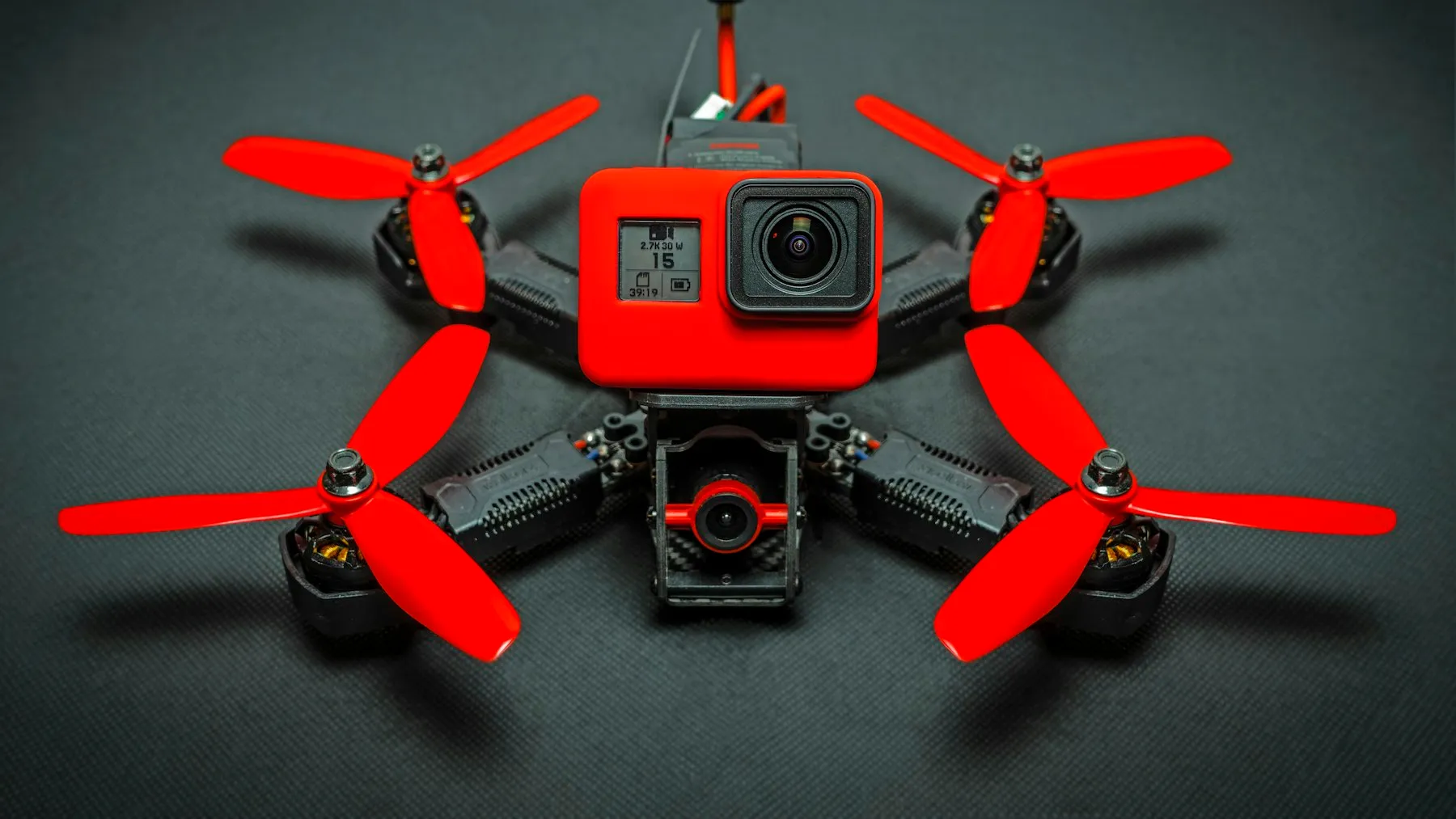
Quantum Systems was founded in Munich in 2015 and builds autonomous fixed-wing VTOL drones — aircraft that take off vertically like a quadcopter, then fly efficiently like a plane. The lineup does the actual work of modern reconnaissance:
- Vector — the tactical ISR workhorse, added to the U.S. Department of Defense’s Blue UAS Cleared List in August 2025, which is the gate you have to clear to sell to the American military.
- Reliant — long-range, long-endurance surveillance for beyond-line-of-sight missions.
- Trinity — the fixed-wing VTOL survey-and-mapping platform for commercial and civil work.
- Sparta — a “mothership” drone still in development, aimed squarely at Ukraine.
The valuation math is the part investors are staring at:
- Valuation, Nov 2025: ~$3.5 billion
- Valuation, Jul 2026: ~$8 billion
- This round: $1.2 billion (Series D)
- Cash on hand: over $1.2 billion
- Combat track record: 19,000+ Ukraine flights in 2025
- Customers: NATO troops plus buyers in the U.S., Ukraine, and Australia (Drone Intelligence)
The other tell is who co-led alongside Blackstone and Advent. Airbus put money in — a prime that could just build drones itself, choosing instead to take a stake. Fidelity, Wellington, Balderton, HV Capital, and A.P. Moller Holding filled out the book (Ventureburn). That’s a strange coalition — a private-equity giant, an aerospace prime, and blue-chip public-market funds — and they don’t usually agree on a price unless the demand behind it is obvious.
⚠️ The Catch
A valuation that doubles in eight months is thrilling on the way up and unforgiving on the way down. Quantum’s numbers are pinned to a single fact about the world: Europe is spending on defense because of an active war on its border. Much of the flight data, and the Sparta program itself, traces back to Ukraine. If that spending cycle cools, an $8 billion price built during a rearmament sprint gets tested fast.
There’s also the question of the moat. The hardware is proven, but the company’s stated priority for the cash is MOSAIC, its software platform meant to stitch drones, sensors, counter-drone systems, and drone ports into one battlefield network. Software integration at that scale is where defense programs historically go to miss deadlines. And Quantum isn’t alone in the field — America’s Anduril and a wave of newly funded European rivals are chasing the same NATO budgets. Being profitable today doesn’t guarantee you’re the platform everyone standardizes on tomorrow.
🎯 What Happens Next
The near-term plan is unglamorous and expensive: build more. Co-CEO Sven Kruck says the money goes to capacity and reach.
“[We will] expand production capacity and boost global sales, as well as continue our work on the next generation of autonomous, AI-driven systems.” — Sven Kruck, co-CEO, Quantum Systems (Ventureburn)
Watch three things. First, whether MOSAIC ships as a real product or stays a pitch-deck diagram. Second, how fast production actually scales — factory throughput, not press releases, is the metric. Third, whether that pile of cash and an $8 billion tag start looking like IPO staging. A profitable defense company with over a billion in the bank is exactly the profile bankers circle.
🧩 Bigger Picture
This round is a data point in a much larger shift: defense tech went from venture capital’s untouchable corner to one of its hottest, with robotics and defense funding hitting record numbers across 2026 (Crunchbase). Europe in particular is trying to build hardware it doesn’t have to import, and Quantum Systems is now the flagship of that bet — the biggest, best-funded, most battle-tested drone name the continent has produced.
Whether that ends in a sovereign European defense champion or an $8 billion valuation that peaked with the news cycle, the market has already voted with $1.2 billion. The aircraft have been flying over a real war for a year. Now the balance sheet has to survive peacetime.
Munich built a drone company that turned a profit shooting reconnaissance over Ukraine — and just got handed a billion-dollar bet that the war economy isn’t going anywhere.
Sources