
🔥 A $442,000 Hypersonic Missile Just Made Castelion a $13 Billion Company
Castelion — a four-year-old startup founded by SpaceX alumni — just raised $1B at a $13B valuation to mass-produce Blackbeard, a Mach-5 missile the Navy is buying for about $442,000 apiece.
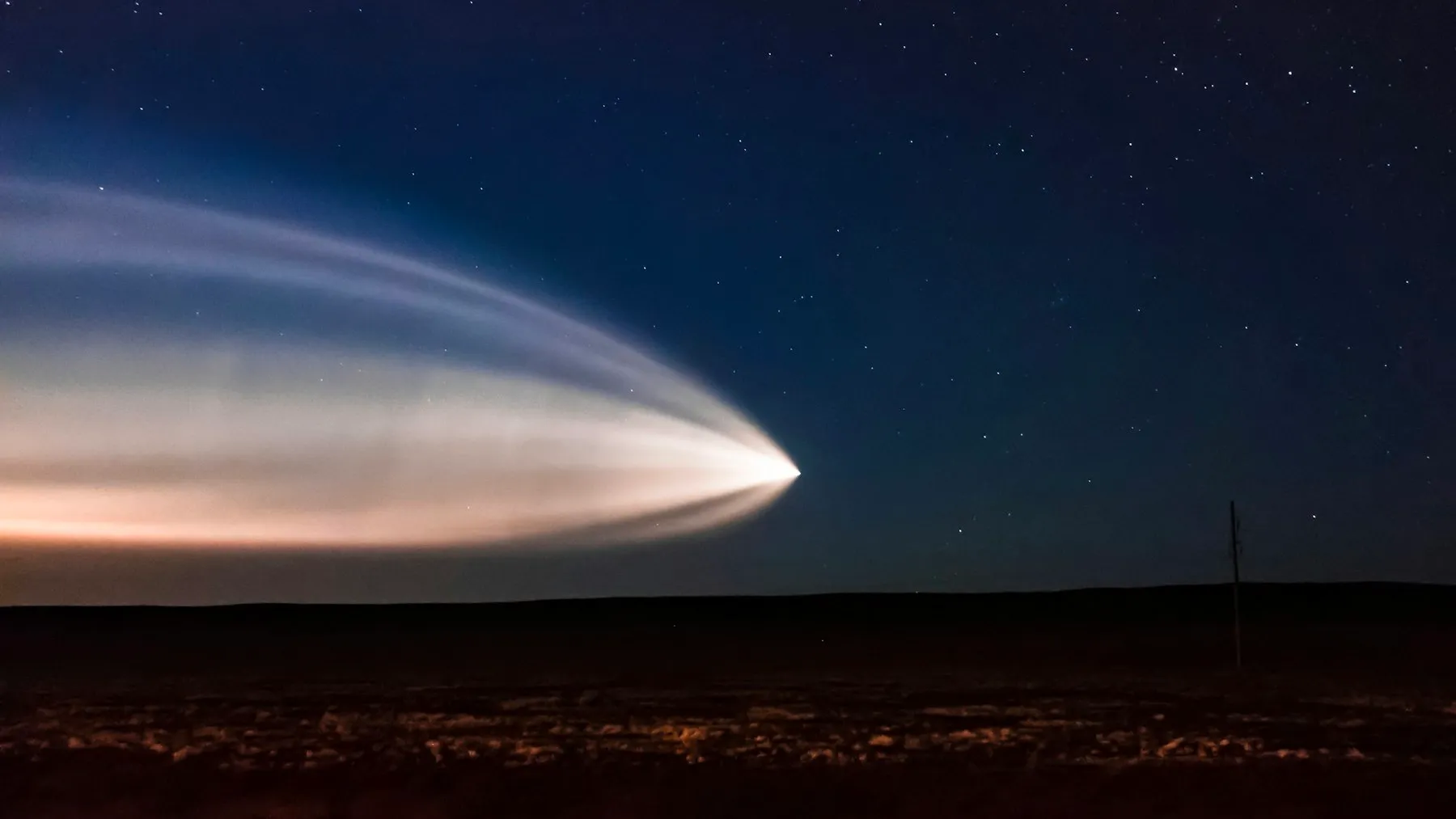
A hypersonic missile is supposed to be the expensive part of any war plan — a multi-million-dollar round you fire once and mourn. A four-year-old startup in Torrance, California just told investors it can build one for about the price of a loaded pickup truck, and those investors handed it a $13 billion valuation to prove it.
On August 19, Castelion closed a $1 billion Series C — $800 million in equity plus a $250 million revolving credit line — co-led by JPMorganChase’s Strategic Investment Group, Andreessen Horowitz, and the Carlyle Group. That’s the number to keep in your head: $13 billion, for a company founded in November 2022 that has yet to field a single missile in combat (Axios).
The pitch is almost aggressively simple. Everyone else builds exquisite hypersonic weapons that cost a fortune and ship in trickles. Castelion wants to build a good-enough one and stamp out thousands. The thesis: in a real fight, quantity is its own kind of quality.
🧠 Why This Matters
The U.S. has spent the better part of a decade and billions of dollars chasing hypersonic weapons that still aren’t in wide service. The flagship Army program, the Long-Range Hypersonic Weapon (Dark Eagle), is fast and long-ranged — and so complex and costly that fielding has crawled. Castelion’s bet is that you win a shooting war with magazines, not marvels.
So it built Blackbeard, a missile explicitly designed to deliver about 80% of the capability of the Army’s Precision Strike Missile Increment 4 — roughly 500 miles of range, a peak speed north of Mach 5 — at a fraction of the price. Not the best missile. The most missiles.
“Deterrence depends on unapologetic American strength — highly capable weapon systems that adversaries fear, produced in quantities they can’t imagine.” — Bryon Hargis, Co-Founder & CEO, Castelion
📊 Deep Dive
Castelion was started by three SpaceX alumni — Hargis (CEO), Sean Pitt (COO), and Andrew Kreitz (CFO) — and it runs the SpaceX playbook: vertically integrate, build your own factory, test hardware to failure, iterate fast. It went from a clean sheet of paper to a program of record in under four years, with fielding targeted for 2027 (PR Newswire).
The money lands on top of real contracts, not just slides. Castelion says it has booked more than $500 million in U.S. military contracts over the past 18 months, including a $23.4 million Navy delivery order for 50 Blackbeard missiles and a framework agreement with the Department of War. Navy budget documents go further, laying out a phased buy of 3,510 missiles through 2031, starting with 353 rounds for $156 million in fiscal 2027 (Defense Express).
Do that division and the whole story snaps into focus:
- Blackbeard: ~$442,000 per missile (353 rounds for $156M in the FY2027 buy)
- PrSM Increment 1: ~$1.6 million per missile
- PrSM Increment 2: ~$5.35 million per missile (TWZ)
- Castelion funding arc: $350M Series B in 2025 → $1B Series C at $13B in 2026
A hypersonic-class weapon for under half a million dollars is roughly an order of magnitude below the missiles it’s meant to sit alongside. The warhead is small — 43 kilograms, about half the punch of a GMLRS rocket — and Castelion is trading raw destructive power for volume, price, and the option to launch from HIMARS trucks, F/A-18 Super Hornets, and F-35C carrier jets.
⚠️ The Catch
A $13 billion valuation on a company whose flagship weapon hasn’t been fielded is a bet on execution, and mass-producing a Mach-5 missile is not the same as mass-producing a car. Cost targets on defense programs have a long history of drifting upward once real production, testing, and integration bills arrive; the $442,000 figure is an early-batch number, not a mature one.
There’s also the small matter of what a hypersonic weapon actually is. Defense analysts have flagged that Blackbeard’s modest 43-kilogram warhead and quasi-ballistic profile raise real questions about how much damage each round does and whether “hypersonic” is doing marketing work here. And the customer is the U.S. government — budgets shift, program-of-record status can evaporate, and a single Navy delivery order for 50 missiles is a long way from 3,510.
🎯 What Happens Next
Watch three things. First, 2027 — the fielding target. If Blackbeard hits carrier decks and HIMARS launchers on schedule, the “SpaceX for missiles” narrative gets very hard to argue with. Second, the factory: Castelion is standing up a 1,000-acre “Project Ranger” campus in Sandoval County, New Mexico, and its ability to actually stamp out hundreds of rounds a year is the entire thesis. Third, the price line in each successive Navy budget. If per-unit cost holds near $442,000 as volumes climb, Castelion looks cheap at $13 billion. If it creeps toward legacy numbers, the whole premise wobbles.
🧩 Bigger Picture
Castelion is the sharpest example yet of venture capital pouring into hard, physical, regulated things — the same week saw defense and manufacturing bets like Hadrian and Castelion soak up most of the market’s biggest checks. After a decade of software eating the world, the money is chasing companies that pour concrete and machine metal.
It also reflects a broader shift in how militaries think about deterrence. The U.S., China, and Russia are all working on hypersonic weapons, and the emerging conventional wisdom — echoed by defense reporters covering the raise — is that “speed is the new mass”: cheap, fast, plentiful weapons may matter more in a protracted fight than a handful of exquisite ones. Castelion is a pure-play wager that the side with the deepest magazine, not the fanciest missile, sets the terms.
For now, three ex-SpaceX engineers have convinced Wall Street and Silicon Valley that the future of firepower looks less like a hand-built masterpiece and more like an assembly line. The rockets just happen to fly at five times the speed of sound.
Sources
- Castelion Raises $1 Billion Series C to Scale Production of Low-Cost Hypersonic Weapons — PR Newswire
- Startup missile maker Castelion valued at $13 billion — Axios
- Hypersonic missile startup Castelion raises $1 billion — SpaceNews
- Blackbeard ‘Cheap’ Hypersonic Strike Missile Being Developed For U.S. Army — TWZ
- Blackbeard Gets Multi-Year Procurement Plan as U.S. Navy’s Primary System — Defense Express
- Castelion raises $350M Series B to scale hypersonic missile business — TechCrunch
- Castelion lands funding to mass-produce hypersonic missiles — TechFundingNews