
🔥 Two Former Teenage Drone Racers Just Raised $250 Million to Build a Million Drones a Year
Neros just raised $250M at a $2.5B valuation—roughly triple its worth nine months ago—to scale toward a million American-made drones a year by 2028.
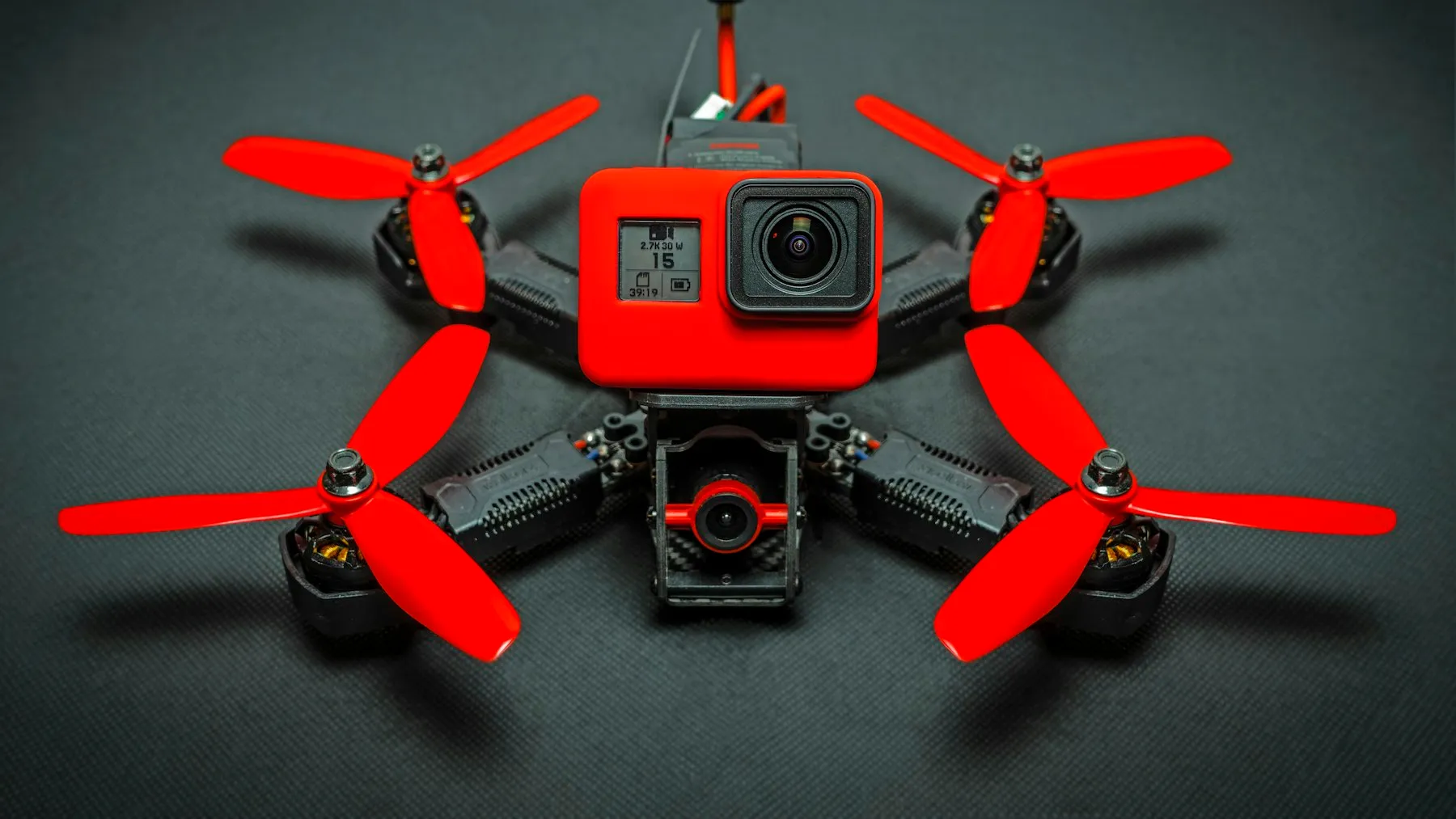
Two guys who were flying racing quadcopters through hoops as teenagers now run a company the Pentagon is betting on to fix America’s drone problem. And investors just handed them a very large check to do it.
Let’s get the number on the table first: $250 million. That’s the Series C that Torrance, California startup Neros Technologies just closed, led by Sequoia Capital and the American Strategic Technology Fund, at a $2.5 billion post-money valuation (PRNewswire).
That valuation roughly tripled from about $794 million at its Series B just nine months earlier (Pulse 2.0). The company was founded in 2023. It is, in other words, moving at roughly the speed of the drones it builds.
The thesis is simple: small, cheap, mass-produced drones now decide battles, America can’t make enough of them, and Neros wants to be the factory that changes that.
🧠 Why This Matters
For most of the last decade, if you wanted a small camera drone, you bought Chinese. That’s the market Neros is aiming at from the defense side. Its founders, Soren Monroe-Anderson and Olaf Hichwa — former competitive drone racers — started the company on a plain premise: build a capable first-person-view (FPV) drone entirely without Chinese components, and build a lot of them.
The war in Ukraine turned that pitch into a live demonstration. Cheap FPV drones, some costing a few hundred dollars, have been used to hit tanks and vehicles worth millions. Neros has already shipped tens of thousands of drones to Ukraine, with deliveries running at a thousand-plus per month (TechRadar).
“This newest round of funding accelerates Neros into a multi-capability drone manufacturer… gets our systems into war fighter hands faster, and at the scale needed for decisive outcomes on the battlefield.” — Soren Monroe-Anderson, CEO, Neros (PRNewswire)
📊 Deep Dive
The flagship product is the Archer, an 8-inch quadcopter that carries a 4.5-pound payload beyond 12 miles and is built with no Chinese parts (TechRadar). The new money extends the lineup into autonomy and defense: Archer AI, with terminal guidance and GPS-denied position hold, and Bandit, an interceptor built to knock down other drones (PRNewswire).
Here’s how the pieces line up:
- The raise: $250M Series C at a $2.5B valuation, roughly 3x the $794M mark from November.
- The backers: Sequoia Capital and the American Strategic Technology Fund lead, joined by Thiel Capital, Valor Equity Partners, Spark Capital, Allen & Company, and Figma CEO Dylan Field.
- The factory: a 250,000-square-foot Los Angeles-area plant producing 1,000+ drones a week today.
- The target: 1 million drones a year by 2028.
- The anchor customer: a U.S. Army contract worth up to $500 million, an indefinite-delivery deal running through June 2031.
- The price point: the military wants to pay roughly $5,000 per unit — and most American-made FPVs still cost multiples of that.
Neros also has contracts with the Marine Corps and every SOCOM component, plus partnerships with allied countries and a UK subsidiary for European work (PRNewswire).
⚠️ The Catch
A million drones a year is a big jump from a thousand a week. Run the math: 1,000 per week is roughly 52,000 a year. Getting to a million means scaling output close to twentyfold in about two years — new lines, new suppliers, and a lot more people, all without Chinese components in a supply chain that mostly runs through China.
Then there’s the price gap. If Uncle Sam wants to pay $5,000 a drone and today’s American-made units cost several times that, Neros has to drive its own costs down hard while scaling up — the exact moment costs usually go the other way.
Neros is “the closest thing the US has to an answer to Chinese dominance in the industry.” — TechRadar
And demand can be lumpy. Defense budgets shift, wars end, and interceptor programs live or die on field performance. Neros says both Archer AI and Bandit are due to reach combat theaters by the end of 2026 — a deadline that will tell you a lot about whether the production story holds.
🎯 What Happens Next
Watch three things. First, that year-end deployment: real units in real theaters is the difference between a pitch and a track record. Second, the cost curve — whether Neros can approach the $5,000 target as volume climbs. Third, follow-on orders. The $500M Army deal is a ceiling, not a guarantee; how much actually gets ordered against it is the number that matters.
With Sequoia and Thiel Capital on the cap table and a valuation that tripled in under a year, the expectations are now priced for the factory to deliver.
🧩 Bigger Picture
Cheap drones have quietly rewritten the economics of modern conflict: a few-hundred-dollar quadcopter can threaten a multimillion-dollar vehicle, which flips the usual cost math on its head. The commercial small-drone market has long been dominated by Chinese manufacturers, and the U.S. defense establishment has spent years trying to build a domestic, allied-sourced alternative that can actually be produced at scale.
Neros is a bet that the answer looks less like a boutique defense contractor and more like a consumer-electronics factory — high volume, low cost, iterated fast. That’s a different playbook than the F-35 world of exquisite, expensive hardware, and it’s the one drawing the biggest checks right now.
Two kids who raced drones for fun grew up, and now the Pentagon is counting on their assembly line. The check cleared. The hard part — building a million of anything a year — starts now.
Sources