
🔥 A Robot-Run Factory Startup Just Raised $1.37 Billion — and Its Valuation Quintupled Since January
Hadrian raised $1.37B at a $7.87B valuation to scale AI-run factories making parts for rockets, subs, and jets — its price tag quintupled since January.
Let’s get the number on the table first: $1.37 billion. That’s how much Hadrian, a six-year-old company that builds highly automated factories, just raised in a single Series D round (Hadrian press release).
The round values the company at $7.87 billion post-money. To feel how fast that is: Hadrian was worth roughly $1.6 billion in January (The Robot Report). In seven months, the price tag quintupled.
And here’s the part that should make you sit up: Hadrian doesn’t make an app, a chatbot, or a chip. It makes metal parts — the unglamorous precision components that go inside rockets, submarines, and fighter jets. The bet investors just made is that the hardest problem in American defense isn’t design. It’s building the things at all.
🧠 Why This Matters
For two decades, the smart money in tech ran away from factories. Manufacturing was low-margin, slow, and someone else’s problem — usually a supplier’s, often an overseas one. Hadrian’s whole thesis is that the pendulum swung too far, and the Pentagon is now short on the one thing money can’t instantly buy: physical production capacity.
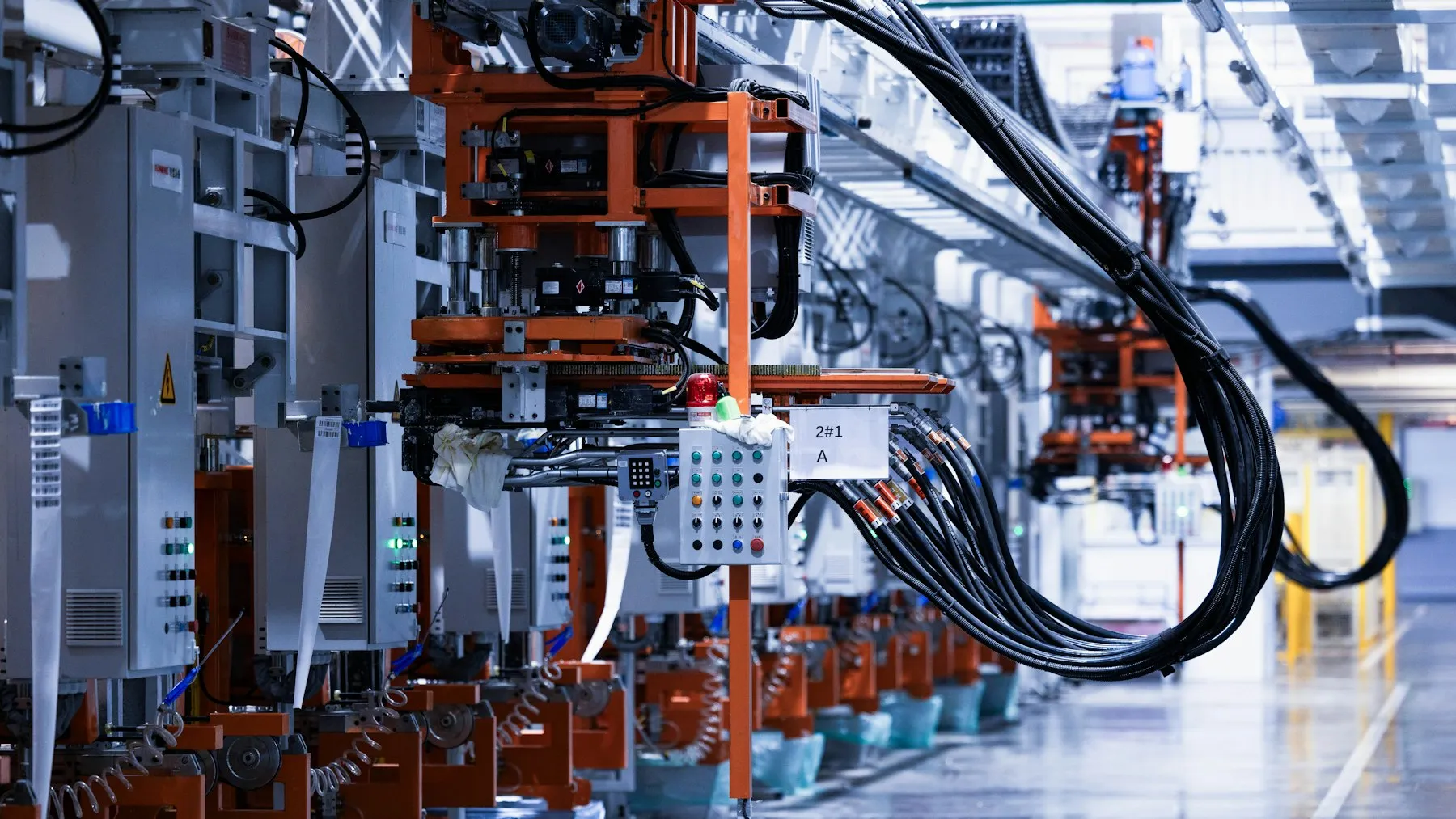
Hadrian’s answer is to treat a factory like a software problem. It combines process engineering, robotics, and an operating system it calls Opus to run machine shops that need a fraction of the skilled machinists a traditional shop requires (Tech Startups). The U.S. Army and Navy are already using Opus, and its named manufacturing customers include Lockheed Martin, RTX, and Anduril (TechFundingNews).
“Production is now the frontline of deterrence. America’s ability to lead will depend on whether we can build, train, and scale faster.”
— Chris Power, founder and CEO, Hadrian
📊 Deep Dive
Founded in 2020 by Australian entrepreneur Chris Power, Hadrian has now pulled in roughly $2 billion in total funding, most of it in the last twelve months (TechFundingNews). The Series D was anchored by JPMorganChase’s Strategic Investment Group and co-led by WCM Investment Management, Washington Harbour Partners, Valor Equity Partners, 137 Ventures, and Baillie Gifford, with Andreessen Horowitz, Founders Fund, Lux Capital, CapitalG, and Altimeter also writing checks (press release).
Here’s how the trajectory stacks up:
- Series C (July 2025): $260 million (Tech Startups)
- Valuation, January 2026: ~$1.6 billion (The Robot Report)
- Series D (August 2026): $1.37 billion at $7.87 billion (press release)
- Footprint: just under 3 million sq ft across four sites — two in Torrance, CA, plus Mesa, AZ and Muscle Shoals, AL (press release)
The Muscle Shoals plant was partly funded by the U.S. Navy, which tells you how badly the government wants this capacity to exist (TechFundingNews). With the fresh cash, Hadrian says it will scale its workforce, expand Opus, and push into munitions and autonomous systems — the two categories the Pentagon is most anxious to restock.
“It enables us to make massive investments to scale our workforce, our software platform Opus that powers our factories, and frankly, get ahead of the massive production challenges.”
— Chris Power, to CNBC (CNBC)
⚠️ The Catch
A $7.87 billion valuation is a promise, not a report card. Hadrian has disclosed no revenue figure and no named contract value alongside this round — the public numbers are all about money raised and square footage built, not money earned (press release). You’re being asked to trust the ramp.
And factories are brutal. Unlike software, you can’t push an update to fix a machine shop that’s running at half capacity. Standing up nearly 3 million square feet across four sites means hiring, tooling, and qualifying parts to aerospace tolerances — a process measured in quarters, not sprints. Defense demand can also cool as fast as it heats: today’s urgency around munitions could look very different after one budget cycle. Quintupling a valuation in seven months leaves little room for a stumble.
🎯 What Happens Next
Watch three things. First, revenue — at some point a company worth almost $8 billion has to show what it’s shipping, and the next customer announcements (Hadrian has hinted more defense primes are coming) will matter more than the raise. Second, the munitions line: if Hadrian can actually mass-produce ordnance components at automated speed, it moves from “interesting supplier” to strategic asset. Third, the exits — with JPMorgan, a16z, and Founders Fund all in, this is now on the short list of defense-tech names investors expect to reach the public markets.
🧩 Bigger Picture
Hadrian is the sharpest example yet of a broader shift: capital pouring into companies that make physical things for defense, from Anduril’s autonomous systems to the wave of drone and munitions startups. The pitch across all of them is the same — that the United States has plenty of engineers and not enough factory floor, and that automation is the way to close the gap without waiting a generation to retrain a workforce.
It’s a reversal of the offshoring logic that shaped manufacturing since the 1990s, and it’s being underwritten by some of the most disciplined money in the market. Whether that money is early or simply exuberant is the open question. Reshoring a supply chain is a decade-long project; venture funds tend to want their answer sooner.
For now, the market has decided that the company teaching robots to build rocket parts is worth nearly $8 billion. The machines still have to prove they can keep up with the check.
Sources
- Hadrian — Series D press release (PR Newswire)
- Tech Startups — Hadrian raises $1.37B at nearly $8B valuation
- TechFundingNews — Hadrian lands $1.4B at $7.9B valuation
- CNBC — Hadrian valued at nearly $8 billion as money pours into defense tech
- The Robot Report — Hadrian valuation reaches $1.6B (January 2026)
- Crunchbase — The Week’s 10 Biggest Funding Rounds (Aug 1–7, 2026)