🔥 AMD Bought Taalas to Etch AI Models Into Silicon. The First Chip Ran 48× a GPU.
AMD is buying Toronto startup Taalas, which etches AI model weights directly into silicon. Its first test chip ran Llama 3.1 8B at 16,960 tokens/sec — about 48x a GPU.
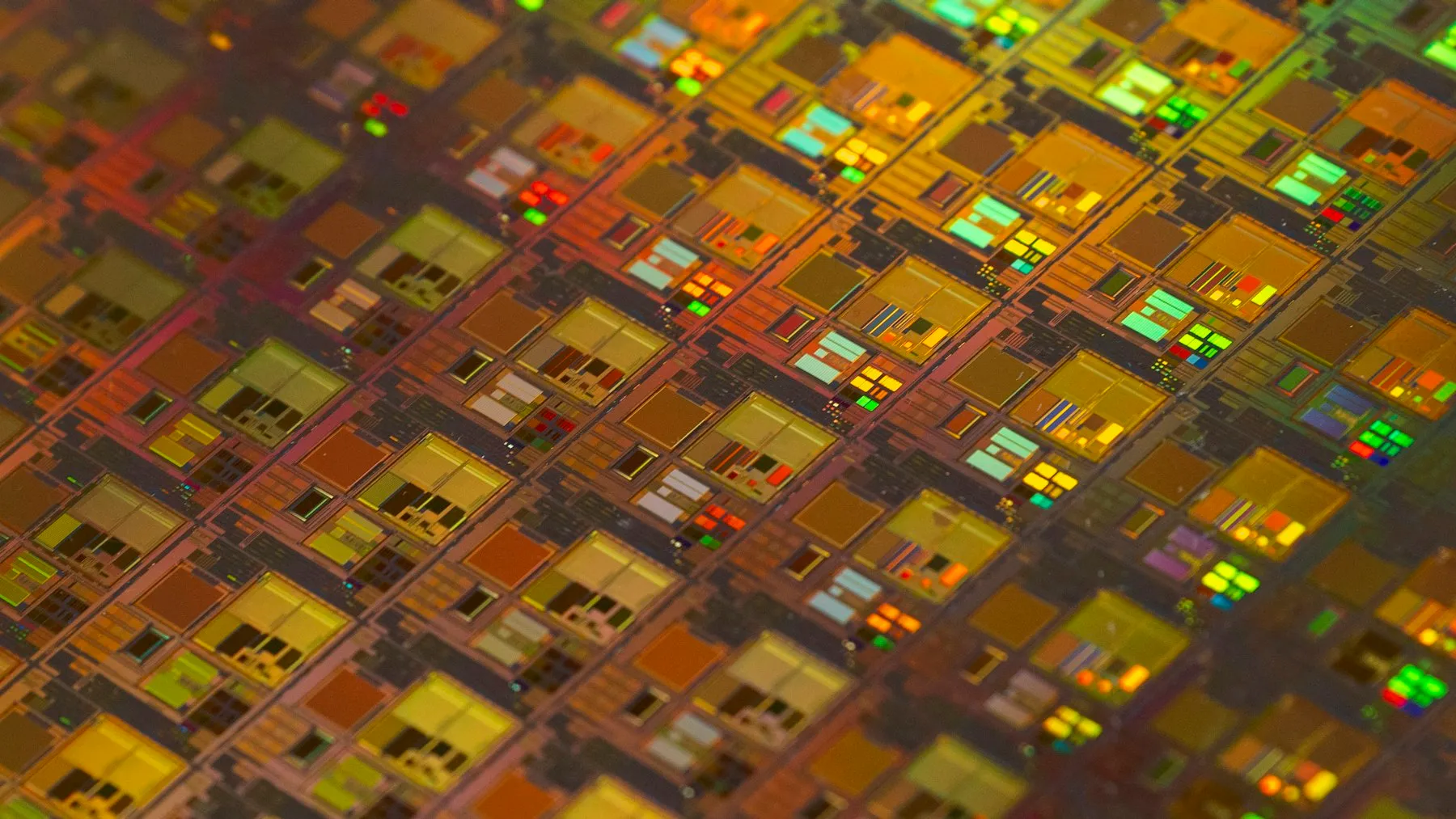
AMD just bought a startup whose whole pitch sounds like heresy: stop shuttling AI models in and out of memory, and instead etch them permanently into the chip itself. No takebacks. The model is the silicon.
Let’s get the number on the table first: 16,960 tokens a second. That’s how fast Taalas’s first test chip — a single piece of TSMC 6nm silicon — served Meta’s Llama 3.1 8B. The company clocked that at roughly 48× a Nvidia GPU and about 8.5× a Cerebras accelerator on the same job (The Register).
Taalas raised $219 million to build that (Forbes). Now AMD owns it. The terms weren’t disclosed, and the deal is expected to close in Q4 2026. Here’s the thesis: the cheapest way to run a fixed AI model fast is to stop treating it like software at all.
🧠 Why This Matters
Every GPU running an AI model does the same exhausting thing millions of times a second: fetch billions of weights out of high-bandwidth memory, do a little math, throw them away, fetch them again. That memory round-trip is the bottleneck. It’s why your chatbot feels laggy and why inference bills are brutal.
Taalas’s move is to skip the trip. It bakes the model’s weights straight into the transistors using an etched mask-ROM “recall fabric,” with conventional SRAM alongside for the fast-changing bits like KV caches and fine-tuning adapters (The Register). No HBM, no constant fetching. The result is a model-specific integrated circuit — a chip that does exactly one model, and does it absurdly fast.
Developers can explore “what becomes possible when large language model inference runs at sub-millisecond speed and near-zero cost.” — Ljubisa Bajic, Taalas co-founder (SDxCentral)
For AMD, buying this is a way to attack Nvidia where Nvidia is strongest: inference, the part of AI that actually runs in production and never stops running.
📊 Deep Dive
Taalas was founded in 2023 in Toronto by Ljubisa Bajic — who previously founded the AI chip company Tenstorrent — and Lejla Bajic, an engineering veteran of ATI and AMD (Forbes). So the operating chief already knows AMD’s silicon from the inside. The backers include Fidelity, Quiet Capital, and veteran semiconductor investor Pierre Lamond.
How the Taalas bet stacks up against the way most inference runs today:
- Where the weights live: etched into silicon (mask-ROM) vs. loaded from HBM memory on a GPU.
- Test-chip throughput: 16,960 tokens/sec on Llama 3.1 8B — about 48× a Nvidia GPU on the same task.
- Process: TSMC 6nm for the first chip; the second-generation part targets 20-billion-parameter models and is due in 2026 (The Register).
- Scaling: around 50 chips wired together to handle a trillion-parameter model.
- Flexibility: one chip = one model, vs. a GPU that runs anything you load onto it.
The efficiency argument is the whole game. A GPU is a general-purpose racehorse asked to sprint the same lap forever. Taalas builds a chip that only knows that one lap — and runs it at a fraction of the power draw, because it isn’t hauling weights across a bus a few billion times a second.
⚠️ The Catch
Here’s the obvious problem, and Taalas doesn’t hide from it: once the chip ships, you’re stuck with that model. You etched Llama 3.1 into the transistors; the transistors don’t care that a better model came out three weeks later.
In a field where the state-of-the-art model changes roughly every quarter, hardwiring one into silicon looks like tattooing today’s stock price on your arm. Taalas’s answer is that a refresh only requires swapping two metal layers rather than a full re-fabrication, so a new model can be turned around in roughly two months (The Register). Faster than building a chip from scratch — but still a chip cycle, in an industry that iterates in weekends.
And the flagship benchmark is an 8-billion-parameter model. Impressive, but small. The frontier models people actually pay for are one to two orders of magnitude larger, which is where the “50 chips per trillion parameters” math starts to matter for cost and footprint.
🎯 What Happens Next
The acquisition is slated to close in Q4 2026, pending regulatory approval. AMD folds Taalas’s team and its etched-silicon approach into a broader inference push. In AMD’s own framing:
“AMD is building a full-stack AI platform that gives customers the flexibility to deploy the right compute solutions for every AI workload.” — Vamsi Boppana, AMD SVP (Forbes)
Watch three things. Whether the second-gen chip actually lands at 20 billion parameters this year. Whether AMD can price etched inference low enough to make the “one chip, one model” tradeoff worth it for cloud customers. And whether anyone commits to hardwiring a model they can’t take back.
🧩 Bigger Picture
This isn’t a lone experiment. Nvidia signed a $20 billion licensing deal with inference specialist Groq in December 2025 (The Register), and every big chipmaker is now hunting for a way to serve tokens cheaper than a general-purpose GPU can. The industry spent years optimizing training. The money now is in running the models, billions of times a day, without setting cash on fire.
Taalas takes the most extreme position in that fight: don’t optimize the software running on the chip — make the model the chip. It’s a bet that some AI workloads are stable enough, and valuable enough, to deserve their own dedicated silicon. AMD just decided that bet is worth owning outright.
Etch the model into the rock and it can’t run away. The only question is whether the model stands still long enough to be worth carving.
Sources