🔥 AMD Just Crammed 31 Terabytes Into a Single Rack — and Aimed It Straight at Nvidia
AMD's new Helios rack packs 72 GPUs and 31TB of memory — 50% more than Nvidia's Vera Rubin — plus a 256-core 2nm CPU, with OpenAI, Meta and Oracle already on board.
Nvidia has spent three years as the only game in town for building giant AI models. On July 22, 2026, at its Advancing AI event, AMD walked on stage and put a number on the table that’s hard to wave away.
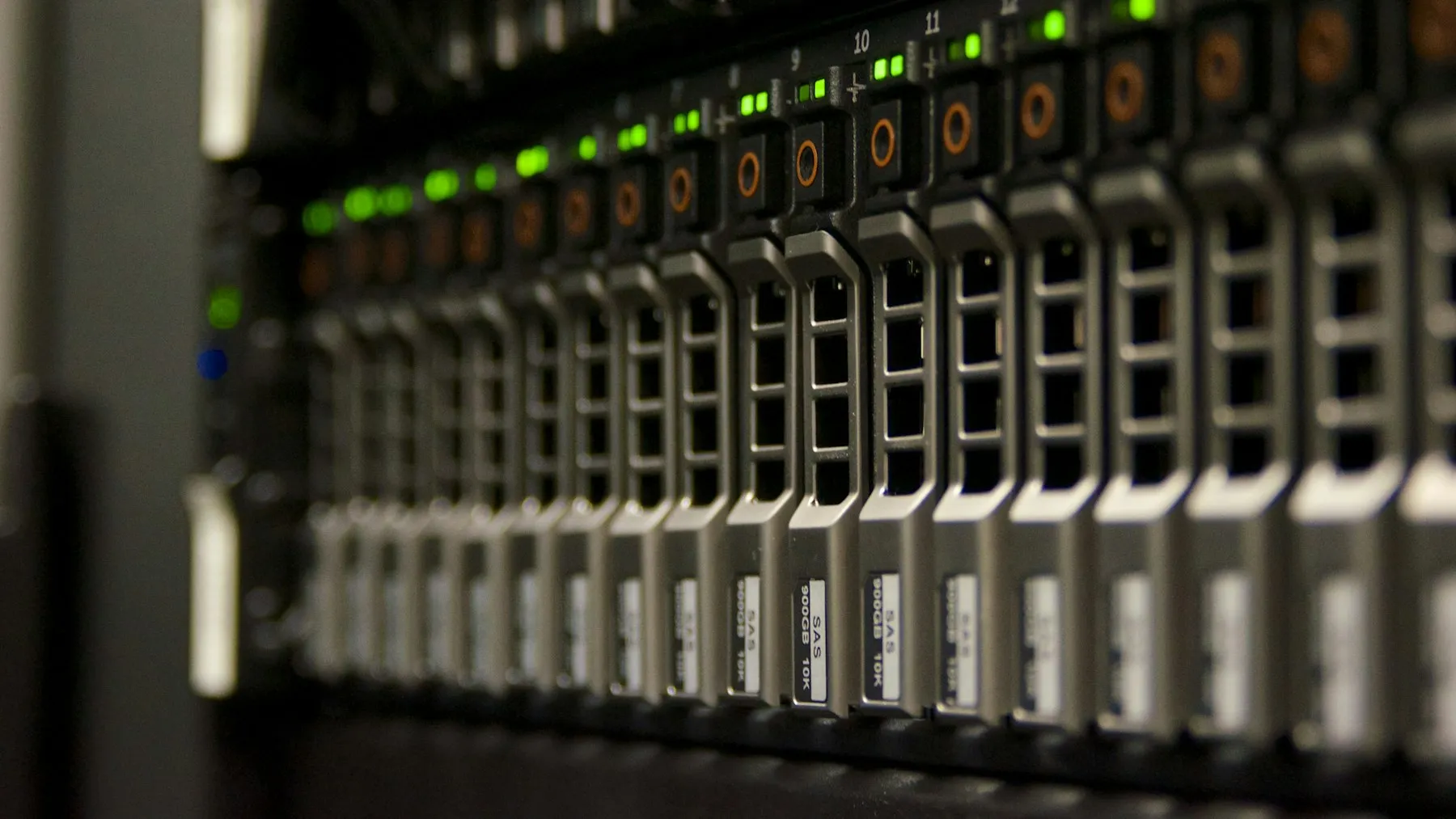
Thirty-one terabytes. That’s how much high-bandwidth memory AMD is packing into a single rack of its new “Helios” AI system — 72 next-gen Instinct MI455X GPUs wired together into one machine that behaves like one enormous accelerator (wccftech). For comparison, Nvidia’s competing Vera Rubin NVL72 rack tops out around 20.7 TB. In a world where the size of the model you can train is gated by how much memory you can keep in one place, that 50% gap is not a rounding error.
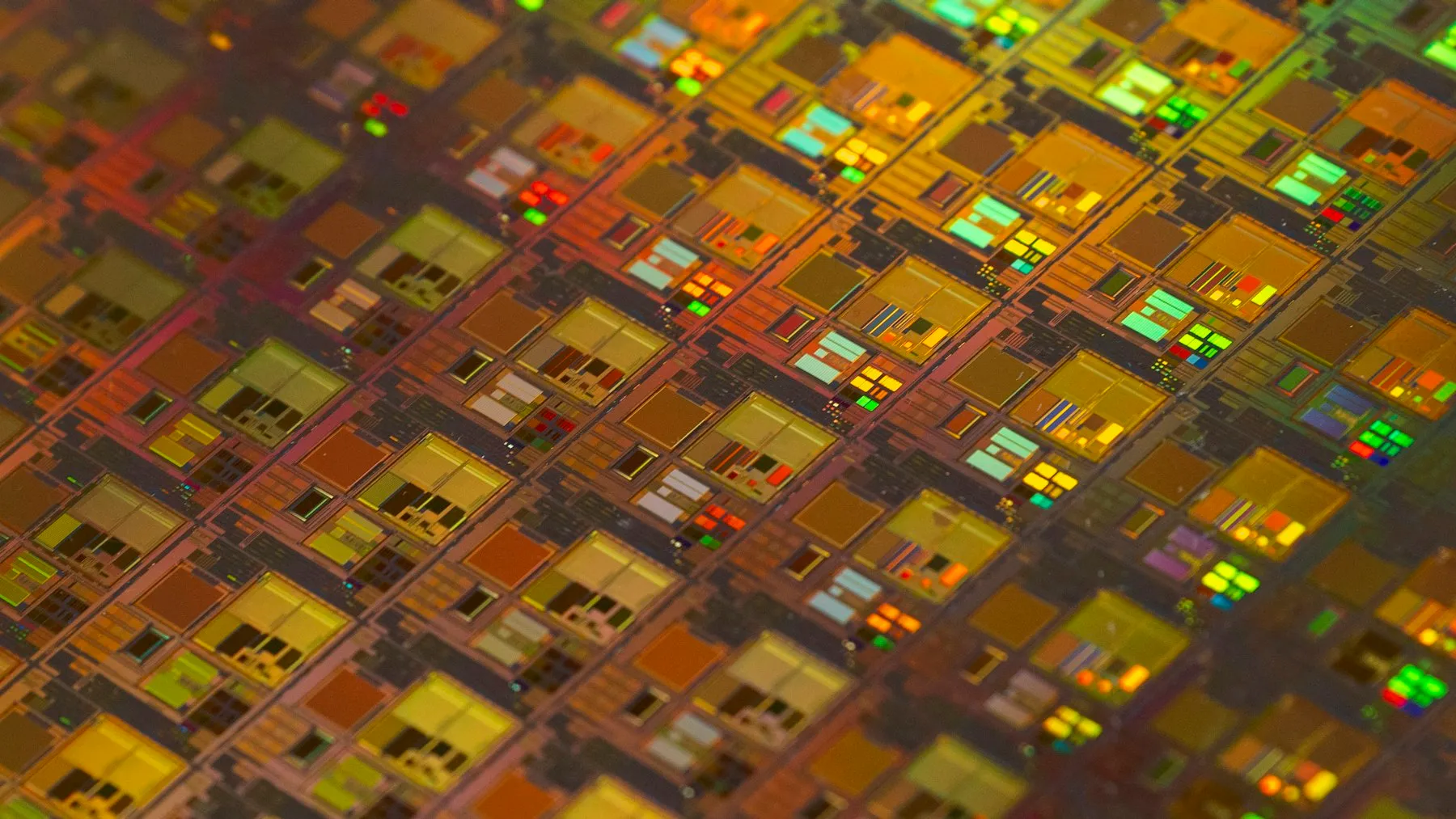
AMD paired it with a CPU that reads like a spec-sheet flex: 256 cores on TSMC’s 2-nanometer process, the first high-performance chip in the world to ship on that node. The thesis is simple: for the first time, the AI-hardware race has two runners.
🧠 Why This Matters
You’ve heard the story a hundred times: every AI lab on earth is starved for compute, and Nvidia sells the shovels. That scarcity is exactly why AMD’s pitch lands. If you’re OpenAI, Meta, or Microsoft, a credible second supplier isn’t a nice-to-have — it’s leverage on price, delivery timelines, and your own survival.
And these aren’t hypothetical customers. AMD named OpenAI, Meta, Microsoft, and Oracle as Helios buyers, with Oracle planning a public-cloud supercluster of 50,000 MI450-series GPUs (Tech Times). When the biggest names in AI are willing to bet production workloads on non-Nvidia silicon, the duopoly stops being a slide in a pitch deck and starts being real.
The financials back the momentum. AMD’s data-center revenue hit $5.8 billion in Q1 2026, up 57% year-over-year, and the company guided to roughly $11.2 billion in total revenue for Q2 (Data Center Dynamics). This is no longer a plucky underdog. It’s a $5-billion-a-quarter data-center business that just brought a rack-scale answer to Nvidia’s rack-scale question.
📊 Deep Dive
Let’s put the two heavyweights side by side. Here’s how AMD’s Helios rack stacks up against Nvidia’s Vera Rubin NVL72, plus what’s inside the boxes:
- Total HBM4 memory: Helios 31 TB vs. Vera Rubin 20.7 TB — AMD wins by ~50% (wccftech).
- Peak FP4 inference: Helios 2.9 exaFLOPS vs. Vera Rubin 3.6 exaFLOPS — Nvidia still wins on raw throughput.
- Per-GPU memory: each MI455X carries 432 GB of HBM4 at 19.6 TB/s — a stack that would have sounded like science fiction two years ago.
- Per-GPU compute: 40 PFLOPS FP4 / 20 PFLOPS FP8 on the CDNA 5 architecture.
- The brains: 6th-gen EPYC “Venice” — up to 256 Zen 6 cores, TSMC 2nm, 70% more compute than the prior “Turin” generation (Tom’s Hardware).
- Memory firehose: Venice moves 1.6 TB/s per socket across 16 channels — more than double Turin’s bandwidth.
The pattern is clear: AMD is trading a bit of peak compute for a lot of memory. And in the era of trillion-parameter models, memory capacity is often the wall you hit first.
“As AI and agentic workloads scale rapidly, customers need platforms that can move from innovation to production faster.”
— Dr. Lisa Su, Chair and CEO, AMD (Tom’s Hardware)
⚠️ The Catch
Before you short Nvidia, read the fine print. Three of them, actually.
First, availability. AMD’s entire 2026 HBM4 supply is already spoken for by hyperscalers. If you’re a normal enterprise buyer, you’re likely waiting until 2027, with MI455X mass production not ramping until Q2 of next year (Tech Times). Announcing a monster is not the same as shipping one at scale.
Second, software. Nvidia’s real moat was never just the chips — it’s CUDA, the software layer every AI researcher already knows. AMD’s ROCm stack has closed ground fast, hitting 90–95% of an Nvidia H100’s inference throughput, but it still runs a 20–30% deficit on training workloads (Tech Times). Hardware you can buy. A decade of developer habit you cannot.
Third, raw performance. That 3.6-vs-2.9 exaFLOPS gap means Nvidia still wins the pure horsepower contest. AMD’s bet is that memory and total cost of ownership matter more than a benchmark’s top line. That bet might be right — but it’s still a bet.
🎯 What Happens Next
The near-term calendar is tight. Lisa Su’s keynote headlined the event on July 23, EPYC Venice systems are slated for Q3 2026, and Helios racks are targeting a high-volume ramp in the second half of this year.
“We are highly confident of ramping Helios in high volume in the second half of the year.”
— Forrest Norrod, GM of Data Center Solutions, AMD (The Next Platform)
Watch two things. One: whether Oracle’s 50,000-GPU cluster actually goes live on schedule — that’s the proof point that turns spec sheets into revenue. Two: Intel, whose competing “Diamond Rapids” Xeon has slipped to mid-2027, leaving AMD a clear 12-month runway to eat server market share it already leads at 46%.
🧩 Bigger Picture
Zoom out and this is bigger than one company’s product day. AMD building the first high-performance chip on TSMC’s 2nm node means the entire industry — Apple, Qualcomm, Nvidia, Broadcom — now has real-world yield and thermal data to design against. AMD is effectively de-risking the bleeding edge for everyone.
It also marks a shift in how AI infrastructure gets sold. Nobody buys a single GPU anymore; they buy racks, then rows, then buildings. By showing up with a full 72-GPU, 31-terabyte rack instead of a lone accelerator, AMD is finally competing on Nvidia’s chosen battlefield — the whole data center, not the chip.
The AI compute monopoly didn’t end today. But for the first time, it has a credible second act. And competition, as anyone who’s ever paid a cloud bill knows, is the only thing that ever brings a price down.
Nvidia built the only door into the AI era. AMD just showed up with 31 terabytes and a crowbar.
Sources
- Tech Times — AMD Advancing AI 2026 Opens With Zen 6 Venice, Helios, and Open AI Rack Bet
- wccftech — AMD Unveils Helios With MI455X & 6th Gen EPYC, Challenging Nvidia
- Tom’s Hardware — AMD Begins Production Ramp of 256-Core EPYC Venice on TSMC 2nm
- The Next Platform — AMD Says Helios Racks and MI400 Series GPUs On Track for 2H 2026
- Data Center Dynamics — AMD Posts Q1 2026 Data Center Revenue of $5.8B