🔥 Google Sent an AI Chip to Space, and It Answered With a Haiku
Google put four TPUs in orbit on a SpaceX rideshare, and on Oct 30 one wrote a haiku — the first AI output ever generated on a chip in space.
On October 30, a computer chip in low Earth orbit was asked to write a poem about where it was. It did. Then it sent the poem home over a ground station in the Arctic Circle.
That chip is a Google Tensor Processing Unit — the same kind of silicon that trains and runs its AI models here on the ground — and the poem is the first AI output ever generated on a data-center-class accelerator in space (Google).
Let’s get the number on the table first: 8. That’s roughly how many times more power a solar panel can produce in the right orbit than the same panel bolted to a field in Texas, thanks to near-constant sunlight above the atmosphere (TechRepublic). That single multiplier is the entire reason Google is doing something this strange.
Because here’s the thesis: the hardest limit on AI isn’t chips anymore — it’s electricity, and space has an absurd amount of it.
🧠 Why This Matters
Every AI company on Earth is slamming into the same wall. Data centers are power-hungry, the grid is slow to expand, and nuclear deals and gas turbines can only be stood up so fast. Google itself just watched rivals commit hundreds of billions in capex chasing the same scarce electrons.
Project Suncatcher is Google’s bet that the cleanest way around a power bottleneck is to go where the power is. In orbit, a satellite can sit in near-permanent sunlight, skip the cooling-tower water bill, and soak up sunlight with none of the clouds, nights, or permitting fights that slow a ground build. The catch, historically, has been that nobody had flown a real AI accelerator up there to see if it survives.
Now someone has. And it wrote a haiku.
📊 Deep Dive
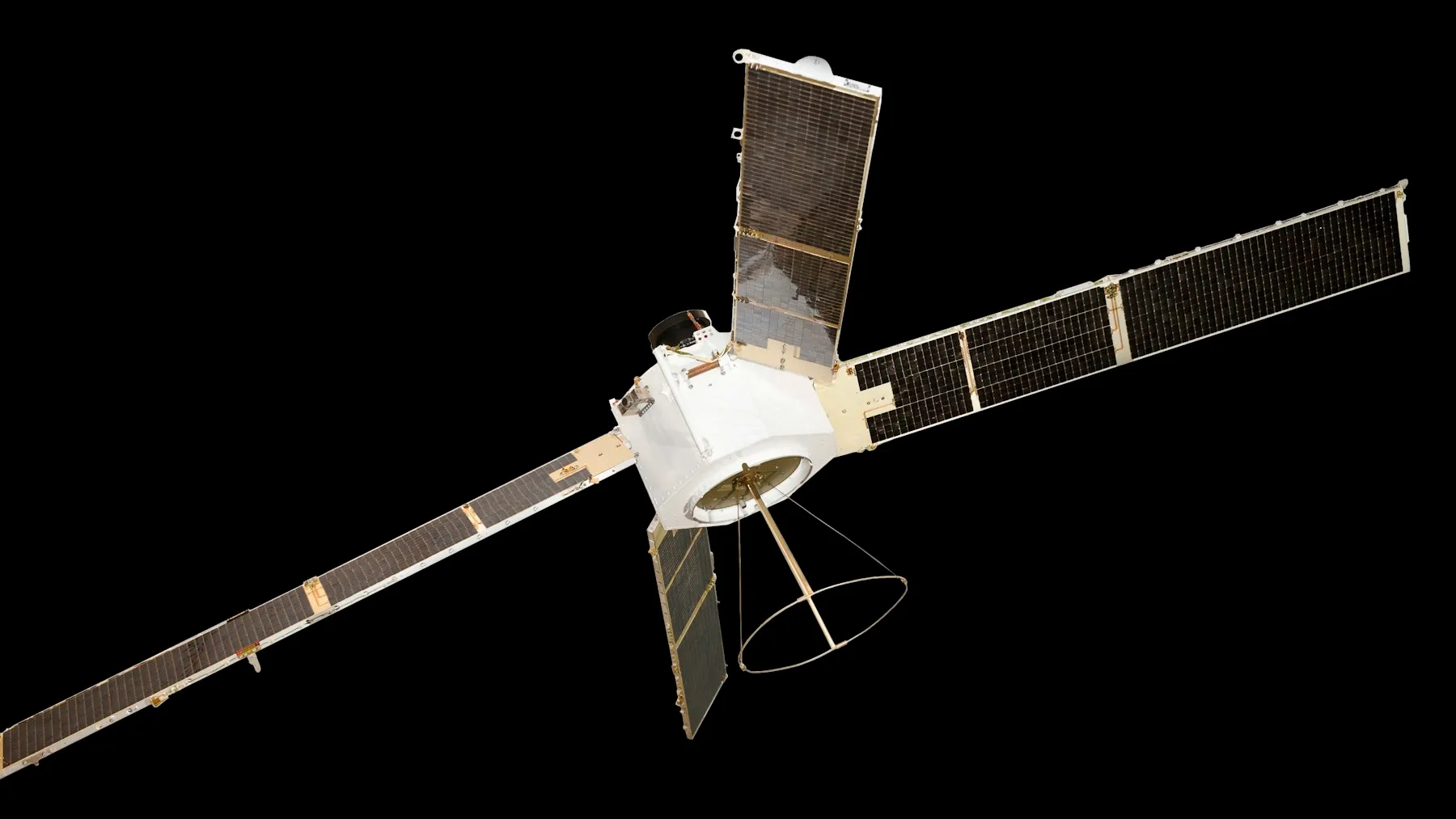
The prototype launched on October 1 aboard a SpaceX Transporter-18 rideshare, built in partnership with Earth-imaging company Planet (Google). It carries four TPUs and runs Google’s open Gemma model directly on board (Newsbytes).
For a few weeks it just phoned home telemetry while engineers checked that the hardware had survived the ride. Then, on October 30, they ran the real test — an actual AI prompt — and the satellite answered. According to reporting on the milestone, the team asked for a haiku about being in space, and the chip obliged, downlinking the result as it passed a ground station over Svalbard, Norway (Unite.AI):
Blue marble below Data streams in silent grace Starlight feeds my core
Travis Beals, the Google senior director running the program, framed it as a “Hello World” moment — the first time a data-center-class TPU has run a model and returned a response from orbit (Unite.AI).
How this compares to the usual way you’d get an AI answer:
- Your phone: prompt travels to a ground data center, runs on a TPU, comes back in milliseconds.
- Suncatcher’s prototype: prompt and answer ride a radio link to a satellite moving thousands of miles an hour, and the TPU runs in orbit on solar power.
- Power source on the ground: grid electricity, often gas or nuclear, plus water for cooling.
- Power source up there: sunlight, up to ~8x more productive, no cooling water, no night.
- Status on the ground: billions of chips, fully industrial.
- Status in orbit: exactly four TPUs, one poem, a peer-reviewed paper in the journal Joule (Google).
⚠️ The Catch
A haiku is not a data center. This is one small satellite with a handful of chips, and the genuinely hard problems are still ahead.
Heat is the first. On the ground you blow air or pump water across a hot chip; in a vacuum there’s no air, so every watt of waste heat has to be radiated away, and TPUs throw off a lot of it. Radiation is the second — Google says it bench-tested its Trillium-generation chips to survive more than a five-year dose before launch, but real orbit is the only honest exam (Unite.AI). And the launch itself is brutal: sustained forces up to ten times gravity on the way up, with individual components seeing far more.
Then there’s the economics. Rockets are cheaper than they used to be, but hauling mass to orbit — and replacing hardware you can’t exactly send a technician to fix — is not free. A poem proves the chips boot and compute. It proves nothing yet about whether a cluster of these can do useful work at a price that beats a boring building in Ohio.
🎯 What Happens Next
The near-term plan is concrete: two prototype satellites flying together by early 2027, again with Planet, this time testing whether satellites can talk to each other fast enough to act like one machine (Google).
That link is the whole ballgame. A real orbital data center wouldn’t be one satellite — it’d be dozens or hundreds flying in tight formation, passing data between them over high-bandwidth laser links at distances where a tiny pointing error means you miss entirely. Nail the lasers and you have a cluster. Miss and you have a very expensive constellation of pen pals.
Expect the 2027 twin flight to be the test that actually tells us whether “data center in space” is an industry or a thesis.
🧩 Bigger Picture
Strip away the poetry and this is a story about where AI’s constraints have migrated. For years the scarce thing was chips. Now the scarce thing is power and the land, water, and grid hookups that come with it — which is why you’re seeing AI money flow into nuclear reactors, gas turbines, and now, apparently, orbital solar.
Google isn’t alone in eyeing space for compute, and the idea has been floated for years. What changed on October 30 is that the argument stopped being a slide deck and started being a chip that works. The company got a working TPU to orbit, run a model, and come back with something coherent — on sunlight, above the weather.
Whether that scales into real infrastructure or stays a beautiful moonshot is a question for 2027 and the decade after it. But the opening move has been made, and it rhymes.
The first thing humanity’s AI did in orbit wasn’t crunch a spreadsheet or route an ad. It looked down at the planet, called it a blue marble, and said the starlight was feeding its core. For a Hello World, you could do a lot worse.
Sources
- Project Suncatcher: Google Research
- Google: Project Suncatcher prototype satellite is in orbit
- Unite.AI: Project Suncatcher’s Orbiting TPU Delivers Its First AI-Generated Haiku
- TechRepublic: Google Aims to Power AI Data Centers from Space
- Newsbytes: Google launches Project Suncatcher satellite with TPUs running Gemma AI
❓ Quick answers
What did Google's Project Suncatcher satellite just do?
On October 30, 2026, its onboard TPU generated the first AI response ever from orbit — a haiku about being in space, downlinked over Svalbard, Norway (Unite.AI).
When did the Suncatcher satellite launch and what is on it?
It launched October 1, 2026 on a SpaceX Transporter-18 rideshare, built with Planet, carrying four TPUs running Google's open Gemma model (Google).
Why is Google putting AI chips in space?
Power. A solar panel in the right orbit can produce up to about 8 times more energy than the same panel on the ground — Google's proposed workaround for AI's electricity bottleneck (TechRepublic).