🔥 Takeda Cracked Orexin. Its First-in-Class Narcolepsy Pill Could Do $2 Billion.
Takeda's Orzeyful is the first-in-class orexin agonist cleared to treat narcolepsy type 1 at its root cause — and Jefferies pegs peak sales near $2 billion.
For 25 years, drugmakers have known exactly what breaks in narcolepsy type 1. The brain stops making orexin, the chemical that keeps you awake and holds your muscles steady. Everyone knew the fix on paper: put the orexin signal back. Nobody could get a molecule to do it safely — until now.
Let’s get the number on the table first: $2 billion. That’s what Jefferies analyst Stephen Barker thinks Takeda’s new pill will pull in at peak, and on August 5 the FDA gave it the green light to try (BioPharma Dive).
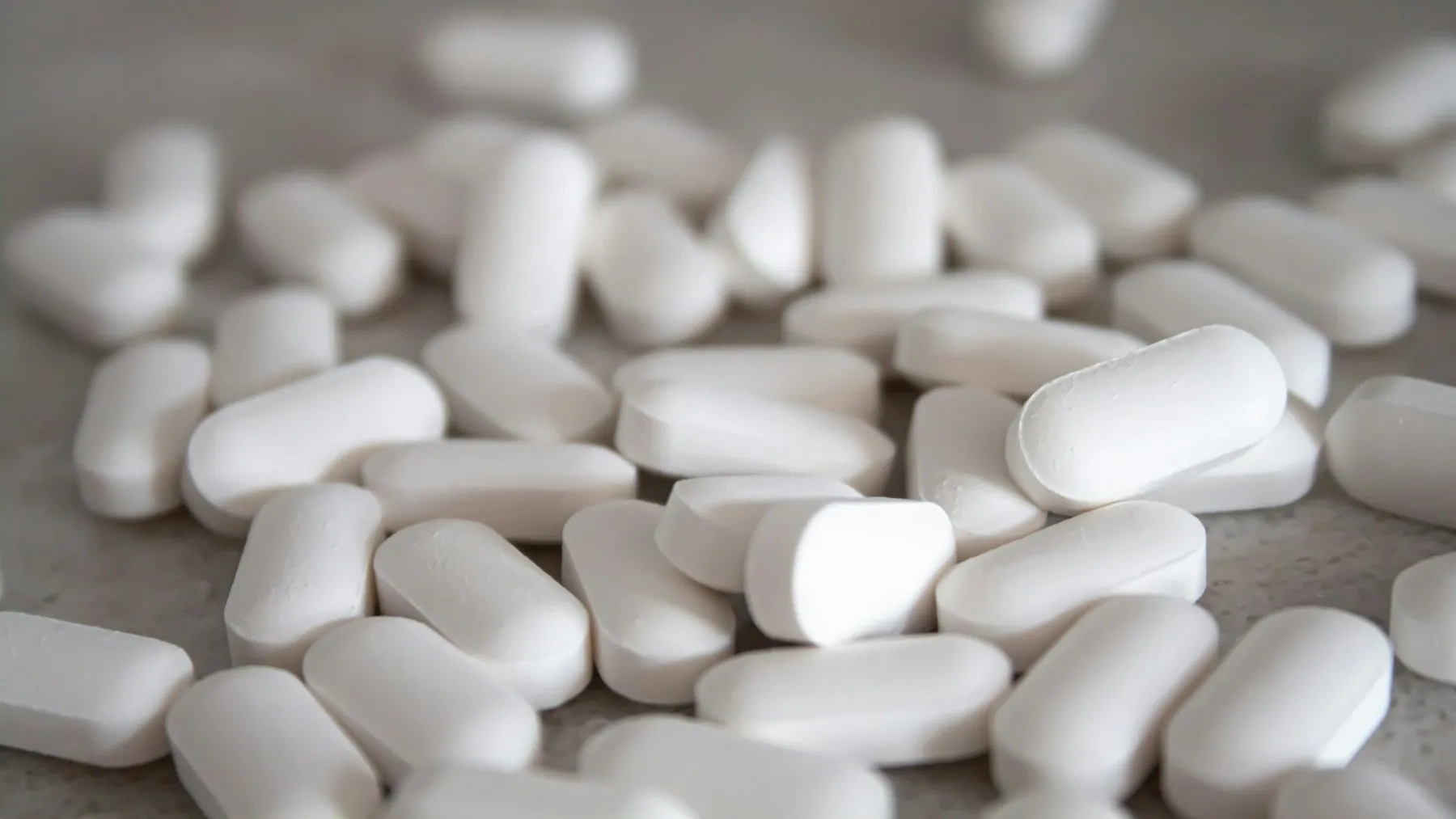
The drug is Orzeyful (oveporexton). It’s the first medicine ever cleared that goes after the cause of narcolepsy instead of papering over the symptoms. Every narcolepsy drug before it was a workaround. This one refills the tank.
That’s the whole story in one line: after decades of chemistry that kept failing, someone finally built an orexin drug the FDA would sign off on.
🧠 Why This Matters
Narcolepsy type 1 isn’t “being sleepy.” It’s a wiring problem. The roughly 120,000 Americans who have it (many still undiagnosed) have lost the hypothalamus neurons that produce orexin (Fierce Pharma). Without that signal, wakefulness collapses at random and muscle control cuts out mid-emotion — the sudden-buckle attacks called cataplexy.
Until now, treatment meant stacking blunt tools: stimulants to force alertness, oxybates at night to blunt cataplexy. None of them touched the missing chemical. Orzeyful is an orexin receptor 2 (OX2R) agonist — it walks up to the exact receptor orexin used to trigger and flips it on directly. You’re not masking the deficit anymore. You’re standing in for it.
“This is the first medicine that impacts the underlying biology of the disease, treating narcolepsy type 1 as a whole.” — Dr. Tiffany Farchione, Director, FDA Division of Psychiatry
📊 Deep Dive
The approval rode on two 12-week Phase 3 trials, FirstLight and RadiantLight, covering 273 adults between them (NeurologyLive). On the 2 mg twice-daily dose, patients beat placebo on the Maintenance of Wakefulness Test — the gold-standard “can you stay awake” measure — at P<.001 in both studies. Daytime sleepiness scores and weekly cataplexy attacks fell at the same significance level.
The earlier Phase 2b read gives you the texture: patients on the drug added roughly 12.5 to 25.4 minutes of sustained wakefulness, while the placebo group lost 1.2 minutes.
Here’s how the toolbox looks now that Orzeyful is in it:
- Stimulants (modafinil, amphetamines): push general alertness, do nothing for cataplexy or the missing orexin.
- Oxybates (Xywav and kin): nighttime dosing, help with cataplexy, priced around $142,000+ a year — and still a workaround.
- Orzeyful: once-approved, twice-daily oral tablet that restores the orexin signal itself; improved wakefulness, sleepiness, and cataplexy in trials.
Takeda isn’t shy about what it thinks it’s holding.
“Takeda’s groundbreaking efforts targeting the orexin receptor 2 bring us a major step closer to having the first orexin therapy that addresses the underlying cause of narcolepsy type 1.” — Dr. Emmanuel Mignot, Stanford University, FirstLight investigator
⚠️ The Catch
Start with the price. Jefferies pegs Orzeyful at somewhere between $142,000 and north of $250,000 per patient per year, in the same zip code as existing high-end sleep drugs (BioPharma Dive). A first-in-class label rarely comes cheap, and insurers will push back.
Then there’s the wait. The drug is recommended for scheduling under the Controlled Substances Act, so Takeda can’t sell a single tablet until the DEA finishes its classification — expected within about 90 days (Fierce Pharma). The approval is real; the launch is on a clock it doesn’t fully control.
And it’s not a cure. Orzeyful reported side effects including insomnia, more frequent and urgent urination, and extra saliva. It restores the signal while you take it; it doesn’t regrow the neurons you lost.
🎯 What Happens Next
The land grab is already on. Orzeyful is first, but it won’t be alone for long. Alkermes is in late-stage testing with its own orexin agonist, alixorexton, aimed wider — narcolepsy type 1 and type 2 plus idiopathic hypersomnia. Eisai is in the hunt. And Eli Lilly bought its way in, paying $6.3 billion for Centessa Pharmaceuticals to grab an orexin program (BioPharma Dive).
Takeda’s own chief scientist framed this as an opening move, not a finish line:
“Orzeyful is just the beginning. Orexin is emerging as a powerful therapeutic pathway.” — Andy Plump, M.D., Ph.D., President of R&D, Takeda
🧩 Bigger Picture
Orexin isn’t only about narcolepsy. The same signaling system touches sleep-wake balance across a range of conditions, which is why a crowd of drugmakers is now pouring money into agonists that switch the pathway on — the mirror image of the insomnia drugs that spent the last decade switching it off.
Takeda needs the win. The company has spent years staring down the patent cliff on its gut-disease blockbuster Entyvio, and a first-in-class franchise in a proven biological pathway is exactly the kind of asset that plugs that hole. Getting there first, in a field littered with molecules that flunked out, is the harder half of the job — and it just did it.
The signal was missing for 25 years. Takeda finally built something to send it — now it has to convince payers that fixing the cause is worth a quarter of a million dollars a year.
Sources