🔥 A Robot Arm Now Builds Cancer Cures 74% Cheaper — and Multiply Labs Just Raised $75 Million to Scale It
Multiply Labs raised a $75M Series B on Oct 6, 2026 to scale robots that make cell therapies up to 74% cheaper per dose.
The drug that could save your life might cost two million dollars. Not because the molecule is rare, but because a highly trained human in a cleanroom spent days pipetting your own cells by hand, one careful step at a time, hoping nothing got contaminated along the way.
A San Francisco startup wants to hand that job to a robot. And investors just backed the idea with a very large check.
Let’s get the number on the table first: $75 million. That’s the Series B that Multiply Labs closed on October 6, led by billionaire physician Patrick Soon-Shiong and his firm NantWorks, with new money from AstraZeneca, Teradyne, Lingotto and Strange Ventures (letsdatascience). It pushes the company’s total raised past $100 million.
The pitch behind that money is blunt: robots can make cell therapies up to 74% cheaper per dose and squeeze as much as 100x more doses out of the same cleanroom floor (letsdatascience). If that holds up at scale, the economics of personalized medicine stop looking impossible.
🧠 Why This Matters
Cell and gene therapies are the closest thing medicine has to a miracle right now. Doctors pull your immune cells, re-engineer them to hunt your cancer, and put them back. For some blood cancers — lymphoma, leukemia — people who were out of options walk away in remission.
The problem is the sticker. These treatments run $300,000 to $2 million per dose (Today’s Medical Developments). A huge slice of that is labor. Because the therapy is made from your cells, it can’t be mass-produced like aspirin — every single dose is a bespoke, hand-built batch. Skilled technicians work for days inside sterile suites, and one slip means a contaminated batch and a patient who waits.
That’s the bottleneck Multiply Labs is aiming at. Not a new drug — a new factory.
📊 Deep Dive
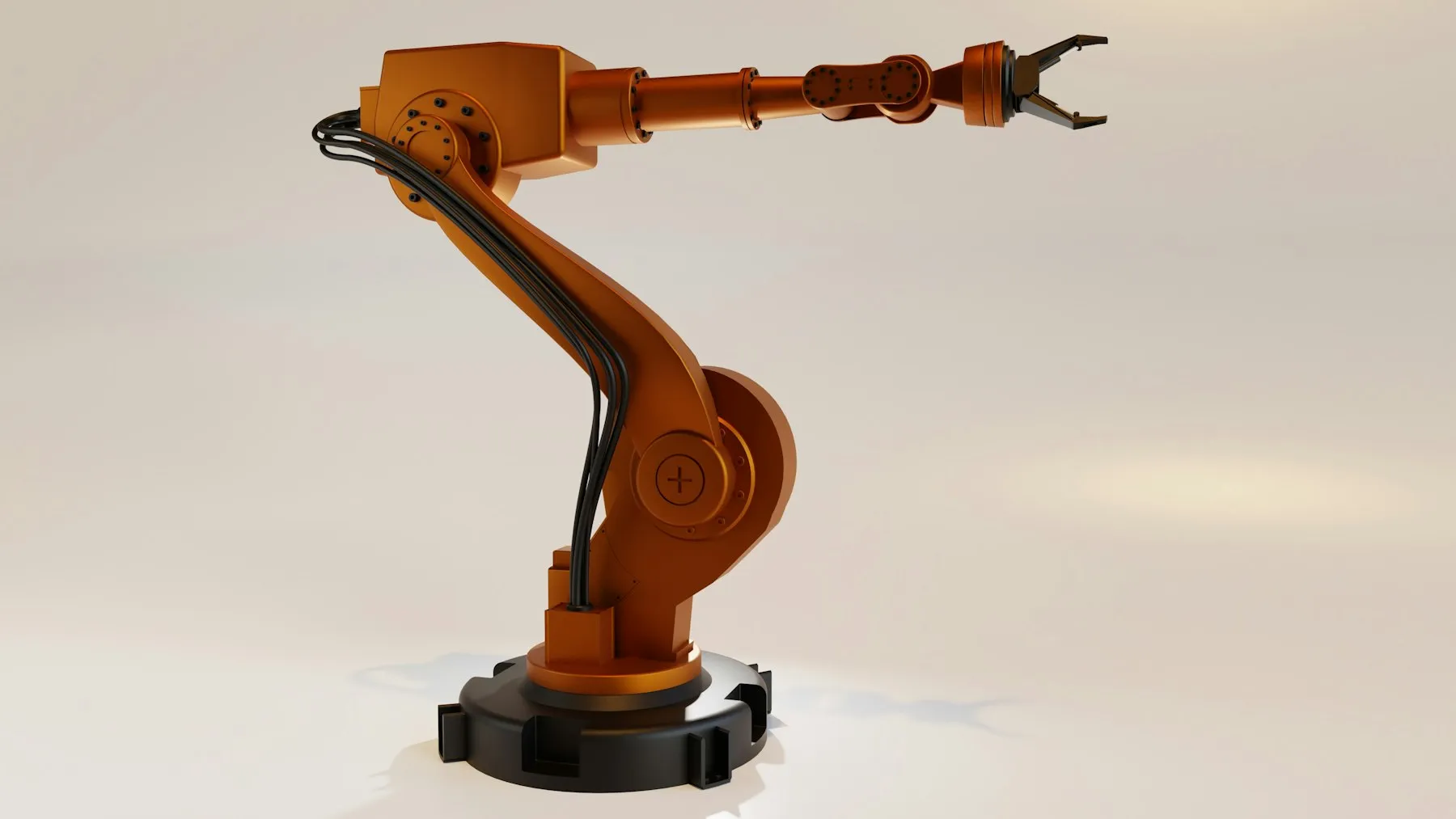
Multiply Labs doesn’t make drugs and it doesn’t want to be your contract manufacturer. It builds enclosed robotic clusters that drop into a drugmaker’s existing cleanroom and run the timed, repetitive steps — moving materials between instruments, stirring and mixing vials — using the equipment the manufacturer already owns. Customers buy the robots and operate them themselves (letsdatascience).
Under the hood, the system runs on six-axis Universal Robots arms, extended to eight degrees of freedom with added X and Z rails, and uses imitation learning so the arms can pick up new tasks by watching rather than being hand-coded for each one (Today’s Medical Developments).
Here’s how the robotic process stacks up against the manual one:
- Cost per dose: up to 74% lower, according to peer-reviewed work with UCSF comparing the same cell-therapy steps done by hand versus by robot
- Throughput: up to 100x more patient doses per square foot of cleanroom
- Contamination: none observed in the robotic runs; the manual comparison saw human handling cause contamination in one case
- Ownership model: the drugmaker owns and runs the hardware, instead of shipping cells out to a third party
The 74% figure isn’t just a marketing line. It comes from a clinician who ran the comparison himself:
“We found a cost reduction of approximately 74%.” — Dr. Jonathan Esensten, formerly of UCSF, now at Sheba Medical Center (Today’s Medical Developments)
And the throughput claim comes from the top:
“Up to 100x more patient doses per square foot of cleanroom.” — Fred Parietti, co-founder and CEO of Multiply Labs (Today’s Medical Developments)
The company isn’t starting from a blank page, either. Back in 2024 it signed its first commercial sale — a deal worth up to $85 million with longevity biotech Retro Biosciences to automate cell-therapy production (Silicon UK). Now AstraZeneca and robotics giant Teradyne are on the cap table, which tells you both pharma and hardware see something here.
⚠️ The Catch
Slow down before you price in the revolution.
Most of the headline numbers are company-reported, and Multiply Labs did not disclose a valuation for this round (letsdatascience). The 74% and no-contamination results trace back to studies with UCSF and Stanford, but the public write-ups don’t name the study titles, sample sizes or dates — so “peer-reviewed” is doing some heavy lifting until you can read the papers.
There’s also the gap between a demo and a drug. Pharmaceutical manufacturing is one of the most heavily regulated activities on Earth. Changing how an approved therapy is made can trigger expensive re-validation, and “up to 100x” is a ceiling, not a floor — the realistic gains depend on the specific therapy, the facility, and how much of the process a robot can actually touch.
🎯 What Happens Next
The $75 million is earmarked for more manufacturing capacity, pushing the product roadmap forward, and hiring across engineering, regulatory and commercial teams (letsdatascience).
Watch two things. First, whether a big-name partner — AstraZeneca is sitting right there — moves from investor to paying customer on a therapy that’s actually in the clinic. Second, whether the cost savings survive contact with regulators. If Multiply Labs can show a validated, inspection-ready robotic line producing an approved therapy, the 74% stops being a slide and starts being a line item.
🧩 Bigger Picture
The money flooding into biotech lately has mostly chased the molecules — the next blockbuster drug, the next editing tool. Multiply Labs is a bet on the unglamorous layer underneath: the plumbing that decides whether a breakthrough reaches ten patients or ten thousand.
It fits a wider pattern of robots moving off the car assembly line and into places that used to demand a human touch — pharmacies, labs, sterile suites. Teradyne writing a check into a drug-manufacturing startup is its own kind of signal about where industrial automation thinks the growth is.
A cure nobody can afford isn’t really a cure. If a robot arm can knock three-quarters off the price of the most expensive medicine on the market, the most radical thing in that cleanroom isn’t the science. It’s the receipt.
Sources
- Multiply Labs Raises $75M Series B for Drug-Manufacturing Robotics — Let’s Data Science
- Multiply Labs drives 74% cost reduction — Today’s Medical Developments
- Multiply Labs and Retro Biosciences announce an $85 million partnership — Silicon UK
- Startup Funding News Today, October 7, 2026 — Tech Startups
❓ Quick answers
How much did Multiply Labs raise and when?
Multiply Labs raised a $75 million Series B announced October 6, 2026, led by Patrick Soon-Shiong and NantWorks, bringing its total to more than $100 million (Let's Data Science).
How much cheaper can robots make cell therapies?
Up to 74% lower cost per dose, a figure from peer-reviewed work with UCSF comparing manual versus robotic steps, per Dr. Jonathan Esensten (Today's Medical Developments).
What does Multiply Labs actually make?
Enclosed robotic clusters, built on 6-axis Universal Robots arms, that automate repetitive steps in cell- and gene-therapy manufacturing inside a drugmaker's own cleanroom; customers own and run the hardware (Let's Data Science).