
🔥 Varda Grows Drugs in Orbit, Parachutes Them Home — and Just Priced That at $1.6 Billion
Varda Space raised a $250M Series D at a $1.6B valuation to scale pharmaceutical manufacturing in orbit.
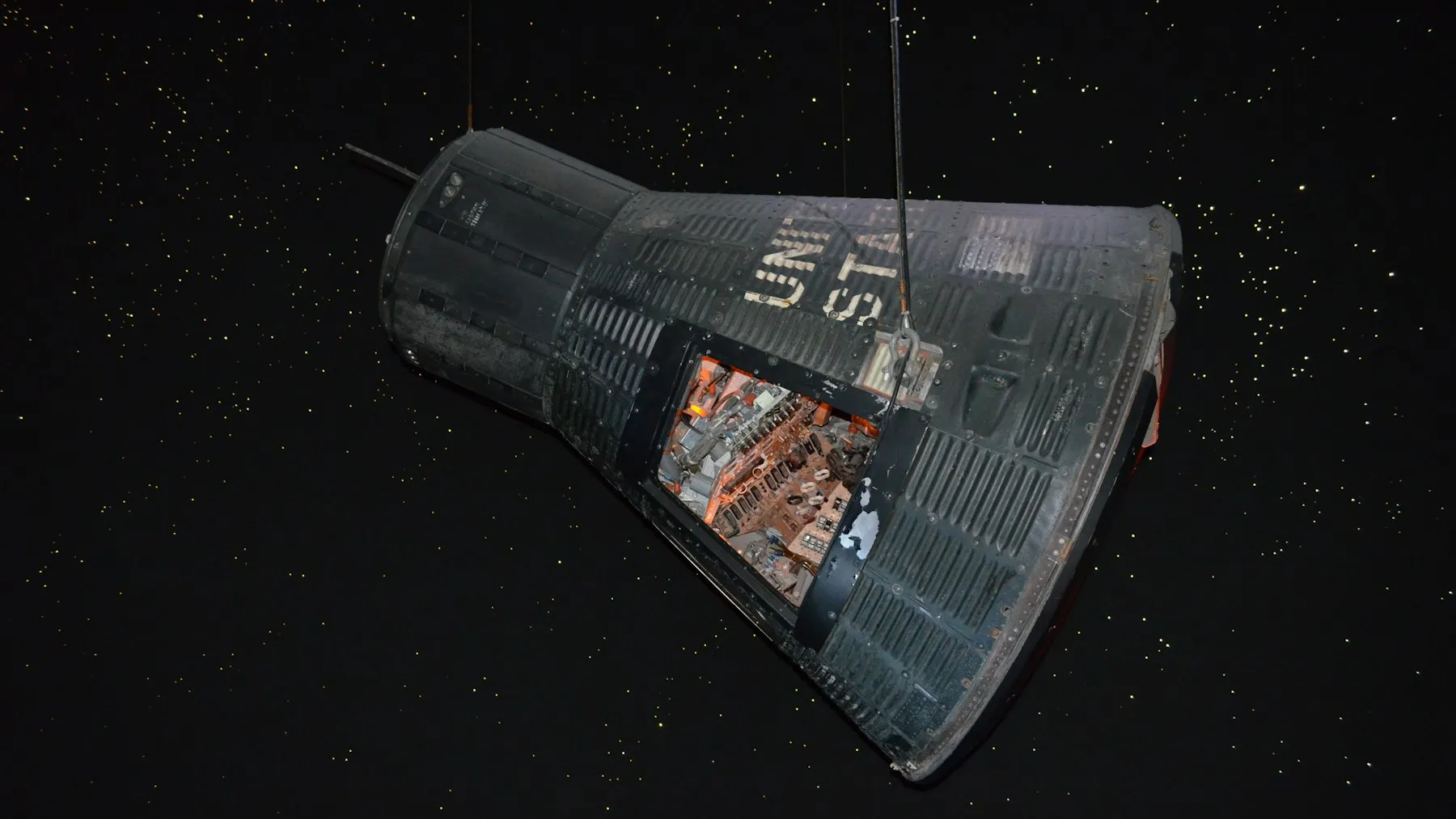
Most space startups sell you a ride. Mars someday, the Moon again, cheaper kilograms to low-Earth orbit. Varda sells you something weirder: a small factory that flies up, grows a drug in zero gravity, and then drops it out of the sky into the Utah desert under a parachute.
Let’s get the number on the table first: $250 million. That’s Varda Space Industries’ new Series D, announced September 30, and it brings the El Segundo company’s total funding to $598 million at a $1.6 billion valuation ($250M Series D (Varda); WBOW). The round was led by Lux Capital and Natural Capital, with Founders Fund, Khosla Ventures, General Catalyst, Caffeinated Capital and others along for the ride (American Entrepreneurship).
Here is the bet Varda is asking you to take seriously: the first thing ever manufactured in space and sold back on Earth won’t be a fancy alloy or a fiber-optic cable. It’ll be a pill.
🧠 Why This Matters
Gravity is quietly annoying if you make drugs. When a compound crystallizes on Earth, convection currents and sedimentation pull the growing crystals around, and you end up with a messier, less uniform structure than you’d like. In orbit, those forces mostly vanish. Crystals grow slower, cleaner, and more uniformly.
For a pharmaceutical company, crystal structure isn’t a cosmetic detail — it decides how stable a drug is, how well it dissolves, and how easily it can be turned into a pill or an injection. A better crystal can mean a longer shelf life or a formulation that finally works. Varda’s pitch is that microgravity is a manufacturing input you simply cannot buy on the ground.
It isn’t hand-waving. Varda has already grown crystals of ritonavir, a decades-old HIV antiviral, aboard one of its capsules and brought them home intact (American Entrepreneurship). That’s the proof-of-concept the whole valuation rests on.
“We started Varda with the conviction that the first product manufactured in space and consumed on Earth would be a pharmaceutical.” — Delian Asparouhov, co-founder and president
📊 Deep Dive
The hardware is the clever part. Varda flies small “W-Series” spacecraft that run crystallization experiments in orbit, then pack the results into a heat-shielded reentry capsule that falls back through the atmosphere and lands by parachute. The first launch went up in June 2023; the first capsule came home in February 2024 at the Utah Test and Training Range (WBOW). Since then the company has flown six missions and recovered its capsules repeatedly.
Where the $250 million sits, by the numbers:
- The raise: $250M Series D, on top of $598M total since the company was founded in 2021 — valuation now $1.6B.
- The track record: six orbital missions since June 2023, with the first capsule recovered in February 2024 in Utah.
- The customer mix: roughly 70% government, 30% commercial pharmaceutical today; Varda expects that to flip toward ~70% commercial by 2032 (WBOW).
- The team: about 275 employees, roughly 18% of them from pharmaceutical backgrounds rather than aerospace.
- The proof point: successfully grew ritonavir crystals in orbit and returned them to Earth.
Two of the founders tell you what kind of company this is. Will Bruey, the CEO, is a former SpaceX engineer. Delian Asparouhov, the president, is a Founders Fund partner. One side knows how to get hardware to orbit and back; the other knows how to raise money and sell a vision. So far both halves are delivering.
⚠️ The Catch
Here’s the part the valuation politely skips over: Varda has not sold a single commercial drug.
Everything so far is demonstration and government contract work. Turning “we grew nicer crystals in space” into “a regulator approved this medicine and patients take it” is a long, expensive road, and nobody has walked it before. The reentry itself isn’t a solved problem either — not every capsule has come home cleanly, and a failed reentry is a lost payload and a bad day.
Then there’s the math of space. Launch still costs real money, capsules are small, and the drugs that justify this have to be valuable enough per gram to earn their seat. That’s a narrow door. And the regulatory path for a space-manufactured pharmaceutical is genuinely uncharted — the FDA has no template for “made in orbit.”
Bruey is upfront about the timeline:
“The biggest milestone is going to be right around the turn of the decade, when we take one of those microgravity-enabled formulations and we inject it into a human in the clinic.”
Translation: the payoff is years out, not quarters.
🎯 What Happens Next
In the near term, Varda wants to fly more and fly often. The company has booked a run of future launches stretching toward the end of the decade and plans to start sending up capsules in pairs to raise throughput (WBOW). The $250 million is earmarked for exactly that: more vehicles, more flights, and deeper partnerships with drugmakers.
The milestone to watch isn’t another launch. It’s the first time a Varda-made formulation goes into a human in a clinical trial. Hit that, and the “space factory” stops being a demo and starts being a supplier. Miss it, and $1.6 billion looks like a lot of money for a very elaborate science project.
🧩 Bigger Picture
For most of its history, the space economy has been about moving things — satellites up, crews up, data down. Varda is part of a smaller, stranger thesis: that orbit is a place to make things you can’t make anywhere else. Microgravity isn’t just a view; it’s a factory condition.
That idea has been floated since the Space Shuttle era and never quite paid off, mostly because getting to orbit and back was too expensive and too rare. Cheaper, more frequent launches have quietly changed that equation, and Varda is the clearest test yet of whether “manufactured in space” can be a line on a product label rather than a science-fair poster.
If it works, the market isn’t just drugs — it’s any high-value material that behaves better without gravity in the way. If it doesn’t, it’ll be a cautionary tale about confusing a cool demo with a business.
The first “Made in Space” label probably won’t be stamped on a satellite or a solar panel. It may read: take one daily, with water.
Sources
- Varda Space Industries (official announcement)
- Varda raises $250 million at $1.6 billion valuation to scale orbital drug manufacturing — WBOW
- Varda Raises $250 Million to Scale Pharmaceutical Manufacturing in Space — American Entrepreneurship Today
- Varda Space raises $250M Series D at $1.6B valuation — Pomegra
❓ Quick answers
How much did Varda Space raise?
Varda raised a $250 million Series D announced September 30, 2026, lifting its total funding to $598 million at a $1.6 billion valuation (Varda; WBOW).
Who led Varda's Series D round?
Lux Capital and Natural Capital led the round, with Founders Fund, Khosla Ventures, General Catalyst and others participating.
What does Varda Space actually make?
Varda flies small W-Series capsules that crystallize pharmaceutical compounds in microgravity, then return them to Earth by parachute; it has grown ritonavir crystals in orbit and recovered its first capsule in Utah in February 2024.