🔥 Qualcomm's New Phone Chip Broke 5 GHz on 2nm — Then Split the Flagship in Two
Qualcomm's Snapdragon 8 Elite Gen 6 is the first phone chip to hit 5.0 GHz, built on 2nm — and Qualcomm split the flagship into two, locking the local AI behind the pricier Extreme.
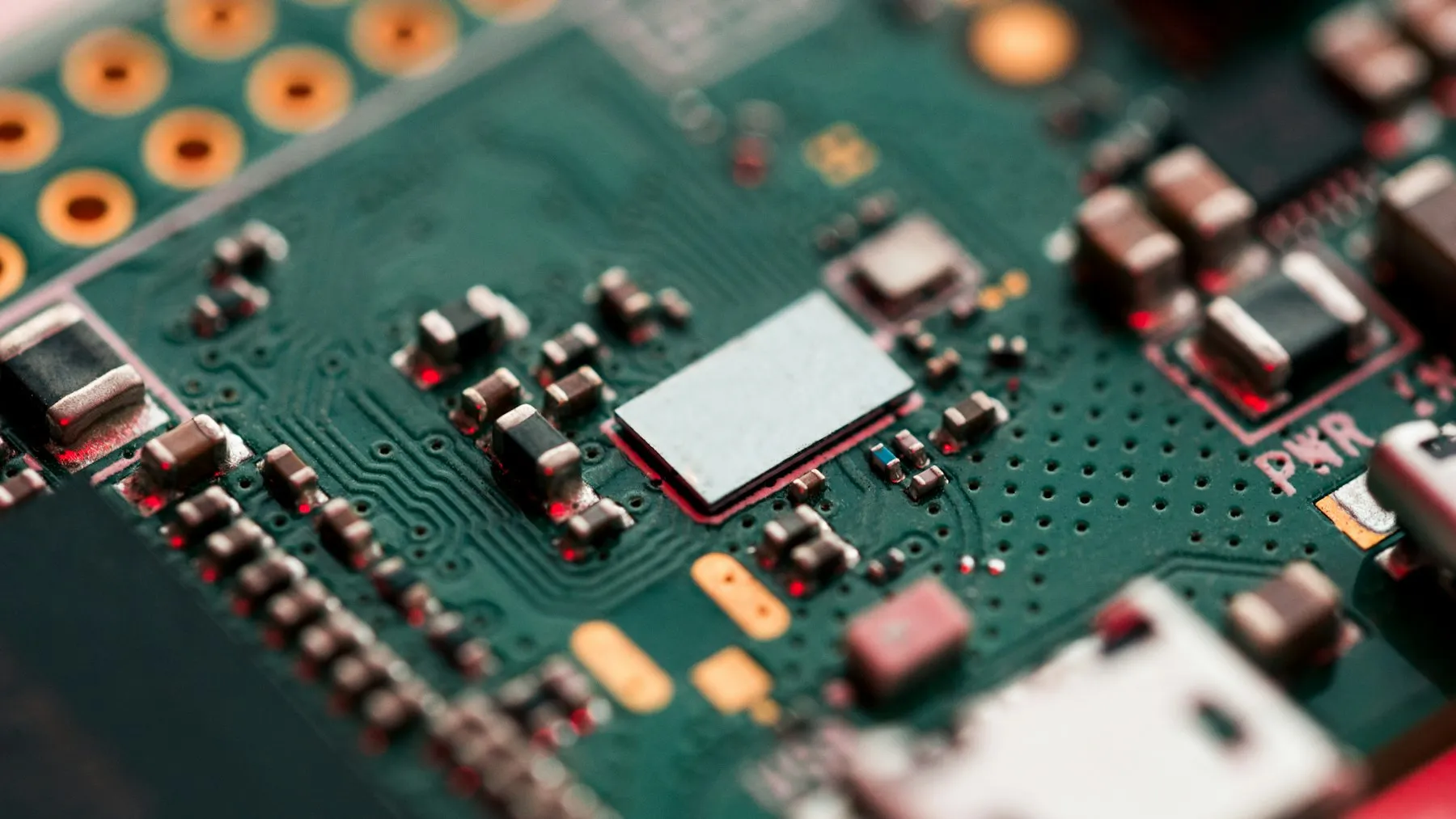
For fifteen years, mobile chips lived under an invisible ceiling. Laptop and desktop CPUs crossed 5 GHz ages ago, but the thing in your pocket — squeezed for battery, choked by a slab of glass with nowhere to dump heat — never got there. It topped out in the low 4s and stayed there.
On September 22 in Lahaina, Hawaii, Qualcomm knocked the ceiling out. Its new Snapdragon 8 Elite Gen 6 runs two Oryon prime cores at 5.0 GHz — the first phone processor ever to reach that clock speed (9to5Google, HotHardware). It’s built on a 2nm process, the smallest node ever shipped in a mainstream phone (TechTimes).
But the headline number isn’t really the point. The point is what Qualcomm did next: it took its single flagship chip and cut it in half.
The most powerful phone silicon of 2026 is no longer one chip — it’s two, and only the more expensive one runs the AI that Qualcomm keeps talking about.
🧠 Why This Matters
Every year one Snapdragon flagship goes into basically every Android phone that wants to call itself premium. One chip, one tier, take it or leave it. This year Qualcomm made two: the standard Snapdragon 8 Elite Gen 6 and a beefier 8 Elite Extreme Gen 6.
That split matters because of where the money and the marketing now live: on-device AI. The Extreme is the one that can hold a 30-billion-parameter Mixture-of-Experts model in memory and run it locally, no cloud round-trip required (9to5Google, TechTimes). The standard chip doesn’t. So the assistant that lives entirely inside your phone, answering without a signal, is now a feature you pay up for — not something every flagship gets.
Qualcomm calls it the first mobile CPU to reach 5 GHz — a barrier laptop chips crossed years ago but phones, hemmed in by heat and battery, never could. — HotHardware, on the Snapdragon 8 Elite Gen 6
📊 Deep Dive
Here’s how the new silicon stacks up. Both chips share the same eight-core Oryon layout — two prime cores plus six performance cores — but the Extreme pulls ahead on the numbers that matter for AI and graphics.
- CPU gains: +10% performance on the standard Gen 6, +13% on the Extreme, versus last year’s Gen 5 (9to5Google, HotHardware).
- Power efficiency: +37% on the CPU side — the same work for a third less battery drain (9to5Google).
- GPU: +35% faster on the standard chip, +44% on the Extreme, with a 40% jump in graphics power efficiency (HotHardware).
- Clock speed: 5.0 GHz prime cores, 4.0 GHz performance cores — a mobile first (Beebom).
- On-device AI: Extreme only — 30B-parameter MoE models running locally; the standard Gen 6 caps out below that (Beebom).
- Connectivity: both get the X105 5G modem with a 14.8 Gbps peak downlink and Wi-Fi 8 readiness through FastConnect 8800 (TechTimes, HotHardware).
The 2nm move is the quiet engine under all of it. Shrinking the transistors is what buys you a higher clock and lower power at the same time — normally you trade one for the other. Getting both is why a phone can suddenly hit a number laptops needed a wall socket to reach.
⚠️ The Catch
Start with the obvious one: 5.0 GHz is a peak, not a cruising speed. A phone has no fan and nowhere to send heat except the aluminum frame and your palm. That top clock is for short bursts — opening an app, a benchmark run — before the chip throttles back to keep from cooking itself. The real-world gap between the standard chip and the Extreme in daily use will be smaller than the spec sheet suggests.
The bigger catch is the two-tier split. By making the flagship-of-flagships a separate part, Qualcomm has quietly created a phone where the marquee AI feature is locked behind the pricier model. When Xiaomi launched the first devices on this silicon — the 18 Pro on the standard chip, the 18 Pro Max on the Extreme (Beebom) — the “Pro” and the “Pro Max” stopped being the same phone in a bigger body. One runs the local model; one doesn’t.
And “30-billion-parameter model on your phone” needs an asterisk. It’s a Mixture-of-Experts design, which means only a fraction of those parameters — roughly 3 billion — actually fire on any given token (TechTimes). Impressive engineering, but not the same as a full 30B model running flat-out in your hand.
🎯 What Happens Next
The devices come fast. Xiaomi’s 18 Pro and 18 Pro Max were unveiled the day after the chip, on September 23 in Beijing (TechTimes). Motorola’s Signature 27 is confirmed on the Extreme, and Qualcomm’s OEM list runs through Honor, iQOO, Nubia, OnePlus, Oppo, Redmi, RedMagic, Vivo and ZTE (TechTimes).
The one to watch is the spring 2027 flagship wave — the Samsung Galaxy S27 among them — because that’s when the two-tier structure meets the phones most people actually buy. If the Extreme’s local-AI edge turns into a genuinely better assistant, expect every maker to push you toward the top model. If it doesn’t, the split will look like a way to sell the same chip twice.
🧩 Bigger Picture
Watch what Qualcomm chose to brag about. Not the camera. Not the screen. The pitch is that your phone can now run a real language model without ever touching a server — private, offline, instant. That’s a bet that the next thing you upgrade for isn’t megapixels, it’s the assistant baked into the silicon.
It also lands the way the whole industry now moves: the cutting-edge node shows up in a phone the same season it shows up anywhere. A 2nm chip reached consumers in a Xiaomi handset before it reached most laptops. The frontier of manufacturing and the thing in your pocket are now the same frontier.
The 5 GHz number will sell the phone. The quiet decision to split one flagship into two — and put the AI behind the wall — is the one you’ll still be paying for in 2027.
Sources
- 9to5Google — Qualcomm announces the Snapdragon 8 Elite Gen 6 and 8 Elite Extreme Gen 6
- TechTimes — Snapdragon 8 Elite Gen 6 Lands on TSMC 2nm: First 5 GHz Mobile CPU Built for AI Agents
- Beebom — Snapdragon 8 Elite Gen 6 Officially Arrives with 2nm Power and 5 GHz Oryon Cores
- HotHardware — Snapdragon 8 Elite Extreme Gen 6 Hits 5GHz With Neural Fusion Gaming, Wi-Fi 8