🔥 Fractile Raised $720 Million for an AI Chip It Hasn't Shipped Yet
Fractile, a London AI chip startup, raised $720M at a reported $7B valuation this week, despite not shipping a single production chip.
A four-year-old London company just convinced some of the sharpest investors in Silicon Valley to hand it three quarters of a billion dollars for a product that does not exist yet.
Let’s get the number on the table first: $720 million. That’s the Series C that Fractile, a British AI chip startup, closed this week, at a reported $7 billion valuation (Reuters). Thrive Capital, Founders Fund, Lightspeed and Redpoint led it. Google’s CapitalG, BlackRock, DST Global and the British government’s own Sovereign AI fund piled in behind them.
The catch, and it’s a big one: Fractile has not shipped a single production chip (TechTimes). Its first commercial silicon is due in 2027.
So the thesis is simple. The market for AI inference hardware is now so hot that a credible plan to beat Nvidia is worth $7 billion before the first wafer leaves the lab.
🧠 Why This Matters
Everyone obsesses over training the giant models. The quieter, larger prize is inference: the work a model does every single time you type a prompt and wait for an answer. Every ChatGPT reply, every Copilot autocomplete, every image generated is an inference job, running billions of times a day.
Here’s the bottleneck. Modern AI chips don’t usually run out of math. They run out of memory bandwidth, the speed at which the chip can pull a model’s weights out of memory and into the processor. The faster that pipe, the faster your answer arrives, and the less power you burn getting it.
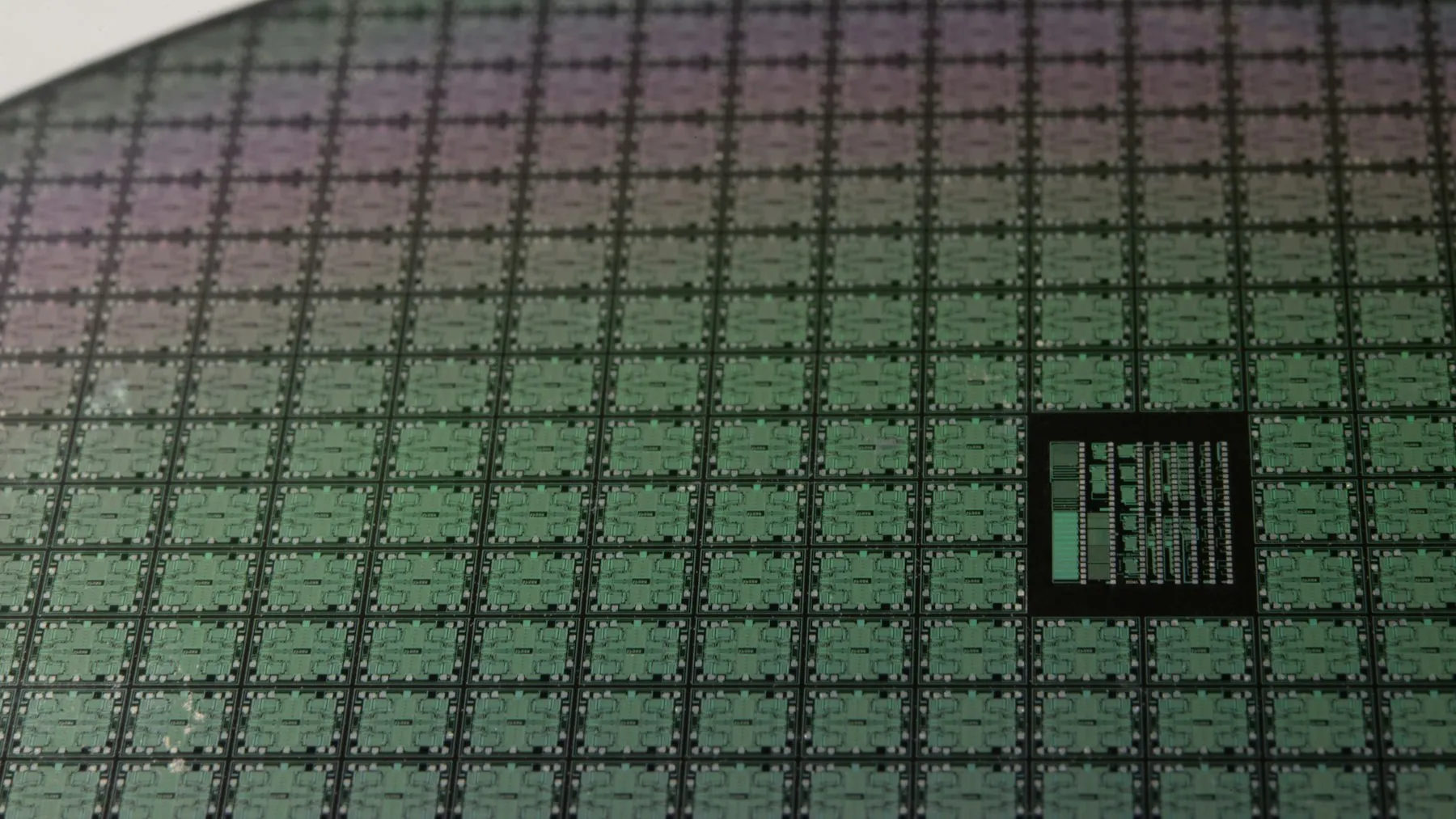
Fractile’s bet is a physical one. Instead of parking memory next to the processor, it stacks DRAM directly on top of the logic die (TechFundingNews). The pitch: more bandwidth than today’s high-bandwidth memory, more capacity than the on-chip SRAM rivals rely on. If it works, you get faster responses at lower cost per token. That is the metric the entire industry is now priced on.
📊 Deep Dive
Six months ago, Fractile raised a $220 million Series B at a valuation near $1 billion, led by Accel, Founders Fund and Factorial (TechTimes). This week’s round values it at seven times that. The company was founded in 2022 by Walter Goodwin, now CEO, and had roughly 80 staff as of early 2026.
The inference-silicon land grab, by the numbers:
- Fractile — $720M Series C, $7B reported valuation, London, first chip due 2027, zero production chips shipped (Reuters)
- Etched — raised $700M at a $21B valuation, backed by Jane Street, chasing a transformer-only chip (TechFundingNews)
- Cerebras — went public in May 2026 at a valuation above $56B, the incumbent challenger that actually ships wafer-scale hardware (TechFundingNews)
- Nvidia — still the thing everyone is trying to route around, with margins fat enough to fund a dozen startups
Fractile also carries a flag the others don’t. The UK has produced world-class chip design (Arm) but no homegrown AI-silicon champion. Britain’s AI minister, Kanishka Narayan, framed the round as a national bet:
We are determined to change that.
The government backed its words, with the British Business Bank and the Sovereign AI fund both listed among new investors (Reuters). Fractile has committed to spending £100 million over three years, including a hardware facility in Bristol.
⚠️ The Catch
A $7 billion valuation on a company with no shipping product and no disclosed revenue is a bet on execution, not traction. And chip design is where ambitious roadmaps go to slip.
Three specific risks sit under the hype. First, the timeline: “2027” is a launch target, and silicon schedules are notorious for sliding right. Second, the pivot: Fractile’s earlier design leaned on SRAM; it has since moved to stacked DRAM (TechTimes). Changing your core memory architecture this close to launch is not a trivial tweak. Third, the moving target: Nvidia is not standing still, and by 2027 it will have shipped at least one more generation of inference-optimised parts.
There’s even a wrinkle in the headline figure. UK filings at Companies House reportedly show about £577 million (~$774M) in Series C shares issued, more than the $720M announced (TechFundingNews). The valuation itself is contested too: the UK government cited “over £5 billion,” while the $7 billion figure comes from a source cited by Reuters. Round numbers in press releases rarely survive contact with the paperwork.
🎯 What Happens Next
Watch for a customer. The strongest signal Fractile could send is a named buyer putting real money down. Bloomberg reported in August that Anthropic had agreed to an initial order of around $250 million in Fractile chips, with deliveries expected in 2027, though the company has not confirmed it (TechFundingNews). If that firms up on the record, the $7B tag looks a lot less speculative.
After that, the milestones are brutally concrete: tape-out (the design gets frozen and sent to a foundry), first silicon back from the fab, and then real benchmarks, tokens per second and watts per token, measured against whatever Nvidia is selling in 2027. Everything before those numbers is a promise.
🧩 Bigger Picture
Zoom out and this round is a thermometer for the whole AI build-out. Capital is no longer flowing only to the model labs. It’s flowing to the picks and shovels one layer down, the memory, the interconnects, the inference silicon that decides whether running these models is profitable or ruinous.
Fractile is a pure expression of that trade: investors are paying 2027 prices for 2027 hardware, today, because the cost of being late to the inference market looks scarier than the cost of being early. For Britain, it’s a rare shot at owning a slice of the AI stack instead of renting it. For everyone else, it’s a reminder that in this cycle, a convincing roadmap and the right logos on the cap table can be worth billions before a product is real.
The hard part starts now. Investors just bought the story. In 2027, Fractile has to ship the chip.
Sources
- UK-backed AI chip startup Fractile hits $7 billion valuation in funding round (Reuters via Yahoo)
- AI Inference Chip Startup Fractile Raises $720M at Reported $7B Value With No Chip Shipped (TechTimes)
- Fractile’s $7B valuation: UK chip startup raises $720M from Thrive and Founders Fund (TechFundingNews)
❓ Quick answers
How much did Fractile raise and at what valuation?
Fractile raised a $720 million Series C in November 2026 at a reported $7 billion valuation, led by Thrive Capital, Founders Fund, Lightspeed and Redpoint (Reuters).
Has Fractile shipped an AI chip yet?
No. As of November 2026 Fractile has not shipped a production chip; it plans to launch its first commercial chip in 2027 (TechTimes).
What makes Fractile's chip different?
It stacks DRAM directly on top of the logic die to raise memory bandwidth for AI inference, aiming for faster, cheaper responses than current hardware (TechFundingNews).