
🔥 Mistral's "Le Chonk" Packs a Trillion Parameters — and Only Wakes 49 Billion of Them Up
Mistral launched Large 4 'Le Chonk' on Oct 6: ~1 trillion parameters, just 49B active, at $1.36 per million input tokens.
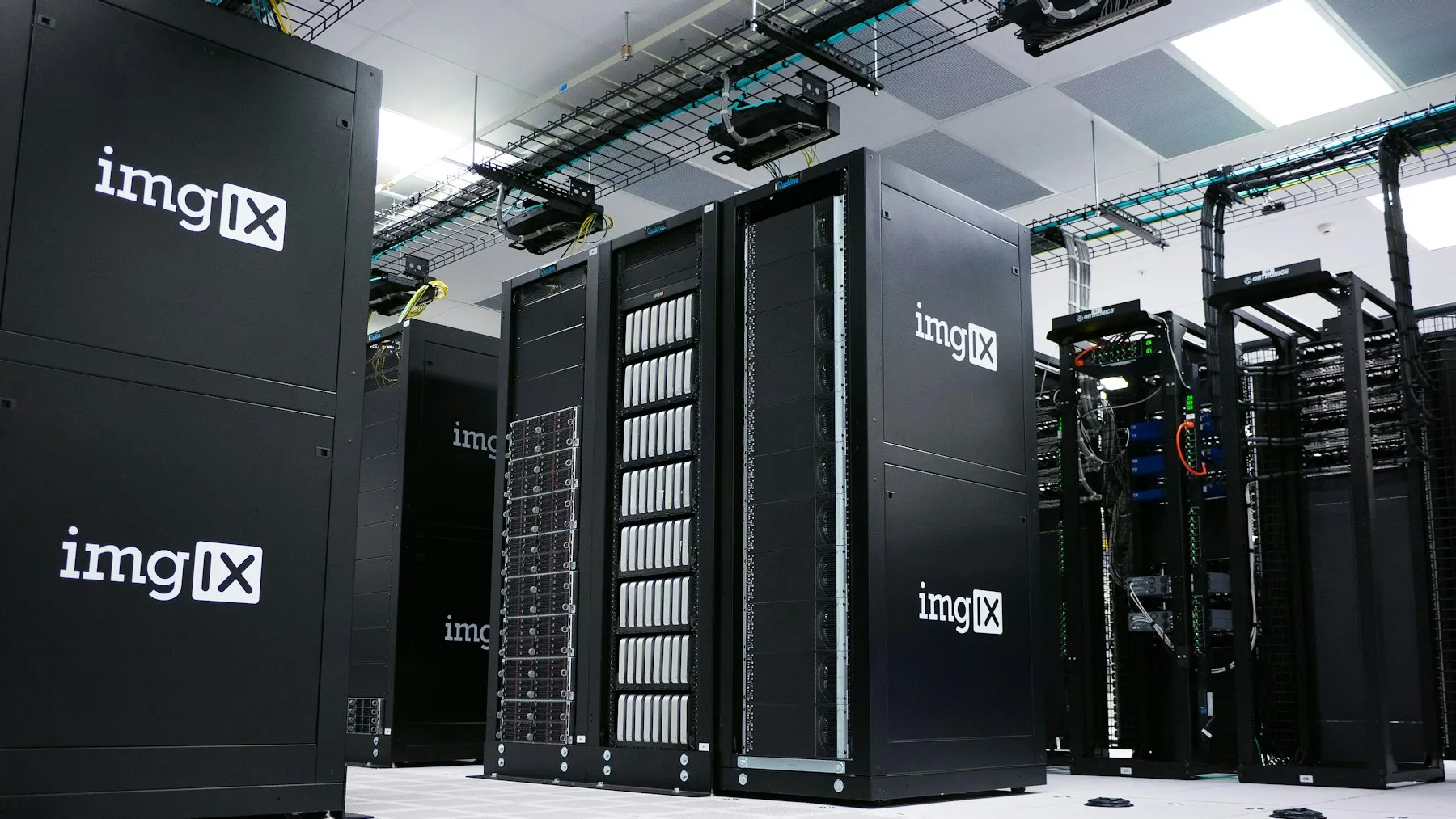
A European startup just shipped a model in the trillion-parameter class and put it on the menu for $1.36 per million input tokens.
That’s the number to sit with. On October 6, Mistral AI — the Paris lab that keeps insisting Europe can build frontier models without borrowing anyone’s — launched Mistral Large 4, nicknamed “Le Chonk,” as a public API preview (mistral.ai). Roughly a trillion parameters. Priced below what plenty of far smaller models charge.
The sleight of hand is that it almost never uses the whole trillion. Large 4 is a mixture-of-experts build that fires just 49 billion parameters on any given token — about 52 billion once you count embeddings, which is why its planned release is literally tagged Mistral-Large-4.0-1T05-A52B (kingy.ai). You rent a skyscraper; most of the lights stay off.
So the thesis is simple, and it has a twist: Mistral built something very big and very cheap to run. Whether it also built something very good depends entirely on which scoreboard you’re reading.
🧠 Why This Matters
The whole game in AI right now is cost per useful token, and mixture-of-experts is how you bend that curve. A dense trillion-parameter model would light up all trillion weights for every word it reads — ruinously expensive. Large 4 only activates the handful of “experts” it needs, so you get the knowledge capacity of a giant model at the compute bill of a mid-sized one.
That’s how Mistral can post a list price of $1.36 per million input tokens and $4.18 per million output (mistral.ai), then slap a launch discount on top that roughly halves it to $0.68 in and $2.09 out through late October (kingy.ai). For a model this size, that is aggressive.
The second reason this lands: Mistral is promising to give the weights away. The company says downloadable weights arrive by the end of October (ai-weekly.ai). If that holds, you’ll be able to run a trillion-parameter-class model on your own hardware — the kind of thing that, two years ago, only a handful of US labs could even gesture at.
📊 Deep Dive
Here’s what Mistral actually put on the table, with the numbers confirmed across its own announcement and independent testing:
- Size: ~1 trillion total parameters, 49B active per token (52B with embeddings) — a granular mixture-of-experts design (mistral.ai)
- Senses: natively multimodal, with a 1.6B-parameter vision encoder; it takes text and images in, and writes text out — no audio, no image generation (kingy.ai)
- Price: $1.36 / $4.18 per million tokens list, discounted to roughly $0.68 / $2.09 at launch (mistral.ai)
- Mistral’s own coding scores: 61.7% on DeepSWE v1.1, a 49.8 Coding Agent Index, 93% of Cybench security challenges solved (mistral.ai)
- Independent coding score: 48.05% on the Vals Index v2.1 — 32nd out of 44 models tested (kingy.ai)
Mistral is leaning hard into one lane: security and agentic work. On the CyberGym end-to-end test it posted roughly 82%, which independent trackers logged as the top result on that leaderboard (kingy.ai). For a model you can eventually self-host inside an air-gapped network, “best at finding and patching vulnerabilities” is a genuinely useful thing to be best at.
“Open-weight hybrid instruct-and-reasoning MoE.”
That’s Mistral’s own one-line pitch for Large 4 — a mouthful that’s really a promise: a frontier-scale model you can download, inspect, and run yourself.
⚠️ The Catch
Start with the gap between the highlight reel and the box score. The benchmarks Mistral chose to show are flattering; the broad independent ones are not. On the Vals Index it lands 32nd of 44, well behind Claude Opus 5.5 (66.97%) and GPT-6 Astra (63.13%) (kingy.ai). In a blind human coding evaluation run by Surge AI, it placed second of five models with a 3.74 out of 5 — behind Claude Opus 5’s 4.22 (kingy.ai). Good, not dominant.
Then there’s the part that isn’t actually shipping yet. On launch day you could call the model through the API, but you could not download it. And the license — the whole point of “open weight” — was simply listed as:
License: “Coming soon.”
Its predecessor, Mistral Large 3, went out under Apache 2.0, but that doesn’t automatically carry to Large 4 (kingy.ai). “Open weight” with no license text and no download link is a press release, not a release.
Even the specs have loose ends: the context window is listed as 1 million tokens on Mistral’s own card but 512K to 524K on third-party provider tables — a discrepancy nobody has reconciled (kingy.ai).
🎯 What Happens Next
The date to circle is the end of October, when the weights and — presumably — an actual license are supposed to land (ai-weekly.ai). That’s the moment the claims stop being a demo and start being something developers can stress-test on their own machines.
Watch two things. First, the license fine print: a permissive Apache-style license would make Large 4 a genuine building block; a restrictive one would make “open weight” mostly marketing. Second, whether the launch discount is a limited sale or the new floor. If a trillion-parameter-class model settles in under a dollar per million input tokens, every pricing sheet above it starts to look negotiable.
🧩 Bigger Picture
Large 4 didn’t arrive in a vacuum. The same week, Reflection AI open-sourced Beam, a 501-billion-parameter mixture-of-experts model trained on 10,500 Nvidia GB300 GPUs (aiweekly.co). DeepSeek’s V4 line sits in the same independent rankings Large 4 is fighting through. The open-weight frontier is getting crowded fast, and the models crowding it keep getting cheaper to run.
For Mistral, this is the whole bet: that the next phase of AI isn’t won by the single smartest model behind a paywall, but by a good-enough model that’s open, portable, and cheap enough to drop anywhere — including the places that legally can’t send data to anyone else’s cloud. On price and portability, Large 4 makes that case. On raw capability, the independent scores say it’s a strong contender, not a champion.
A trillion parameters sounds like a flex. The real flex is getting away with only using 49 billion of them — and charging you like it’s a rounding error.
Sources
- Mistral AI — Introducing Mistral Large 4 (official announcement)
- Kingy AI — Mistral Large 4 (Le Chonk): Specs, Benchmarks, Pricing
- AI-Weekly — Issue 237, October 6, 2026
- AIWeekly — AI News Today, October 7
❓ Quick answers
What is Mistral Large 4?
A mixture-of-experts AI model Mistral AI launched on October 6, 2026, with about 1 trillion total parameters but only 49 billion active per token, available first as an API preview (source: mistral.ai).
How much does Mistral Large 4 cost?
List pricing is $1.36 per million input tokens and $4.18 per million output tokens, with a launch discount of roughly $0.68 in and $2.09 out through late October 2026 (source: mistral.ai, kingy.ai).
When will the Mistral Large 4 weights be released?
Mistral says downloadable weights arrive by the end of October 2026, though the open-weight license was still marked 'Coming soon' on launch day (source: ai-weekly.ai, kingy.ai).