🔥 A Startup That Glues Sensors to Factory Machines Just Hit $1.4 Billion
Tractian raised a $130M Series D at a $1.4B valuation to bolt AI-powered sensors onto factory machines and predict breakdowns before they strike.
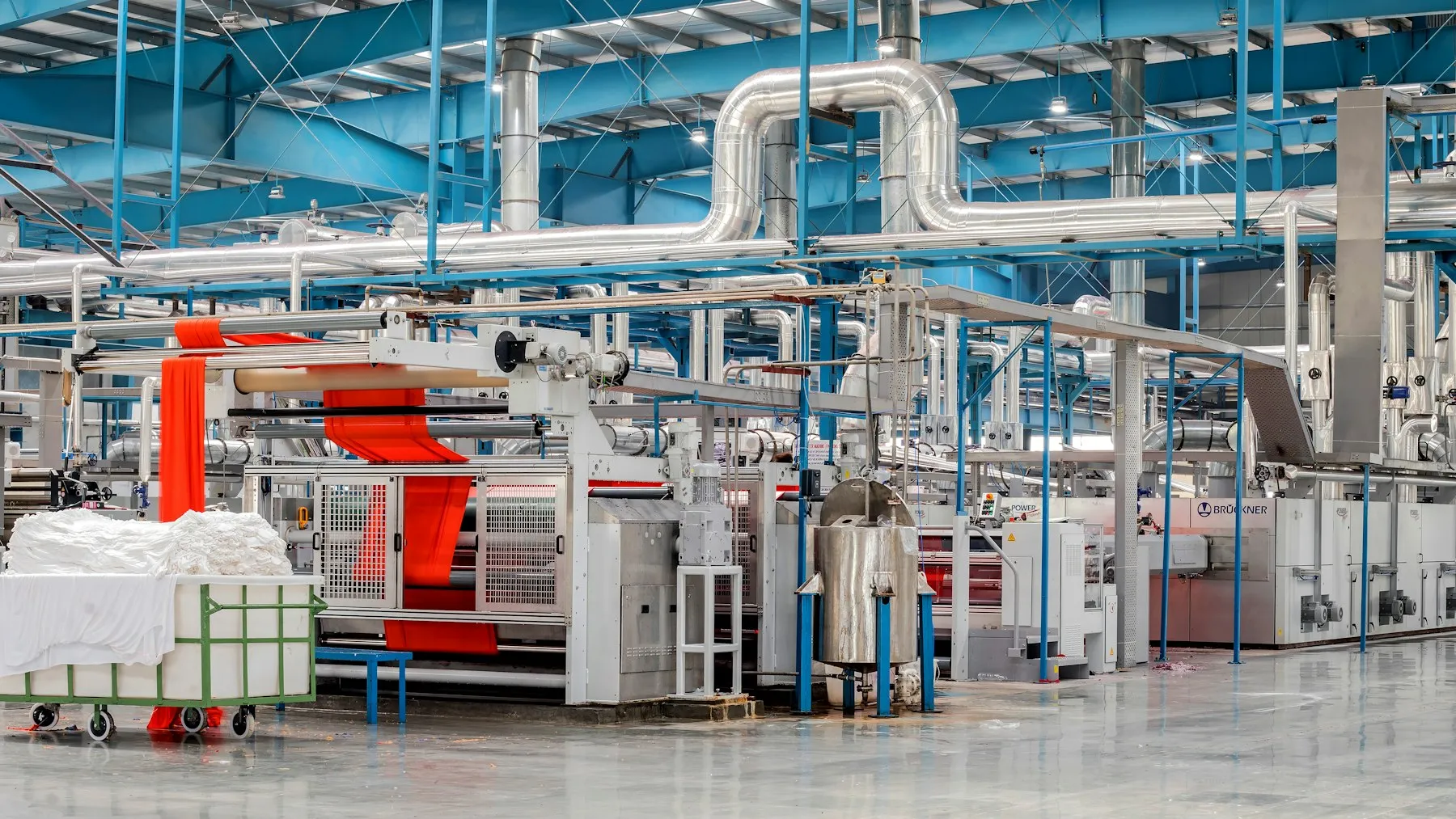
Let’s get the number on the table first: $130 million. That’s what Tractian, a company whose entire business is bolting sensors onto grimy industrial machines and listening to them hum, just raised in a Series D led by Sapphire Ventures (Dealroom).
The round values the company at $1.4 billion. That’s nearly double the $720 million it was worth in December 2024, when it closed a $120 million Series C — also led by Sapphire (technologies.org). Less than two years, roughly 2x the price tag.
Here’s the thing most AI coverage skips: while everyone argues about chatbots, a quieter category is eating the physical world. Tractian calls it physical AI — software that watches real equipment in real factories and tells you which motor is about to die.
The thesis: the most valuable AI right now might be the kind that never writes you a poem.
🧠 Why This Matters
Tractian’s pitch rests on one ugly statistic. The company says unplanned downtime costs the world’s 500 largest industrial firms about 11% of annual revenue — roughly $1.4 trillion a year (Pulse 2.0). When a bottling line or a pharma reactor stops without warning, the bill arrives in hours.
The reason it keeps happening is almost funny. Most industrial machines have no idea how they’re doing. As founder and CEO Igor Marinelli puts it, they’re flying blind.
“Completely naked in terms of hardware instrumentation.” — Igor Marinelli, CEO, Tractian (Dealroom)
So Tractian retrofits them. It sticks on about a dozen kinds of sensors — vibration, temperature, pressure, ultrasound, water level — then runs the readings through AI trained on a large library of past equipment failures. The software flags the motor whose bearings are grinding, names the likely cause, and tells a technician what to do before the line goes dark.
📊 Deep Dive
The money is real because the revenue is, too. Tractian’s annual recurring revenue crossed $100 million in September, up about 90% year over year, per figures the company shared and that The Information first reported (Dealroom). At a $1.4 billion valuation, that’s roughly 14x ARR — expensive, but not the triple-digit multiple a lot of pure-software AI darlings are wearing.
Here’s how the round and the business stack up:
- The raise: $130 million Series D, led by Sapphire Ventures with M&G’s Catalyst as co-lead, plus Next47, General Catalyst, Bosch Ventures, 53 Stations, Monashees and Y Combinator (Tractian).
- The price: $1.4 billion, up from $720 million in December 2024 (technologies.org).
- The footprint: more than 2,000 facilities worldwide run the platform, and headcount is past 700 (Pulse 2.0).
- The logos: Eli Lilly, McKesson, Whirlpool, Cummins, Embraer and Coca-Cola bottlers, plus undisclosed data-center and government operators (Pulse 2.0).
- The roots: founded in 2019 in Brazil, now headquartered in Atlanta with offices in Monterrey, São Paulo and Poland (technologies.org).
Notice what’s missing from that list: a chatbot. Tractian customizes open-source models — including Nvidia’s Nemotron — to chew through sensor data rather than to hold a conversation (Dealroom). Food and beverage is its biggest sector today. The fastest-growing one? Critical infrastructure, including the AI data centers everyone else’s models live in.
That last detail is the quiet joke of this round. The generative-AI boom is building enormous, power-hungry buildings full of equipment that absolutely cannot go down — and Tractian sells the sensors that keep those buildings breathing. Its investors noticed.
“The AI boom is driving a massive build-out of physical infrastructure.” — Anders Ranum, Partner, Sapphire Ventures (Pulse 2.0)
⚠️ The Catch
Predictive maintenance is not a new idea, and Tractian is not alone in it. Industrial giants and a crowd of startups have promised “no more surprise breakdowns” for a decade, and plenty of factory managers have a drawer full of sensors that generated dashboards nobody read. Selling software into heavy industry is slow, unglamorous work, and switching costs cut both ways — sticky once you’re in, brutal before you are.
There’s also a valuation question. ARR crossing $100 million is a milestone, but annualized recurring revenue is a snapshot run-rate, not audited annual revenue — a distinction that flatters fast-growing companies. At 14x, Tractian is priced for the 90% growth to keep going. Industrial sales cycles don’t always cooperate.
And the hardware is a double edge. Gluing a dozen sensor types onto machines across 2,000 facilities is a logistics and support operation, not just a software download. That’s a moat and a cost center at the same time.
🎯 What Happens Next
Tractian says the fresh capital goes into R&D and scaling its platform, with a strategic shift worth watching: moving from predicting individual equipment failures toward managing the overall health of an entire plant’s critical assets (Pulse 2.0).
In plain terms, the company wants to stop being the thing that pings you about one bad motor and become the system that runs your maintenance strategy. Expect more agentic features — software that doesn’t just flag a problem but drafts the work order — and an aggressive push into data centers and defense, where downtime is measured in dollars per second.
Watch two things from here. One: whether that $100 million ARR keeps compounding near 90% once the easy logos are signed. Two: whether a legacy industrial titan decides it’s cheaper to buy Tractian than to out-build it.
🧩 Bigger Picture
Zoom out and the Series D is a marker for where AI money is quietly flowing. The headline rounds still go to the model labs. But a parallel bet is forming on companies that point AI at concrete, steel and spinning metal — the unglamorous machinery that makes the pills, bottles the drinks and cools the GPUs.
Tractian’s rise — from a 2019 startup in Brazil to a $1.4 billion company with Eli Lilly and Embraer on the roster — is a reminder that the most durable AI businesses may be the ones closest to the factory floor, where the output isn’t a clever sentence but a line that simply doesn’t stop.
The smartest AI in your supply chain might never say a word. It just makes sure the machine keeps running.
Sources
- Tractian hits $1.4B valuation with $130M Series D for factory AI — Dealroom
- Tractian Raises $130 Million Series D at $1.4 Billion Valuation — Pulse 2.0
- Tractian Raises $130 Million Series D at $1.4 Billion Valuation for AI That Predicts Machine Failures — technologies.org
- Tractian Secures $130M to Scale Physical AI Worldwide — Tractian
❓ Quick answers
How much did Tractian raise and at what valuation?
Tractian raised a $130 million Series D on October 23, 2026, led by Sapphire Ventures with M&G's Catalyst as co-lead, valuing the company at $1.4 billion (Dealroom).
What does Tractian actually do?
It retrofits industrial machines with about a dozen sensor types and runs the data through AI trained on past equipment failures to predict breakdowns and recommend maintenance before machines go down (Pulse 2.0).
Who are Tractian's customers?
More than 2,000 facilities use the platform, including Eli Lilly, McKesson, Whirlpool, Cummins, Embraer and Coca-Cola bottlers (Pulse 2.0).