🔥 A Robot Hand That Picks 1,500 Objects an Hour Just Landed a $1.45 Billion Valuation
Eka Robotics raised a $150M Series A at a $1.45B valuation on Oct 21, 2026 for a robot hand that picks 1,500 objects an hour.
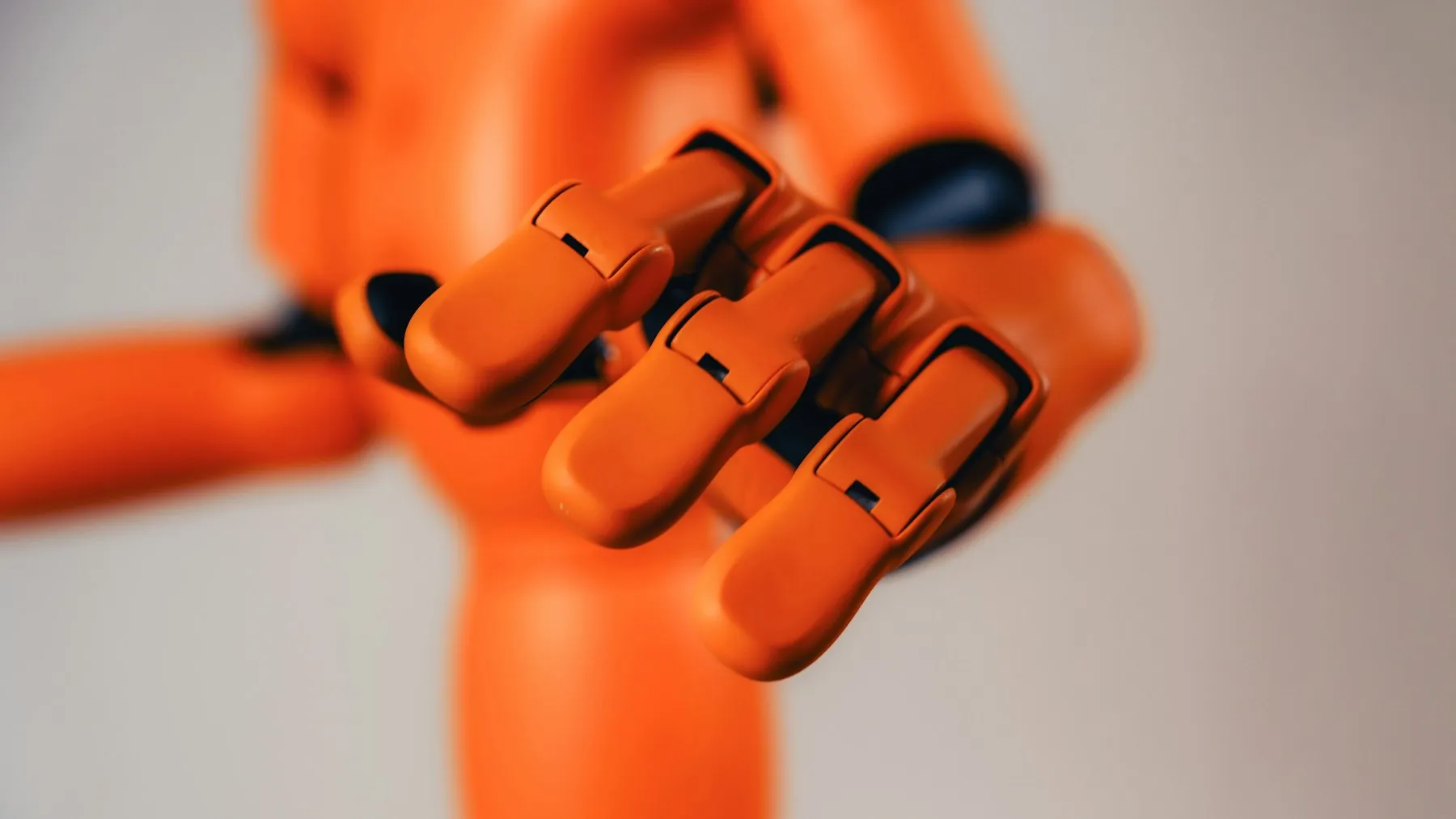
Start with the number that made investors open their wallets: 1,500 objects an hour. That’s how fast a gripper from a two-year-old Cambridge startup called Eka Robotics can pick and handle items in its own demos, against a human baseline of roughly 600 per hour. Call it 2.5x a person on a good day.
On October 21, 2026, Eka put a price on that claim. The company raised a $150 million Series A at a $1.45 billion post-money valuation, co-led by Andreessen Horowitz and F-Prime, the venture arm tied to Fidelity (TechFundingNews, TechStartups). That is a billion-dollar-plus valuation on a Series A — the round where most startups are still arguing about their first big customer.
The reason isn’t the robot arm. Arms are a solved, commodity problem. It’s the hand — and the software that tells the hand how hard to squeeze a strawberry without turning it into jam.
The breakthrough everyone’s chasing in robotics isn’t walking or talking. It’s touch.
🧠 Why This Matters
Robots have been welding car doors for 50 years. What they’ve never done well is the fiddly stuff your own hands do without thinking: picking up a key, screwing in a light bulb, threading a wire into a connector, pulling one slippery item off a pile without crushing it or dropping it.
That gap is the whole ballgame. The world has installed a lot of robots — the International Federation of Robotics counts more than 5 million industrial robots now running in factories, with installations up 11% year over year (IFR, Manufacturing Dive). Almost all of them repeat one bolted-down motion forever. The moment a task needs feel — adjust grip, sense slip, react to an object that isn’t where it should be — the robot falls over and a human steps back in.
Eka is betting it has cracked the feel part. If that holds up outside a demo reel, it reopens a chunk of manual labor that automation has never been able to touch.
📊 Deep Dive
Eka’s pitch is a model it calls Vision-Force-Action (VFA) — vision to see, force sensors to feel, and a learned policy to act. The trick is where it learns. Instead of thousands of hours of real-world trial and error, Eka trains in simulation that models mass and inertia, generating what it says is thousands of robot-hours of practice in minutes, then transfers the result to a custom gripper packed with more force sensors than a standard one (TechFundingNews). In its demos the robot screws in bulbs, inserts wires, fishes a strawberry out of an open palm, sorts chicken nuggets, and handles keys and earplugs (BGR, via WIRED).
The founders are the other half of the story. Pulkit Agrawal is an MIT professor who previously co-founded elder-care startup SafelyYou. Tuomas Haarnoja spent years at Google DeepMind and co-created Soft Actor-Critic, one of the reinforcement-learning algorithms that half the field now builds on. They met as grad students at Berkeley.
Here’s where the $1.45 billion sits among the companies chasing physical AI:
- Eka Robotics — $150M Series A, $1.45B valuation (Oct 21, 2026)
- Skild AI — raised $1.4B, valued above $14B (January 2026)
- Physical Intelligence — reported around an $11B valuation earlier in 2026
- Generalist — raised nearly $200M at roughly $3B (August 2026)
- Across the whole category, Crunchbase counted $47.4B of physical-AI venture funding in just the first half of 2026 (TechFundingNews)
a16z general partner Raghu Raghuram didn’t hedge:
“Eka’s Vision-Force-Action model is the first approach I’ve seen that truly solves manipulation.”
⚠️ The Catch
Read the throughput numbers again, slowly: 1,500 picks an hour, above 95% success — in specified conditions, in Eka’s own demonstrations. That is not the same as 1,500 picks an hour on a loud, dusty factory floor, for eight hours, with objects nobody told the robot about.
Eka hasn’t named a single paying production customer. It says it’s piloting with industrial partners on object handling and wire work, and that proving consistent performance outside the lab is the next job. Even its own messaging admits the bar:
“Generality without performance isn’t a product. It’s a lab demo.”
Then there’s hardware. A gripper that picks 1,500 times an hour is picking tens of thousands of times a day, and sensor-dense hardware has to survive that abuse without drifting out of calibration. The company concedes it still needs to prove durability. Translation: investors just paid a $1.45 billion price for a result that currently lives mostly in controlled conditions.
🎯 What Happens Next
The money has one obvious job — turn demos into deployments. Eka says the raise goes toward scaling VFA to more tasks and speeding up customer rollouts. Watch for the first named customer and, more tellingly, the first repeat order. A pilot proves a robot works once; a second purchase order proves it pays for itself.
The number that will matter isn’t picks per hour. It’s uptime — how many hours the thing runs between a human having to walk over and fix it. That single figure decides whether this is a labor replacement or an expensive science project.
🧩 Bigger Picture
For a decade, the splashy robotics money chased humanoids — full walking, talking androids. Eka is part of a quieter counter-bet: forget the legs, nail the hands. Manipulation is the bottleneck in warehouses, electronics assembly, and food packing, and it’s where most of the actual human labor still lives.
If simulation-trained touch really transfers to the real world, the economics get uncomfortable fast. A gripper that genuinely does 2.5x a human, around the clock, doesn’t just help a line — it reprices the line. That’s the trillion-dollar question sitting under a $1.45 billion Series A, and nobody has answered it yet. Eka just raised $150 million to try.
Robots learned to see years ago. The company that teaches them to feel won’t be selling a demo — it’ll be selling everyone else’s labor budget back to them.
Sources
- TechFundingNews — Eka Robotics raises $150M at $1.45B valuation
- TechStartups — Startup Funding News Today, October 21, 2026
- BGR — This new robot could be the next step in replacing humans for manual labor
- IFR — Five million robots now operate in factories globally
- Manufacturing Dive — Factory robots surpass 5M worldwide, IFR reports
❓ Quick answers
How much did Eka Robotics raise and at what valuation?
Eka Robotics raised a $150 million Series A at a $1.45 billion post-money valuation, announced October 21, 2026, co-led by Andreessen Horowitz and F-Prime (TechFundingNews, TechStartups).
How fast is Eka's robot compared to a human?
In its own demonstrations Eka's gripper picks about 1,500 objects per hour at above 95% success, versus a human baseline of roughly 600 per hour — about 2.5x — though these are controlled-condition results, not proven factory throughput.
Who founded Eka Robotics?
MIT professor Pulkit Agrawal and former Google DeepMind researcher Tuomas Haarnoja, who co-created the Soft Actor-Critic reinforcement-learning algorithm; the company is based in Cambridge, Massachusetts.