🔥 Lilly and Resilience Just Put $750 Million Into Ohio to Make More Weight-Loss Pens
Lilly and its manufacturing partner Resilience are putting $750 million into an Ohio campus to make more of the injector pens behind the diabetes and obesity boom -- 400 new jobs, full operations by early 2027.
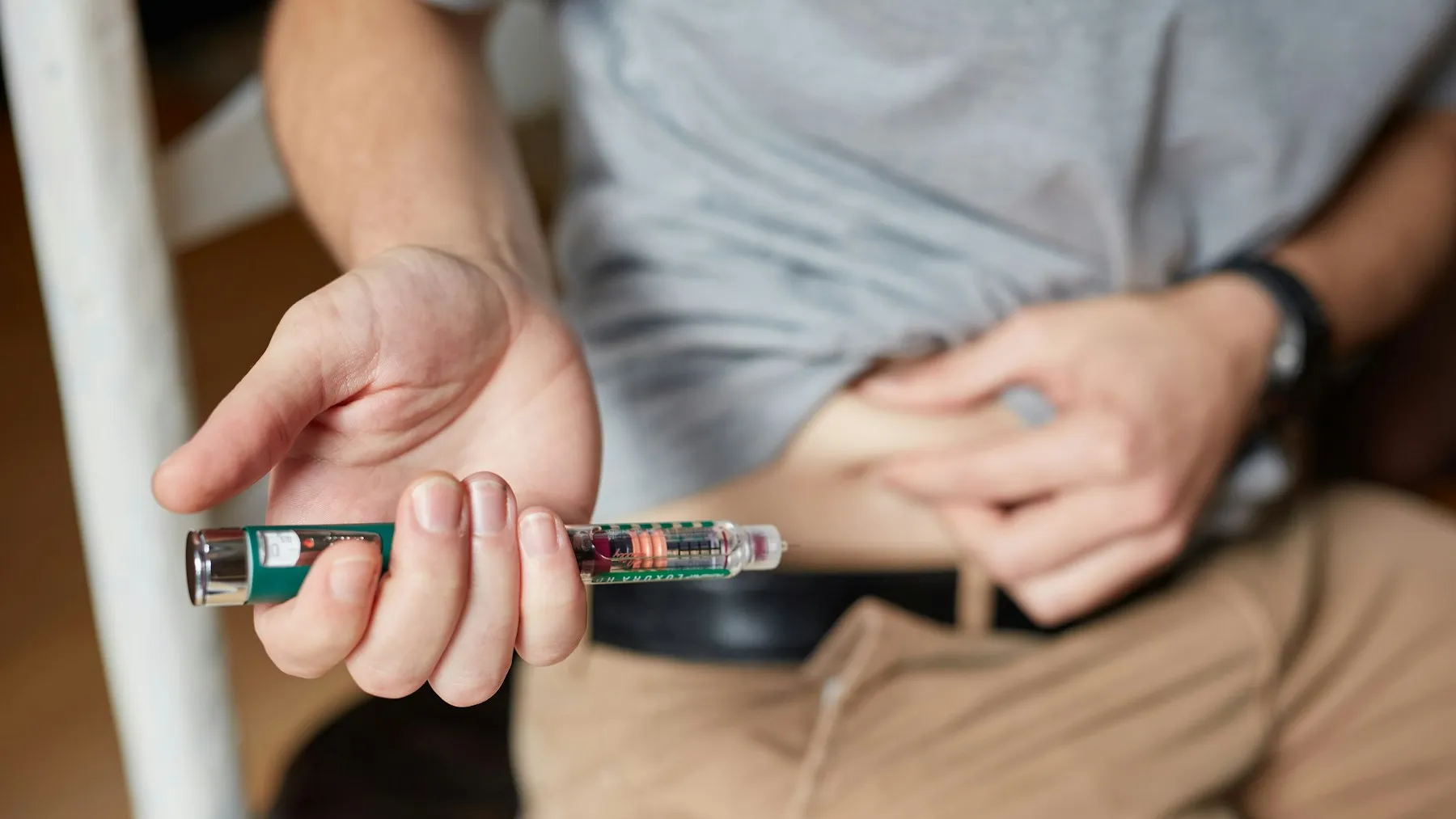
The most valuable drugmaker on Earth just spent big on something that isn’t a drug. It spent it on the plastic pen that pushes the drug into your leg.
Let’s get the number on the table first: $750 million. That’s the combined check Eli Lilly and its manufacturing partner Resilience are writing to expand a sprawling factory campus in the Cincinnati suburbs, aimed squarely at cranking out more of the injector pens that deliver Lilly’s diabetes and obesity blockbusters ($750M raise (BusinessWire)).
The money buys 400 new high-skilled jobs, pushes Resilience’s Ohio headcount past 1,400, and expands two facilities that already span nearly a million square feet. Full operations are expected in early 2027 (BioSpace).
The story here isn’t a molecule. It’s a bottleneck — and who’s paying to widen it.
🧠 Why This Matters
You can invent the best weight-loss drug of the decade and still lose if you can’t fill enough pens. That’s the wall Lilly keeps running into. Demand for GLP-1 medicines like Mounjaro and Zepbound has outrun supply for two straight years, and the choke point often isn’t the active ingredient — it’s the sterile fill-finish step and the device assembly that turns a vial of medicine into a click-and-inject pen you can use at home.
Resilience is a contract development and manufacturing organization — a CDMO, in industry shorthand — that specializes in exactly that unglamorous, hard-to-scale work. Since the two companies teamed up in 2023, the partnership has already churned out more than 150 million doses of Lilly medicines (BusinessWire). This new money is a bet that 150 million wasn’t nearly enough.
“Our investment reflects our long-term commitment to building one of the largest and most advanced sterile injectable and device assembly and packaging operations in the United States.” — William S. Marth, President and CEO, Resilience
📊 Deep Dive
The specific target is Lilly’s KwikPen, the prefilled injectable device for its diabetes and obesity medicines. Expanding pen production means expanding two things at once: the sterile filling of the drug, and the mechanical assembly and packaging of the device around it. Doing both under one roof in Ohio is the whole point.
Here’s the deal by the numbers:
- $750 million — combined Resilience + Lilly investment (the split between the two wasn’t disclosed)
- 400 — new high-skilled jobs, on top of the ~1,000 people already on site
- 1,400+ — total Resilience employees expected in Ohio once it’s built out
- ~1 million — square feet across the two existing Cincinnati-region facilities being expanded
- 150 million+ — doses of Lilly medicine the partnership has already produced since 2023
- Early 2027 — when full operations are expected to come online
Location matters more than it looks. Resilience recently moved its own headquarters to Blue Ash, Ohio, from California, and the expansion lands in the West Chester area — planting a specialized biomanufacturing hub in the Midwest rather than the usual coastal clusters. Ohio’s governor was quick to take a bow.
“Scaling complex manufacturing programs requires proven technical capability, an uncompromising commitment to quality, and the ability to deliver consistently.” — Edgardo Hernandez, EVP and President of Manufacturing Operations, Eli Lilly
⚠️ The Catch
Capacity is not the same as a cure. This $750 million buys the ability to make more of what Lilly already sells — it doesn’t invent anything new, and it won’t ship a single extra pen until early 2027. If you’re waiting on a prescription today, this announcement does nothing for you this year.
The jobs number is also worth reading plainly: 400 new roles for $750 million is capital-heavy, not labor-heavy. Modern sterile-fill lines are highly automated, so the headline figure is about output and resilience of supply, not about employing a town.
And the demand it’s chasing isn’t guaranteed to hold its shape. GLP-1 competition is intensifying, pricing is under pressure, and oral weight-loss pills are coming that could shift volume away from injectables entirely. Betting on injector-pen capacity is a bet that the needle stays central for years — a reasonable bet, but a bet.
🎯 What Happens Next
Watch the calendar. The 2027 start date is the real milestone, and in pharma manufacturing, “expected early 2027” has a way of drifting. If the lines come online on time and on spec, Lilly gains a domestic buffer against the supply crunches that have dogged the whole category.
Watch the CDMO model, too. Lilly building capacity through a partner — rather than pouring every dollar into its own plants — is a signal that even a company this size wants to spread the risk and the capital of scaling fill-finish. Expect more of these hybrid deals across Big Pharma.
🧩 Bigger Picture
This $750 million is a rounding error inside a much larger campaign. Lilly has pledged to more than double its U.S. manufacturing spend since 2020 to over $50 billion, including $27 billion announced in February 2025 to build four new plants (Manufacturing Dive). That announcement came days after CEO David Ricks met with President Trump, who had floated tariffs “in the neighborhood of 25%” on imported pharmaceuticals (CNBC).
So read the Ohio deal as one brick in a wall the entire industry is building: pulling drug production back onshore, ahead of tariffs and after years of supply scares. Weight-loss demand supplies the urgency; trade policy supplies the deadline. The pen factory in Cincinnati is where those two forces meet.
The blockbuster gets the headlines. The pen that delivers it just got a $750 million vote of confidence — and that’s the part of the supply chain that actually decides whether the drug reaches your hands.
Sources
- Resilience and Lilly Invest $750 Million to Increase U.S.-Manufactured Medicine Supply — BusinessWire (July 30, 2026)
- Resilience and Lilly Invest $750 Million — BioSpace
- Resilience And Lilly Invest $750 Million — Pulse 2.0
- Lilly expands US manufacturing build-out with $50B target — Manufacturing Dive
- Eli Lilly plans at least $27 billion in new U.S. manufacturing — CNBC