
🔥 Etched Doubled to $21 Billion in a Month — on a Chip That Only Runs Transformers
Etched, a transformer-only AI chip startup, just doubled to a $21 billion valuation on a $700M round led by Jane Street — with $1B in booked orders and one very concentrated bet.
A four-year-old chip startup founded by Harvard dropouts just told investors it’s worth $21 billion. That’s the number to sit with. On August 18, Etched closed a $700 million round led by trading firm Jane Street, roughly doubling a valuation that had been $10.3 billion less than a month earlier (TechCrunch).
Rewind eight months and Etched was a $5 billion company (DCD). So the arc reads $5B in December, $10.3B in July, $21B now — a 4x markup while the company is still shipping its very first product.
Here’s the wager underneath the number: Etched didn’t build a flexible AI chip. It built one that can run transformers and nothing else. That’s the whole bet, and it’s why this round is either brilliant or a $21 billion tightrope.
🧠 Why This Matters
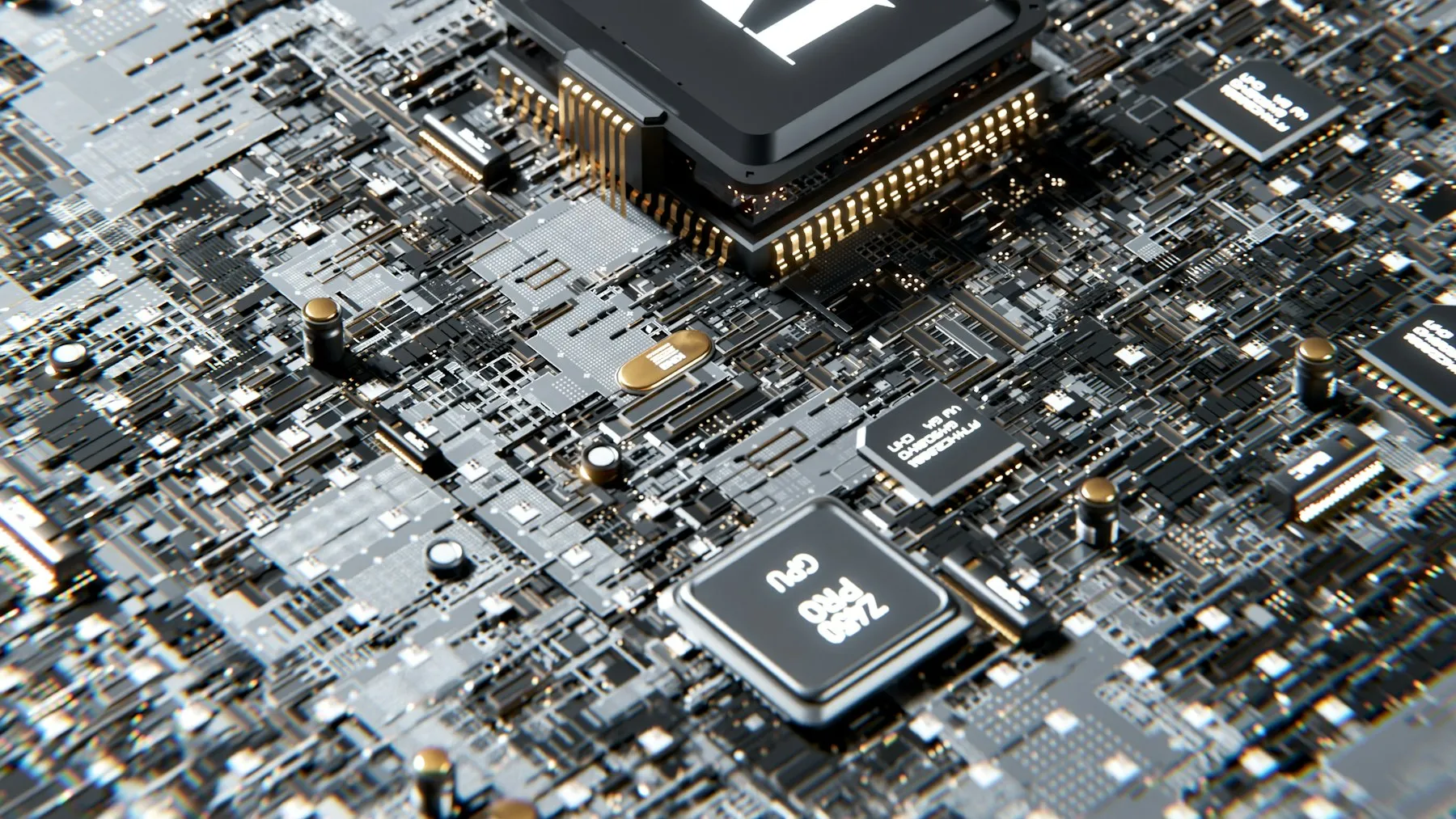
Nearly every AI chip on earth — including Nvidia’s — is a general-purpose processor that can run many kinds of models. Etched threw that flexibility out. Its chip, Sohu, hard-wires the transformer architecture — the “T” in ChatGPT — directly into silicon. Drop everything else, the theory goes, and you get enormous speed on the one thing that actually matters right now.
The pitch is blunt. Etched claims one 8-chip Sohu server replaces 160 Nvidia H100 GPUs, and runs text, image and video transformers “an order of magnitude faster and cheaper” than even Nvidia’s next-gen Blackwell parts (TechCrunch, 2024). If that holds up in production, it’s the kind of cost curve that makes a $4-trillion incumbent nervous.
“In 2022, we made a bet that transformers would take over the world.”
— Gavin Uberti, Etched CEO (TechCrunch)
📊 Deep Dive
Etched was started in 2022 by Gavin Uberti, Robert Wachen and Chris Zhu, who left Harvard to chase a single-architecture chip when most people still hadn’t heard the word “transformer.” Four years on, the company runs about 400 employees and a new 10-megawatt data center in Milpitas, and it says it’s sitting on roughly $1 billion in booked orders (TechCrunch). Jane Street — the new lead investor — installed Etched’s first shipped cluster in its own datacenter, which is a useful signal when a firm puts unproven hardware next to its trading systems.
The valuation ladder, in one glance:
- December 2025: $5 billion, on a $500M round led by Stripes with Peter Thiel (Yahoo Finance)
- July 2026: $10.3 billion, on a $300M Series C led by Sequoia (TechCrunch)
- August 2026: $21 billion, on $700M led by Jane Street, with Kleiner Perkins, Sequoia, Andreessen Horowitz, Tiger Global, Bain Capital Ventures and Blackstone in the mix (TechCrunch)
- Product on the table: Sohu, a transformer-only ASIC that Etched says hits ~500,000 tokens/second on Llama 70B per 8-chip server (Etched’s own figure, at batch size 1, not independently benchmarked) (Spheron)
That last line is the reason to keep both eyes open. A specialized inference chip can look untouchable at batch size 1 — one request at a time — and then give back much of the lead in production, where GPUs serve dozens of requests at once and Etched’s fixed circuits don’t scale the same way. The 500,000-token headline is real as a claim; it just hasn’t been checked by anyone outside the company.
⚠️ The Catch
Sohu can only run transformers. That’s the feature and the fault line. Etched’s entire $21 billion rests on the assumption that the transformer stays the dominant AI architecture for years — long enough to fill $1 billion of orders and then several billion more.
The field is not standing still. State-space models, diffusion-based language models, and various hybrid designs are all being researched precisely because transformers are expensive to run at scale. If any of them displaces the transformer for frontier models, a general-purpose GPU simply loads different software. A hard-wired transformer chip becomes a very fast doorstop. Uberti has never hidden this — the “bet” framing is his — but a bet at a $5 billion valuation and a bet at $21 billion are different animals carrying the same risk.
🎯 What Happens Next
Watch for independent benchmarks. Until a third party runs Sohu against Blackwell at realistic batch sizes, the performance claims are marketing, however credible the investor list. The tell that matters more than any spec sheet: whether those $1 billion in booked orders convert into repeat purchases once customers see production numbers.
Also watch Nvidia. It has answered specialized-inference challengers before by cutting prices and shipping faster, and it can absorb a margin hit that would sink a startup. Etched’s window is the gap between “Sohu is measurably cheaper per token” and “Nvidia matches the price.” That window is the entire investment thesis.
🧩 Bigger Picture
Etched is a clean read on where AI money is flowing in 2026: away from training the next model and toward running the ones we already have, cheaply, billions of times a day. Inference is the recurring cost of the AI boom, and whoever drops the price per token controls a lot of leverage. That’s why a trading firm, three of the biggest venture funds, and Blackstone are willing to underwrite a company whose product can do exactly one thing.
It’s also a reminder of how fast paper valuations move when a story is hot. A 4x markup in eight months isn’t a judgment about revenue — Etched is pre-scale — it’s a judgment about conviction, and conviction can reprice a lot faster than it can ship chips.
Etched built a chip that’s a genius as long as the world keeps speaking transformer — and an expensive paperweight the day it doesn’t.
Sources
- TechCrunch — Etched’s valuation doubles to $21B in a month
- TechCrunch — Etched hits $10.3B valuation
- TechCrunch — Etched’s transformer-only chip (2024)
- Data Center Dynamics — Etched raises $500M at $5B
- Yahoo Finance — Etched $500M round
- RCR Wireless — Etched in talks for $20B valuation
- Spheron — Sohu vs Nvidia inference analysis