
🔥 DeepSeek Erased $600 Billion From Nvidia in a Day — Now It Wants Wall Street to Pay $74 Billion for the Lab That Did It
DeepSeek, the Chinese lab that wiped ~$600B off Nvidia in a day, is raising up to $7B at a $74 billion valuation ahead of an onshore IPO.
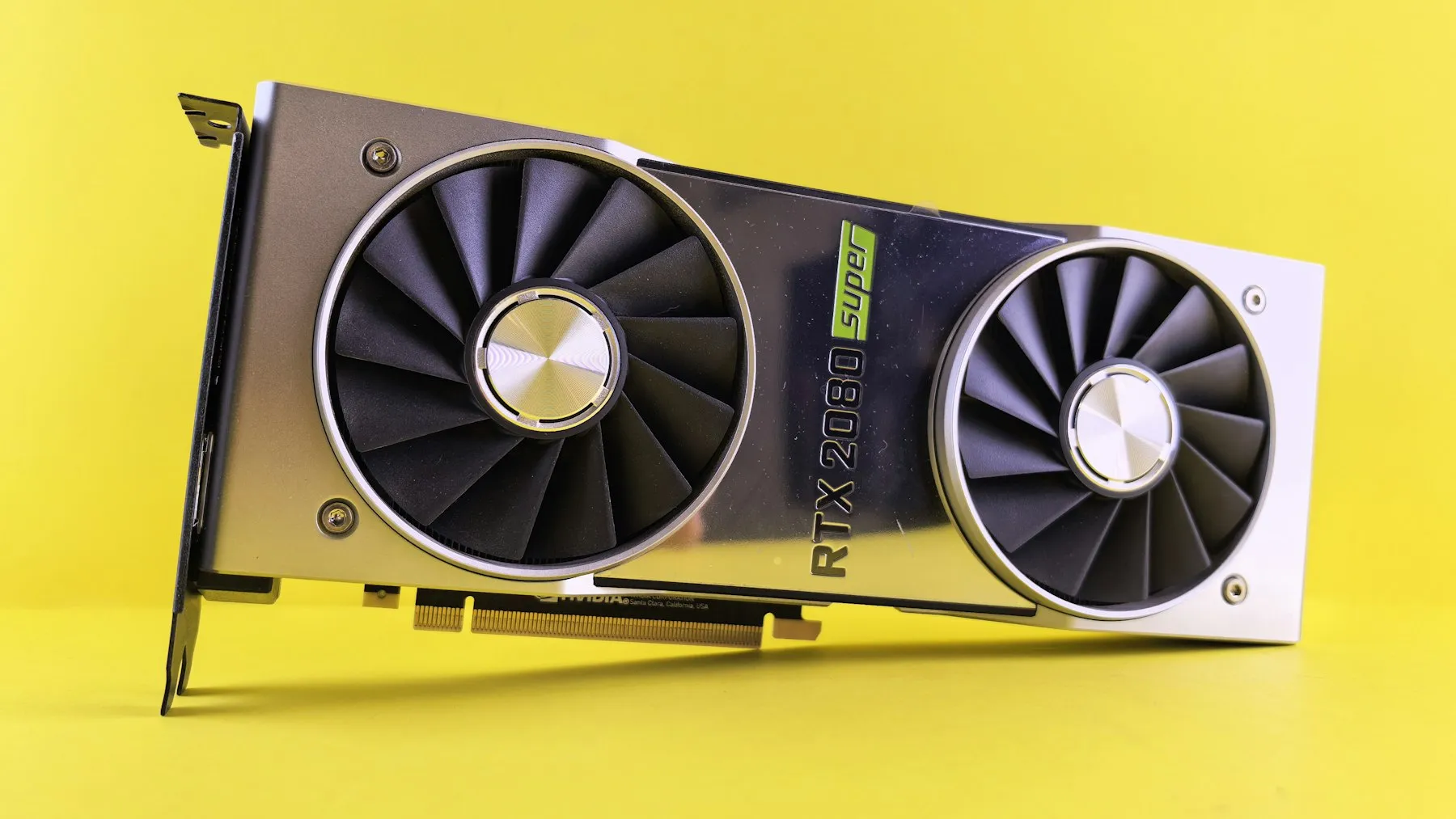
Eighteen months ago, a Chinese lab you’d never heard of wiped nearly $600 billion off Nvidia’s market cap in a single trading day — the biggest one-day loss in U.S. stock market history (CNBC). Now that same lab wants Wall Street’s estimation of itself.
Let’s get the number on the table first: $74 billion. That’s the valuation DeepSeek is targeting in a fresh funding round, according to people familiar with the plans (Reuters). To put a finer point on it — that’s 500 billion yuan, and DeepSeek is trying to raise up to 50 billion yuan (about $7 billion) to get there.
The kicker isn’t the size. It’s the speed. In June, DeepSeek closed a round at a 450-billion-yuan post-money valuation, roughly $66 billion (Business Standard). Weeks later, it wants investors to pay $8 billion more for the same company. And it’s doing this while lining up for a stock-market debut on home turf.
The lab that made the AI world cheaper is about to find out what it’s worth.
🧠 Why This Matters
DeepSeek isn’t just another model shop. In January 2025, its low-cost R1 model did something no one thought possible: it rivaled the best American systems at a fraction of the training and operating cost (Reuters). That single revelation triggered a global selloff, gutted Nvidia’s stock, and forced every hyperscaler in Silicon Valley to explain why they were spending tens of billions on compute when a Hangzhou team apparently didn’t need to.
So when this company decides to raise money and go public, it’s not a routine funding headline. It’s a referendum. Investors are being asked to price the one lab that proved the “spend your way to AGI” thesis might be wrong — and they’re saying yes, at $74 billion.
📊 Deep Dive
Here’s what makes the round remarkable. DeepSeek is majority-owned and largely self-funded by its founder, quant-fund billionaire Liang Wenfeng, who put in 20 billion yuan of the June raise himself (Tech Startups). This is not a startup begging for cash. It’s a startup letting a very short list of strategic names buy in.
Compare the two rounds side by side:
- June round: ~50 billion yuan raised at a 450 billion yuan (~$66B) post-money valuation
- New round: up to 50 billion yuan targeting a 500 billion yuan (~$74B) valuation
- Time between them: a matter of weeks, not quarters
- Anchor investor: founder Liang Wenfeng — 20B yuan of his own money in June
- Strategic backers: Tencent (10B yuan), battery giant CATL (5B yuan), plus China’s national AI fund, NetEase, JD.com and IDG Capital
Look at that investor list again. CATL — the world’s largest EV battery maker — is now a DeepSeek shareholder. That’s not a financial bet; it’s an industrial one. And China’s state-backed national AI fund being in the cap table tells you Beijing considers this company strategic infrastructure, not a hobby.
DeepSeek “drew global attention with its low-cost AI models in 2025,” models that “appeared to rival leading U.S. systems at lower training and operating costs.” — Reuters
What’s the money for? After June, DeepSeek said it plans to double staff across departments and develop its own proprietary AI inference chips (Reuters) — a direct hedge against U.S. export controls that keep Nvidia’s best silicon out of Chinese data centers.
⚠️ The Catch
Now the part the valuation glosses over. DeepSeek’s revenue is not disclosed — neither Reuters nor Business Standard could put a number on what this $74 billion company actually earns. You’re pricing a lab on influence and potential, not a P&L.
Then there’s the venue. DeepSeek is aiming for Shanghai’s STAR Market, China’s Nasdaq-style board, with an internal target to file this year and potentially debut in 2027 (Reuters). That keeps it walled off from U.S. investors and squarely inside China’s regulatory orbit — a market where AI companies answer to the state as much as to shareholders.
And the export-control problem doesn’t vanish because DeepSeek wants its own chips. Designing inference silicon is one thing; manufacturing it at scale without cutting-edge fabs is another. The company that beat the West on software efficiency still has to solve hardware the hard way.
🎯 What Happens Next
Watch the filing. If DeepSeek submits IPO paperwork to the STAR Market before the end of 2026, it becomes the first true frontier-model lab to test public markets — beating OpenAI and Anthropic to the punch, and doing it in Shanghai rather than New York.
Watch the chips, too. Any concrete progress on DeepSeek’s in-house inference silicon would be a genuine tremor for Nvidia, which already learned in 2025 what this team does to its stock price when it ships something unexpected.
🧩 Bigger Picture
Step back and the story stops being about one round. The U.S. AI thesis has been simple: whoever spends the most on compute wins. DeepSeek is the living counterexample — a lab that got to the frontier on efficiency, self-funded by a hedge-fund founder, now valued at $74 billion and marching toward a domestic IPO with Beijing’s blessing.
If that debut lands, it hands China a publicly traded AI champion the West can’t buy into and can’t easily sanction. The $600 billion DeepSeek erased from Nvidia in a day was a warning shot. This round is the follow-through.
DeepSeek made AI cheap enough to terrify Wall Street. Now it’s asking Wall Street to pay $74 billion for the privilege — and it doesn’t even need the money.
Sources
- Reuters (via Yahoo Finance) — China’s DeepSeek to raise fresh capital at $74 billion valuation ahead of onshore IPO
- Business Standard — DeepSeek seeks fresh funding at $74 bn valuation ahead of onshore IPO
- Tech Startups — DeepSeek eyes $74 billion valuation in new funding round ahead of planned IPO
- CNBC — Nvidia sheds almost $600 billion in market cap, biggest one-day loss in U.S. history