🔥 Y'all Street Just Pulled $155 Million — and Its First Listings Off Nasdaq
Dallas-based Texas Stock Exchange raised $155M, pushing total funding to $430M, after pulling its first listings off Nasdaq and giving the NYSE-Nasdaq duopoly a credible third rival.
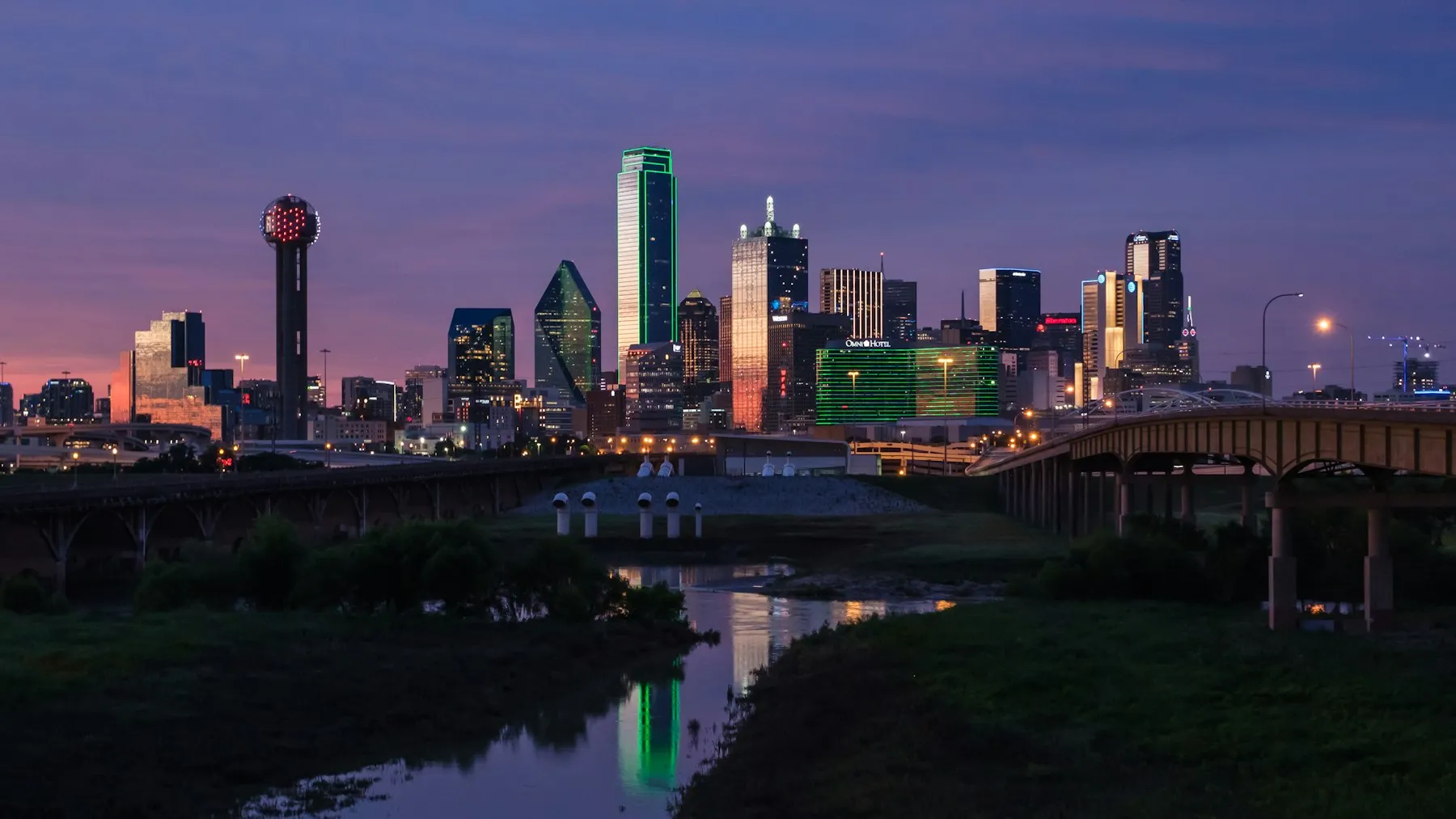
There’s a new stock exchange in Texas, and this week it did two things Wall Street has spent 200 years assuming nobody else could pull off: it took listings away from Nasdaq, and it convinced the people who run Wall Street to pay for the privilege of helping.
Let’s get the number on the table first: $155 million. That’s the fresh round the Dallas-based Texas Stock Exchange raised this week, pushing its total haul to $430 million since it started (Dallas Innovates; Insurance Journal / Bloomberg). More than three-quarters of it came from investors who’d already written checks before.
Here’s the part that should make the incumbents sit up: the money arrived after TXSE had already started trading and after it had peeled its first real corporate listings off the big boards. This isn’t a pitch deck anymore.
The thesis: for the first time in a generation, the NYSE–Nasdaq duopoly on American primary listings has a credible third door — and it’s bankrolled by the same firms that own the first two.
🧠 Why This Matters
For decades, if you wanted your company’s ticker to trade on a U.S. public market, you had exactly two serious choices. The New York Stock Exchange or Nasdaq. That’s it. A duopoly that comfortable doesn’t usually get disrupted by a startup in a cowboy hat.
But TXSE isn’t scrappy. Its backer list reads like a seating chart at a Davos dinner: BlackRock, Citadel Securities, Charles Schwab, JPMorgan Chase, Goldman Sachs, and Bank of America are all in (Dallas Innovates). When the world’s largest asset manager and the firm that executes a huge share of U.S. retail orders both fund your competitor-to-the-exchanges, that’s not charity. That’s a hedge.
“Real competition for primary listings is here, and it is here to stay.” — James Lee, TXSE founder and CEO (Insurance Journal / Bloomberg)
📊 Deep Dive
The timeline tells the story better than any press release. TXSE won SEC approval as a national securities exchange on September 30, 2025 (Wikipedia). It switched on trading in the summer of 2026 (Houston Public Media). And in September 2026 it landed what the big exchanges said couldn’t happen quickly: primary listings pulled directly off Nasdaq (Texarkana Gazette).
Texas Capital Bancshares became the first company to ditch Nasdaq and list on TXSE (Insurance Journal / Bloomberg). Energy Transfer and its affiliates have announced moves too, alongside names like Dillard’s and Origin Bancorp (Dallas Innovates).
How the new exchange stacks up against the establishment:
- Total raised: TXSE has pulled in $430 million across three rounds — roughly $275 million before this week, plus the new $155 million (Dallas Innovates).
- Listing standards: TXSE is deliberately picky. By CEO Lee’s own math, its standards would screen out roughly 1,500 Nasdaq-listed and 200 NYSE-listed companies that currently trade (Wikipedia).
- Target pool: an estimated 1,000 public companies and 14,000 private-equity-backed firms across the Southeast and Southwest (Wikipedia).
- Home turf: downtown Dallas, pitched squarely at companies that would rather not answer to a market headquartered in Manhattan.
The strategy isn’t volume. It’s positioning. Lee’s bet is that a slice of corporate America wants a listing venue that markets itself as business-friendly and lower-drama — and that a few marquee defections will make the rest feel safe following.
⚠️ The Catch
Winning a handful of listings is not the same as winning the war. The NYSE and Nasdaq list thousands of companies and move trillions in daily volume; TXSE is measured in a short, if growing, list of names. Liquidity is the whole game in exchanges, and liquidity is sticky. Index funds, options markets, and decades of trading infrastructure are all wired to the incumbents.
There’s also a plainer wrinkle worth noting: TXSE’s majority owner is Kelcy Warren (Wikipedia) — and Energy Transfer, the pipeline giant Warren co-founded and chairs, is among the companies lining up to list. Friendly early customers are great for momentum. They’re less persuasive as proof that unaffiliated companies will come on their own.
And the valuation on this round? Not disclosed (Dallas Innovates). When a company raises mostly from insiders and stays quiet on price, it’s worth asking what the number would have looked like in the open.
🎯 What Happens Next
Watch the defection rate. One or two listings is a headline; a dozen a quarter is a trend. The companies that have announced moves — Energy Transfer, Dillard’s, Origin Bancorp — now have to actually complete them, and other boards will be watching how smoothly it goes.
Watch the ETF pipeline, too. TXSE has lined up funds like the Texas Capital Texas Equity Index ETF and the Westwood Salient Enhanced Power & Infrastructure ETF (Dallas Innovates). Products are how an exchange builds the everyday trading flow that makes big listings feel safe.
And watch the incumbents. The NYSE already opened a Texas outpost; Nasdaq has leaned into its own Texas presence. The duopoly noticed. The question for the next few quarters is whether they respond with marketing — or with fee cuts that actually hurt.
🧩 Bigger Picture
The U.S. hasn’t had a genuinely new, venture-backed national stock exchange swinging at primary listings in living memory. That it’s happening at all — approved by the SEC, trading live, and now $430 million deep — tells you something about where capital and companies think the center of gravity is drifting.
You can read this as a Texas story, and it is one. But the sharper read is about concentration: when two venues control who gets to be a public company, even their own biggest customers eventually fund an alternative, just to keep the duopoly honest. The $155 million isn’t really buying a stock exchange. It’s buying leverage.
Wall Street spent two centuries deciding it was the only room that mattered. Y’all Street just proved there’s a second door — and it’s already got a few people walking through it.
Sources
- Dallas Innovates — Texas Stock Exchange Funding Hits $430M After $155M Raise
- Insurance Journal / Bloomberg — Texas Stock Exchange Raises $155 Million After First Listings
- Houston Public Media — Texas Stock Exchange Launches Trading
- Texarkana Gazette — TXSE Captures First Primary Equity Market Listings From NYSE
- Wikipedia — Texas Stock Exchange