
<p>SpaceX just filed plans to build a $55 billion chip factory in Texas called Terafab — joint with Tesla, using Intel's 14A process, designed to manufacture custom AI chips for self-driving cars, Optimus humanoid robots, and orbital data centers. Here's everything you need to know.</p>
<figure class="kg-card kg-image-card"><img src="https://images.unsplash.com/photo-1742934028777-4d283a3233cc?crop=entropy&cs=tinysrgb&fit=max&fm=jpg&ixid=M3w3ODQzODd8MHwxfHNlYXJjaHwxfHxzZW1pY29uZHVjdG9yLWZhY3RvcnktY2hpcC1tYW51ZmFjdHVyaW5nfGVufDB8fHx8MTc3ODA3NjA5MHww&ixlib=rb-4.1.0&q=80&w=1080" class="kg-image" alt="Semiconductor manufacturing facility" loading="lazy"></figure>
<h2>🔥 What Happened</h2>
<p>On May 6, 2026, <strong>SpaceX publicly filed plans for Terafab</strong>, a semiconductor manufacturing complex in Grimes County, Texas, with an initial investment of <strong>$55 billion</strong> — and a potential total price tag of <strong>$119 billion</strong> if all phases are completed.</p>
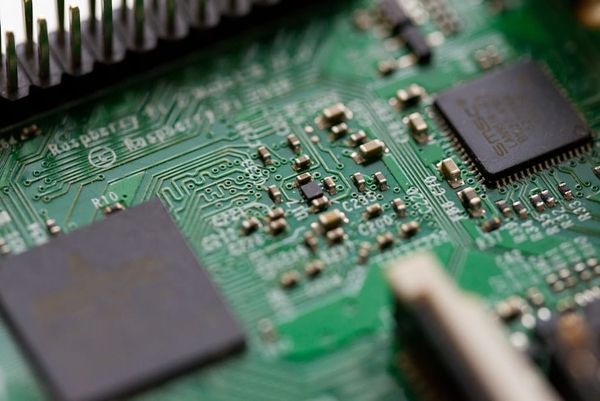
<p>The filing, made public Wednesday via a reinvestment zone notice, reveals this is a <strong>joint project with Tesla</strong> that will produce custom AI chips using Intel's cutting-edge <strong>14A process node</strong>. The facility is designed to manufacture chips for:</p>
<ul>
<li><strong>Tesla's Full Self-Driving systems</strong> and the Cybercab robotaxi fleet</li>
<li><strong>Optimus humanoid robots</strong> — Tesla's humanoid workforce-in-progress</li>
<li><strong>SpaceX orbital data centers</strong> using custom D3 chips designed for space-based AI processing</li>
<li><strong>In-house GPU manufacturing</strong>, as flagged in SpaceX's S-1 registration</li>
</ul>
<p>This is not a hypothetical pitch deck. The Grimes County commissioners are expected to consider a property tax abatement agreement at their June meeting. Land has been identified. The timeline is real.</p>
<h2>🧠 Why This Matters</h2>
<p>Here's the terrifying-reality part: <strong>Elon Musk couldn't buy enough chips for his own companies</strong> — so he decided to build the most expensive factory on Earth.</p>
<p>During Tesla's Q1 earnings call last month, Musk explained the math bluntly. Even extrapolating maximum production from TSMC and Samsung, the output wouldn't come close to meeting Tesla's combined needs for FSD, Cybercab, and Optimus. His exact words: <em>"I can't see any other way to get to the volume of chips that we're looking for. So I think we're probably going to have to build a gigantic chip fab. It's got to be done."</em></p>
<p>Four months later, that vision became Terafab.</p>
<p>This is a <strong>vertically integrated semiconductor play</strong> that bypasses the entire global chip supply chain. SpaceX and Tesla are essentially saying: we want to own the silicon we run on, from design through fabrication to deployment.</p>
<h2>📊 Deep Dive</h2>
<p>The scale here is hard to overstate. Let's break down the numbers:</p>
<p><strong>$55 billion initial investment</strong> — that's the proposed first phase. For context, TSMC's Arizona fab (the largest foreign semiconductor investment in US history) is $65 billion <em>total</em>. Samsung's Taylor, Texas complex is around $45 billion. Terafab's initial phase alone puts it in that league — and the $119 billion full-phase estimate would make it the <strong>most expensive semiconductor facility ever built</strong>.</p>
<p><strong>Joint by design.</strong> SpaceX, Tesla, and the recently acquired xAI are all pooling their chip demand. With xAI now integrated into SpaceX (the combined entity was valued at $1.25 trillion in the deal earlier this year), the Terafab project serves the entire Musk industrial ecosystem under one roof.</p>
<p><strong>Intel's 14A process.</strong> Intel CEO Lip-Bu Tan has personally committed Intel to design, fabricate, and package chips for the Austin-area facility. This is a massive win for Intel's foundry ambitions — landing the Terafab contract signals that Intel 14A is legit, and gives Intel a flagship customer for its most advanced node.</p>
<p><strong>Two factories, two purposes.</strong> Reuters previously reported that Terafab will actually house two chip fabrication lines. One will produce the AI5 and AI6 chips powering Tesla's FSD and Optimus (terrestrial AI). The second will produce D3 chips designed specifically for orbital data centers — AI processing in space, powered by SpaceX's satellite infrastructure.</p>
<p><strong>IPO timing.</strong> The filing comes as SpaceX targets a <strong>June 2026 IPO</strong> that could value the company at around $1.75 trillion. The Terafab project is disclosed in SpaceX's S-1 registration as a planned "substantial capital expenditure." Making the filing public now, ahead of the IPO roadshow, signals to investors: this is how we maintain our competitive moat.</p>
<h2>⚠️ The Catch</h2>
<p>This is still a <strong>proposal</strong>. SpaceX's own filing includes a sobering disclaimer: there's <em>"no assurance it will meet its Terafab objectives within expected timelines, or at all."</em></p>
<p>The risks are real:</p>
<ul>
<li><strong>Capital requirements.</strong> $55 billion is an enormous sum even by Musk standards. The company will need to raise significant debt or equity — and that's before any cost overruns, which are virtually guaranteed in semiconductor construction.</li>
<li><strong>Intel 14A doesn't exist yet.</strong> Intel's 14A process is still in development. The Terafab timeline depends on Intel delivering a working node that can match (or beat) TSMC's equivalent — and Intel's foundry track record is, charitably, mixed.</li>
<li><strong>Workforce.</strong> The CHIPS Act has triggered a semiconductor construction boom across the US. Finding enough engineers, technicians, and construction workers to staff Terafab alongside TSMC Arizona, Samsung Taylor, Intel Ohio, and dozens of other projects is a genuine bottleneck.</li>
<li><strong>Tax abatement politics.</strong> The Grimes County tax abatement is up for a vote in June. Local officials will have to weigh the jobs and economic impact against the lost property tax revenue — and not everyone in Texas is thrilled about subsidizing Elon Musk.</li>
<li><strong>IPO execution risk.</strong> SpaceX's IPO is ambitious at a $1.75 trillion valuation. If market conditions sour or the IPO disappoints, the Terafab budget could face serious cuts.</li>
</ul>
<p>Spinning this up is the hardware equivalent of SpaceX deciding to build a rocket factory before proving the engine works. The vision is there. The execution is not guaranteed.</p>
<h2>🎯 What Happens Next</h2>
<p>The immediate milestones are clear:</p>
<ul>
<li><strong>June 2026:</strong> Grimes County votes on the property tax abatement agreement. This is the first real go/no-go decision.</li>
<li><strong>June 2026:</strong> SpaceX IPO roadshow begins. The Terafab plans will be front-and-center in investor presentations.</li>
<li><strong>Late 2026-2027:</strong> Site preparation and groundbreaking, assuming approvals go through.</li>
<li><strong>2028-2029:</strong> First chips from early production lines, likely starting with the terrestrial AI5/AI6 chips.</li>
<li><strong>2030+:</strong> Full-scale production across both facilities.</li>
</ul>
<p>For consumers and Tesla owners, the near-term impact is minimal — existing TSMC and Samsung supply chains will handle production for at least the next 2-3 years. But if Terafab succeeds, it means future Teslas will run on in-house chips manufactured in Texas, not Taiwan. That's a geopolitical shift disguised as a supply chain decision.</p>
<h2>🧩 Bigger Picture</h2>
<p>The Terafab filing is part of a much larger pattern. <strong>Every major tech company is trying to own its silicon.</strong></p>
<ul>
<li>Apple designed the M-series chips and effectively locked up TSMC's most advanced nodes.</li>
<li>Amazon builds Trainium and Inferentia chips through Annapurna Labs.</li>
<li>Google has its TPU (now in its seventh generation).</li>
<li>Microsoft is reportedly co-developing custom AI chips with AMD and others.</li>
<li>OpenAI is collaborating with Broadcom on custom AI accelerators.</li>
</ul>
<p>What makes the <strong>OpenAI angle</strong> particularly relevant here: while OpenAI debated whether to spin out its hardware and robotics divisions (WSJ reported yesterday that the plan was shelved over financial reporting complications), Musk's companies are going the opposite direction — <strong>integrating hardware deeper into the core business</strong>.</p>
<p>OpenAI decided a spinout would complicate its financial picture ahead of an IPO. SpaceX and Tesla decided they have no choice but to build their own chip foundry because the existing market can't scale fast enough. Two different conclusions from the same underlying reality: <strong>hardware is becoming the competitive battleground in AI</strong>.</p>
<p>The chip industry is on track to become a <strong>$1 trillion business in 2026</strong>, per Bloomberg, confirming its transformation from backwater commodity to centerpiece of the global economy. Everyone wants a piece. Musk is betting $119 billion that he can build the biggest piece himself.</p>
<p>Whether this works or becomes one of the most spectacular capital expenditures in corporate history… either way, it's going to be fascinating to watch.</p>
<p><em>Sources: Reuters, Bloomberg, The Wall Street Journal, The Verge, SEC S-1 filing excerpts</em></p>