🔥 Michael Dell's Son Built a $13 Billion Battery Company by Renting Out Your Backyard
Base Power raised $1B at a $13B valuation to bury US-made batteries in Texas backyards and run them as one giant virtual power plant.
Zach Dell turns 30 later this month. His battery company is now worth $13 billion.
Let’s get the number on the table first: $1 billion. That’s what Base Power, the Austin startup Dell co-founded in 2023, raised in a Series D round announced August 3 — its second billion-dollar raise in ten months, and enough to more than triple its valuation from $4 billion last October to $13 billion today (TechCrunch).
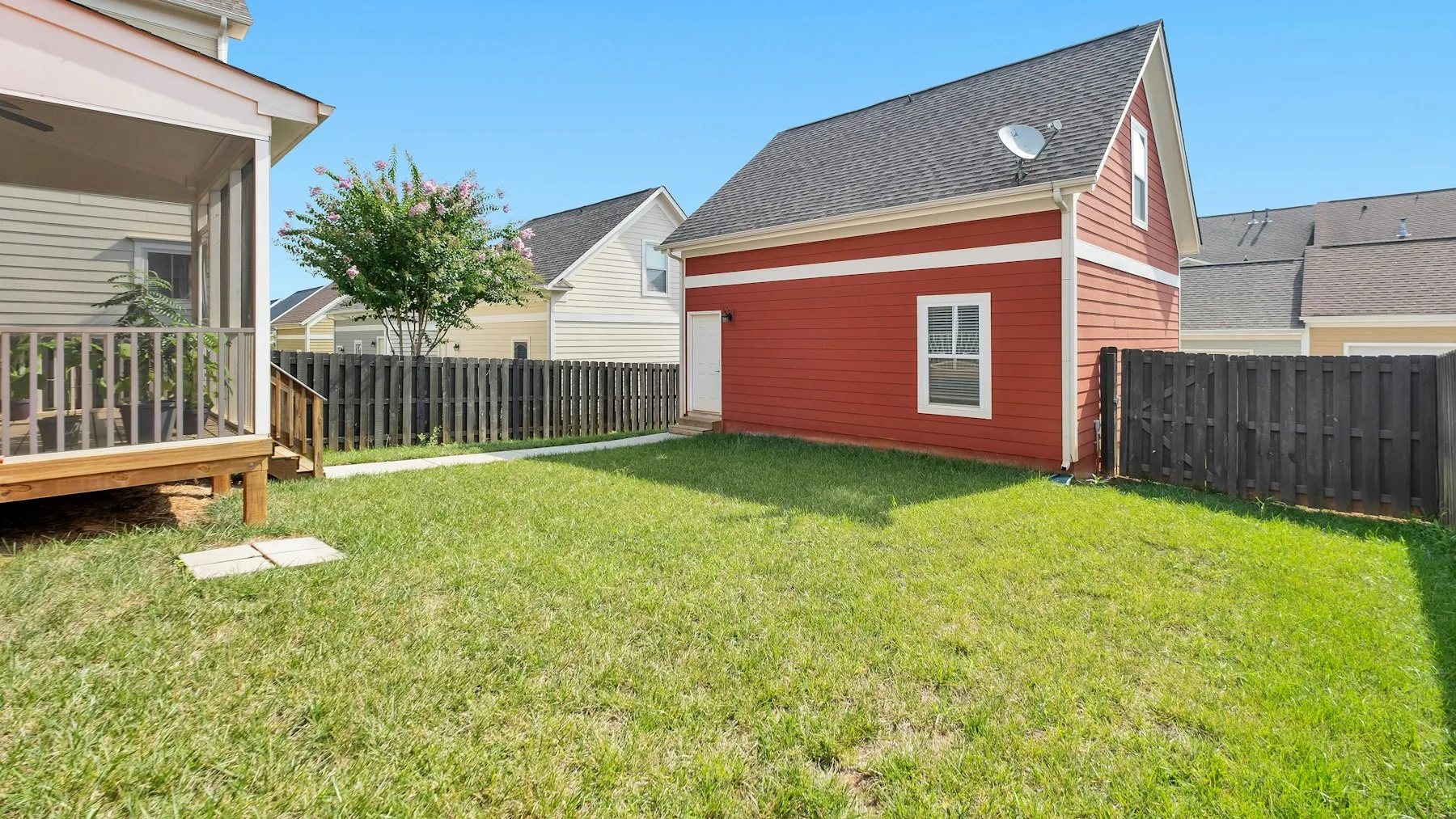
The pitch is almost aggressively simple. Base puts a refrigerator-sized battery in your yard, charges you a small monthly fee for backup power and electricity, and keeps ownership of the hardware. Then, when the Texas grid is straining, it drains thousands of those batteries at once and sells the stored power back onto the grid.
Your backup battery is also Base’s power plant. That’s the whole trick.
🧠 Why This Matters
US electricity demand is climbing for the first time in a generation, and AI data centers are a big part of the reason. Building new power plants and transmission lines takes years. Base’s bet is that you can bolt storage onto the grid far faster by installing it a few kilowatt-hours at a time, in people’s yards, and stitching those units together in software.
Each new Base Core battery stores 39.2 kWh and can push out about 20 kilowatts instantly — enough to carry a house through an outage. Base says it installs roughly 100 batteries a day, has more than 500 MWh of storage deployed across about 17,000 homes, and wants to double that install rate by year-end (Canary Media).
Aggregate 17,000 batteries and you get something that behaves like a mid-sized peaker plant — one that can respond in milliseconds instead of minutes. Base has already signed utility partnerships with El Paso Electric, Austin Energy, and CoServ totaling more than 200 MW of capacity (Base Power).
“Our business model, which is very unique, is that we’re really an infrastructure company.” — Zach Dell, CEO and co-founder, Base Power (Fortune)
📊 Deep Dive
Here’s how the money actually moves. Instead of paying $10,000-plus upfront for a home battery, a Base customer pays a small install fee and a monthly subscription — and Base keeps the box, and the grid revenue it throws off.
- The usual way (Tesla Powerwall and friends): you buy the battery outright, often $10,000–$15,000 installed, and it sits idle most of the year waiting for a blackout.
- The Base way: in the Houston area, roughly $695 to install, $19 a month, and $0.131 per kWh for electricity. Install fees run as low as $95 in some markets. Base owns the hardware and earns money selling stored power during peak demand (Canary Media).
- The hardware: the new US-made Base Core holds 39.2 kWh (stack two for 78.4 kWh), installs in under an hour, and is built at Base’s “Factory 1” in Austin, which COO Justin Lopas says is now producing thousands of systems a month.
- The balance sheet: more than $2.5 billion raised to date. Series D was led by Ribbit, Addition, Valor Equity Partners, and JPMorgan’s Strategic Investment Group, with Coatue, a16z, Thrive Capital, Lightspeed, and CapitalG also in.
⚠️ The Catch
The economics only work if a few things hold.
First, Base is a hardware company that owns its own inventory, so it burns cash to grow. Every battery is a capital outlay it recovers slowly through subscriptions and grid sales — which is exactly why it has raised $2.5 billion in under three years. Grow fast and the financing has to keep coming; slow down and the flywheel stalls.
Second, most of those batteries sit in Texas, on the ERCOT grid — the same deregulated, notoriously volatile market that gave Base its opening after the 2021 blackouts. Volatile prices are how Base earns its margin arbitraging peak demand, but regulators and utilities write the rules, and those rules can move.
Third, the “made in America” story is still half-built. Base assembles Base Core in Austin, but only plans to shift to domestically sourced battery cells by the end of 2026 (Canary Media). Until then, tariffs and overseas supply still matter.
And $13 billion is a steep price for a three-year-old company with roughly 17,000 customers — about $765,000 of valuation for every home wired up so far.
🎯 What Happens Next
Watch three numbers. The install rate, which Base wants to push from about 100 batteries a day toward 200 by December. The map — it’s live in Texas and Illinois, and Dell says he wants Base “in every neighborhood in America.” And the cell supply, meaning whether Base actually hits domestic sourcing by year-end, since that drives both its costs and its national-security sales pitch.
Double the installs while holding margins, and the virtual-power-plant model gets a real proof point at scale. Let financing tighten or Texas power prices calm down, and the story gets a lot harder to tell.
“Base’s Factory 1 is now producing thousands of systems a month, while our deployment team enables the safe, efficient installation of them on homes throughout Texas and beyond.” — Justin Lopas, COO and co-founder, Base Power (Base Power)
🧩 Bigger Picture
Base is one of several 2026 mega-rounds chasing the same problem: the grid can’t keep pace with demand, and AI is widening the gap. The same week Base closed its round, Valar Atomics raised $1 billion for modular nuclear reactors aimed at data-center power. The hottest infrastructure trade right now isn’t a chatbot — it’s electrons, and who can move them when everyone wants them at once.
What sets Base apart is where it puts the steel. Not in a data center or a substation, but in the gap between your patio and your fence — turning tens of thousands of ordinary homes into one machine a grid operator can dispatch on command.
The 20th century built giant power plants and ran wires out to your house. Base is betting the 21st runs the other way: a power plant in every backyard, and a soon-to-be-30-year-old Dell holding the meter.
Sources
- TechCrunch — Base Power raises another $1B to save the grid using backyard batteries (Aug 3, 2026)
- Canary Media — Base Power raises $1B to get big batteries into more homes (Aug 4, 2026)
- Base Power — Announces $1B Series D and launches Base Core (Aug 3, 2026)
- Fortune — Michael Dell’s son built a $13 billion home battery business (Aug 6, 2026)