
🔥 WHAT HAPPENED
A small Silicon Valley company that makes chips the size of dinner plates just pulled off one of the biggest tech IPOs in history.
Cerebras Systems priced its IPO at $185 per share on Wednesday — well above its initial $115–$125 range — raising $5.55 billion. That makes it the largest tech IPO since Uber in 2019 and the biggest US tech IPO since Snowflake in 2020.
The stock starts trading today on the Nasdaq under the ticker CBRS. At the IPO price, Cerebras is valued at $56.4 billion on a fully diluted basis.
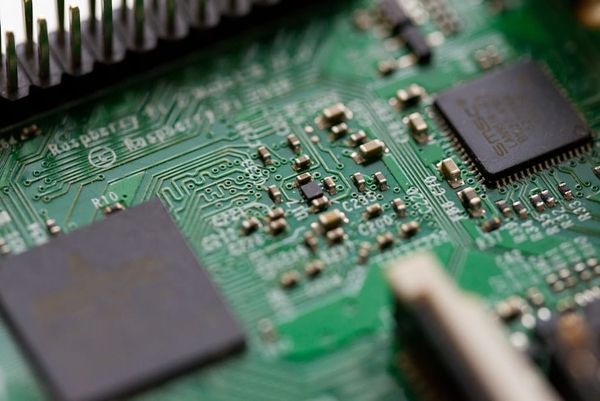
Here's the part that makes this wild: Cerebras doesn't make normal chips. It makes wafer-scale processors — single chips that take up an entire silicon wafer. The WSE-3 is 58 times larger than Nvidia's leading GPU.
🧠 WHY THIS MATTERS
For years, Nvidia has been the only game in town for serious AI computing. When you train or run a model like GPT-4 or Claude, you're almost certainly using Nvidia GPUs. Competitors like AMD and Intel have tried to break in, but Nvidia's CUDA software ecosystem gives it a moat that's proven incredibly hard to cross.
Cerebras is different. Instead of trying to beat Nvidia at the GPU game, they reinvented the chip from scratch. The WSE-3 has 4 trillion transistors, 900,000 AI-optimized cores, and 44 GB of on-chip memory with a bandwidth of 21 petabytes per second. That's 7,000 times more memory bandwidth than an Nvidia H100.
Why does this matter for normal people? Faster AI chips mean cheaper AI. When inference gets faster, companies can run more sophisticated models without breaking the bank. Cerebras claims its chips deliver inference up to 15 times faster than leading GPU-based solutions on standard benchmarks.
📊 DEEP DIVE
Let's talk numbers, because this IPO has some doozies:
- Shares sold: 30 million (underwriters can buy 4.5 million more)
- Initial range: $115–$125 per share
- Revised range: $150–$160 per share (after 20x oversubscription)
- Final price: $185 per share
- Money raised: $5.55 billion
In January 2026, Cerebras signed a contract with OpenAI worth over $20 billion for 750 megawatts of Cerebras computing capacity. This was the kind of deal that changes everything for a startup — a vote of confidence from the most famous AI company on the planet, backed by real money.
Cerebras did $510 million in revenue in 2025, up from roughly $272 million annualized in early 2024. The company reported non-GAAP net income of $237.8 million, though GAAP figures showed a net loss of $75.7 million due to one-time items.
In 2024, UAE-based G42 accounted for 85% of Cerebras' revenue. By 2025, that dropped to 24% — but the Mohamed bin Zayed University of Artificial Intelligence (also in the UAE) accounted for 62% of revenue last year. Combined, UAE entities still make up the vast majority of Cerebras' business.
Co-founder and CEO Andrew Feldman's stake is now worth about $1.9 billion. OpenAI's Sam Altman held about 89,000 shares — worth $16.5 million at the IPO price. OpenAI co-founder Greg Brockman held roughly 78,000 shares, worth about $14.4 million.
Big institutional holders include Fidelity ($3.8 billion stake), Benchmark ($3.3 billion), Foundation Capital ($2.8 billion), and Eclipse ($2.5 billion).
⚠️ THE CATCH
Cerebras' path to this IPO was anything but smooth. The company first filed to go public in September 2024, but withdrew a year later after heavy scrutiny over its reliance on a single UAE customer, G42. The U.S. Committee on Foreign Investment (CFIUS) opened a review into G42's minority stake, concerned about potential AI tech transfer to China through G42's business ties.
The review concluded in October 2025 after G42's stake was restructured into non-voting shares. That cleared the path, but it exposed a fundamental vulnerability: Cerebras' revenue is still overwhelmingly concentrated in one geographic region.
The company's business model has also shifted. Instead of just selling hardware systems, Cerebras is now pushing a cloud service based on its chips. That means it's competing directly with its own potential partners: Google Cloud, Microsoft Azure, and Oracle. Those are listed as competitors in the prospectus.
Here's another eyebrow-raiser: CNBC reported that Arm and SoftBank both tried to acquire Cerebras in the weeks before the IPO. That's an 11th-hour acquisition attempt by two of the biggest names in chips. Cerebras declined to comment, but the fact that they turned down what would presumably have been a generous offer suggests Feldman and the board believe the independent path is worth more.
🎯 WHAT HAPPENS NEXT
Cerebras starts trading today. The market will decide pretty quickly whether the $56.4 billion valuation is justified.
The key catalysts to watch:
The OpenAI Deal Timeline: The $20 billion contract runs for multiple years. Any delays or restructuring would rattle confidence.
Revenue Diversification: Cerebras needs to show it can win customers outside of the UAE. The OpenAI deal is a good start, but investors will want to see a broader base.
Nvidia's Response: Nvidia isn't sitting still. The Blackwell B200 and upcoming Vera Rubin platform are closing the performance gap. The question is whether Cerebras' architectural advantage can survive Nvidia's relentless iteration cycle.
The Inference Shift: AI workloads are moving from training (building models) to inference (running them). Cerebras' architecture is particularly strong at inference. If this shift accelerates, Cerebras could be in the right place at the right time.
🧩 BIGGER PICTURE
Cerebras' IPO is more than one company's big payday. It's a signal that the AI chip market is finally opening up.
For years, Nvidia has held a near-monopoly on AI silicon. But the scale of AI investment is now so massive — Amazon, Microsoft, Alphabet, and Meta are collectively spending roughly $725 billion on AI infrastructure in 2026 — that the market is demanding alternatives.
Intel, AMD, and Micron are each up more than 80% in the past month alone. The silicon renaissance is real, and it's spreading beyond Nvidia.
Cerebras' wafer-scale bet is ambitious bordering on insane. Making a single chip that's 58 times larger than a normal GPU is the kind of engineering moonshot that usually lives in a university lab, not on the Nasdaq. But if it works — if the performance advantages hold up in production workloads — Cerebras could become a legitimate third pillar in AI computing alongside Nvidia and the hyperscalers' custom chips.
The IPO also raises a fascinating question: How many more AI chip companies will go public this year? The market is hungry for pure-play AI infrastructure investments. Cerebras' success (or failure) will set the tone for the next wave.
Bottom line: Cerebras just pulled off one of the most audacious hardware bets in modern tech history. Whether it's a generational opportunity or a cautionary tale depends on what happens when the Nasdaq bell rings.