🔥 Walden Robotics Cut Off the Legs, Raised $300 Million, and Put Its Robots to Work Today
Walden Robotics left stealth with a $300M seed at a $1.1B valuation — and its wheeled robots are already working in a Toyota factory.
Six months. That’s how long it took a robotics company to go from “we don’t exist yet” to a $1.1 billion valuation with real robots doing real work on a real factory floor. No pilot-purgatory. No “coming in 2028.” Actual machines, actual shifts, actual Toyota plant.
Let’s get the number on the table first: $300 million. That’s the seed round Walden Robotics just closed as it stepped out of stealth — one of the largest seed rounds any startup has ever raised, in any sector, ever (BusinessWire). For context, most “hot” startups would kill for a $30M Series A. Walden raised ten times that before most people knew its name.
And here’s the part that should make every other humanoid-robot founder sweat: Walden’s robots have been on the clock since February, going from first pilot to production work in under two months (The Robot Report).
The thesis is simple and brutal: while everyone else demos, Walden ships.
🧠 Why This Matters
The humanoid robot pitch has been the same slide for years now: a two-legged android that folds your laundry, walks your dog, and lives in your house sometime around the heat death of the sun. It’s a great trailer. It’s also mostly vaporware.
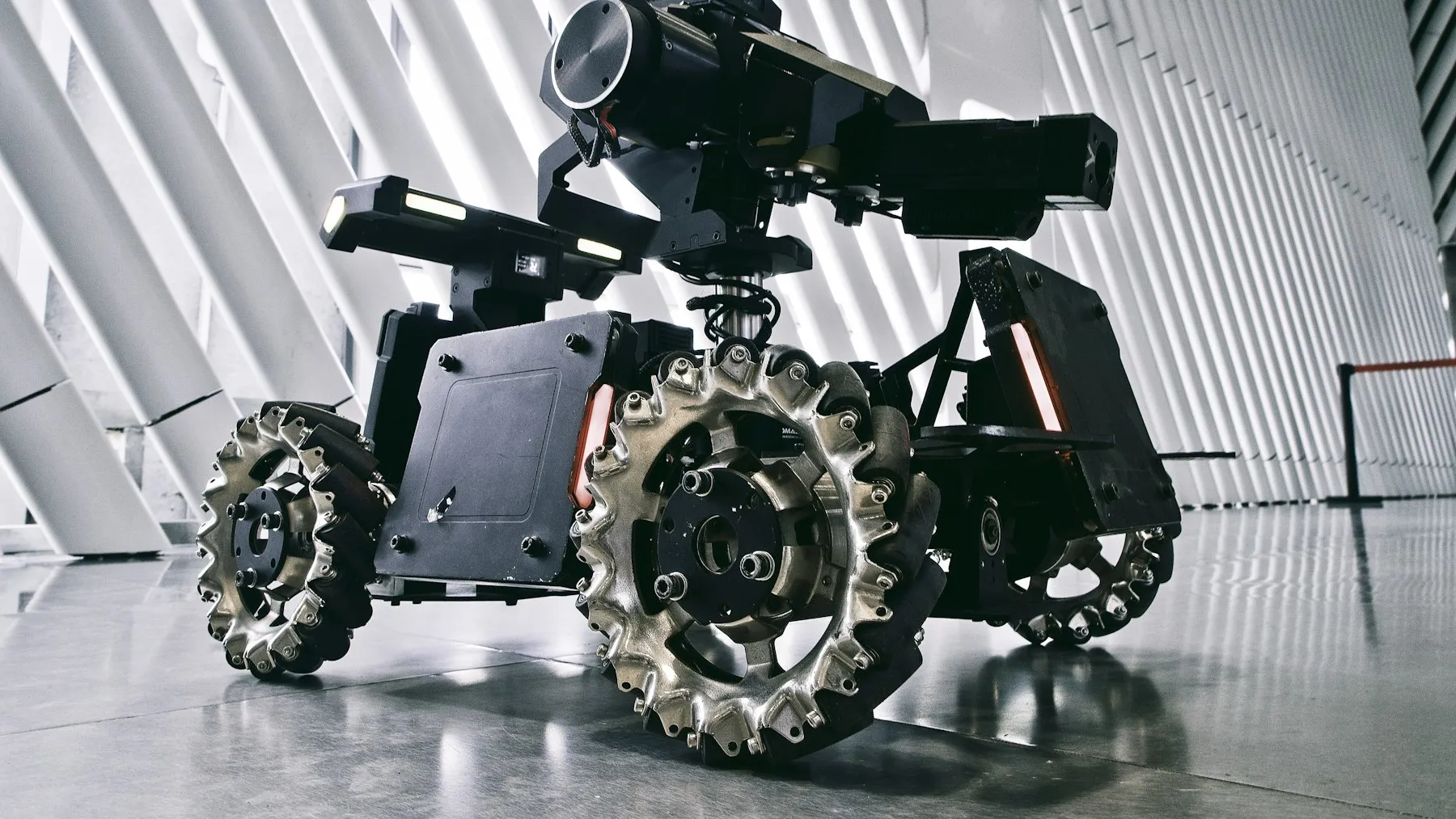
Walden looked at that pitch and did something heretical — it cut off the legs. Literally. Walden’s robot is a humanoid torso with two arms mounted on a wheeled base, not bipedal legs (The Robot Report). Wheels are cheaper, more stable, and don’t fall over. In a factory with flat floors, legs are a liability, not a feature.
That one design decision tells you the whole strategy. This isn’t a company chasing the sci-fi dream of a robot butler. It’s a company that wants to be useful on a Tuesday. And the money followed the usefulness, not the fantasy.
“Walden’s uniqueness is its ability to deliver robots that provide value from day one in real-world work environments.” — Hiroki Nakajima, Executive Vice President, Toyota Motor Corporation
📊 Deep Dive
Walden was founded in January 2026 as a spinout of the Toyota Research Institute, and it’s headquartered in Cambridge, Massachusetts (Tech Startups). At the helm is Dr. Russ Tedrake — an MIT professor and the former SVP of Large Behavior Models at Toyota Research Institute. In other words, this isn’t a couple of undergrads with a Kickstarter. It’s one of the most respected roboticists alive, taking the lab work commercial.
The brains run on two ideas Tedrake helped pioneer: Large Behavior Models (LBMs) and Diffusion Policy. Think of LBMs as the physical-world cousin of the large language models you already know — instead of predicting the next word, they predict the next action, and they get better by practicing in the real world rather than being hand-coded task by task.
Here’s how Walden stacks up against the standard-issue humanoid startup:
- Form factor: Wheeled base with a humanoid upper body — vs. the industry’s default two-legged bipedal design.
- Go-to-market: Paid production work in a Toyota plant today — vs. the usual “home robot, someday” roadmap.
- Founding-to-unicorn: Roughly six months from incorporation to a $1.1B valuation — one of the fastest unicorn runs on record.
- Round size: A $300M seed — an order of magnitude beyond a typical Series A, let alone a seed.
- The tasks: Machine tending, tool setting, parts kitting, assembly, and moving car parts around — the unglamorous, repetitive jobs factories actually struggle to staff.
The cap table reads like an industrial-AI supergroup. Co-leading the round were Toyota (via Toyota Motor Corp, Toyota Ventures, and Toyota Invention Partners) and Deviation Capital, with a supporting cast that includes NVIDIA, Boeing, Samsung, CoreWeave, Prologis, and Menlo Ventures (BusinessWire). When your chip supplier (NVIDIA), your compute provider (CoreWeave), your warehouse landlord (Prologis), and your first customer (Toyota) are all on your cap table, you’ve engineered a business that’s hard to dislodge.
“We are building the ‘full stack’ — hardware, software, AI, plus the application layer.” — Dr. Russ Tedrake, CEO & Co-founder, Walden Robotics
⚠️ The Catch
Now for the cold water. A $1.1 billion valuation on a six-month-old company is a bet on a story, not a P&L. Walden hasn’t disclosed how many robots are actually deployed, and “operating in production at a Toyota plant” can mean anything from a full shift to a handful of units doing narrow tasks under close supervision (Tech Startups).
There’s also the elephant on the cap table: Toyota is both the biggest investor and the marquee customer. That’s a wonderful head start and a genuine conflict of interest at the same time. A deployment at your own backer’s factory is not the same as winning a competitive bid against Amazon’s warehouse robots. The real test is customer number two — someone with no equity stake and no reason to be charitable.
And “general-purpose” is doing heroic lifting in the marketing. A robot that can kit parts and tend a machine is impressive; a robot that can walk into any factory and learn any job with no reprogramming is still, for now, a promise.
🎯 What Happens Next
Watch three things. First, deployment numbers — Walden needs to move from “a Toyota plant” to a hard count of robots across multiple non-Toyota sites, and soon. Second, the next round: a $300M seed sets up a monster Series A, and the valuation will tell you whether investors still believe. Third, the talent war — Tedrake’s name will pull top roboticists, but so will every other unicorn holding a checkbook.
Expect Walden to lean hard into its one true moat: it’s already earning revenue in a factory while rivals are still shooting demo reels. In a hype cycle this frothy, boring reliability is the flex.
🧩 Bigger Picture
Walden is a symptom of a much larger fever. Robotics venture funding is hitting record numbers in 2026, and it’s riding the same wave that pushed global startup investment to a record $510 billion in the first half of 2026, with more than 70% of Q2 capital flowing into AI-focused companies (Crunchbase).
The center of gravity in AI is shifting from software that talks to machines that do. Language models gave us copilots for the desk job; “physical AI” is coming for the loading dock, the assembly line, and the stockroom. Walden’s wheeled, unglamorous, revenue-first robot is a bet that the winners of this era won’t be the ones with the flashiest humanoid — they’ll be the ones whose robots showed up to work.
Everyone else is still teaching robots to walk. Walden just taught its robots to clock in.
Sources
- Walden Robotics Launches with $300 Million (BusinessWire press release)
- Walden Robotics launches with $1.1B valuation for general-purpose robots (The Robot Report)
- Walden Robotics emerges from stealth with $300M at $1.1B valuation (Tech Startups)
- Toyota-Backed Startup Walden Robotics Comes Out of Stealth With $1.1 Billion Valuation (Bloomberg)
- Global Startup Investment Hit Record $510B In H1 2026 (Crunchbase)