
SoftBank Just Created a Robotics Company That Builds Data Centers — and It's Already Eyeing a $100B IPO
Data centers are the new factories of the digital world. The problem? Building them is still painfully slow — permits, supply chains, construction crews working in parallel with server racks being bolted into place. It's a logistical nightmare that costs billions and takes years.
SoftBank just announced a solution so wild it might actually work. They're spinning off a new robotics company called Roze AI — and its only job is to build data centers faster, using autonomous robots. And oh yeah, they're targeting a $100 billion IPO for it before the year is out.
🔥 WHAT HAPPENED
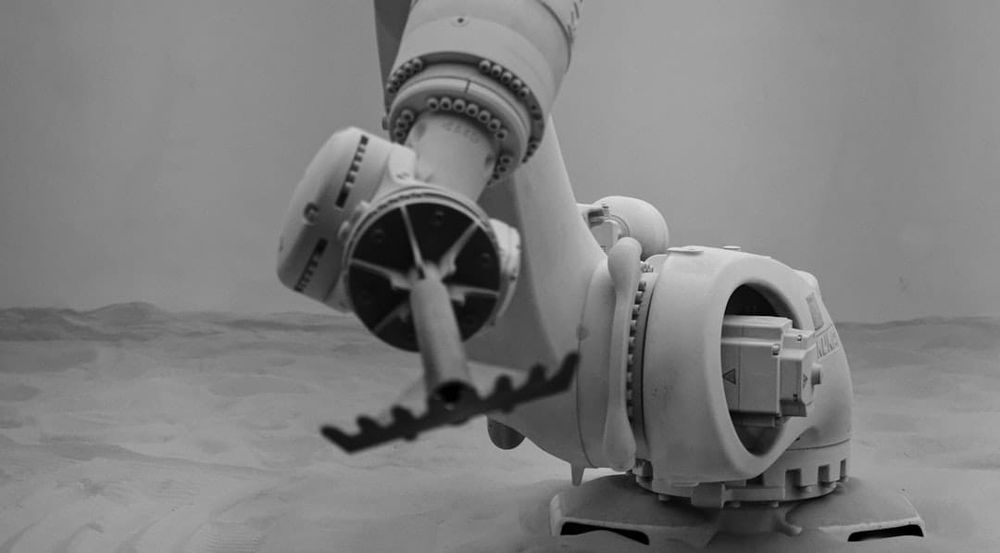
On April 29, the Financial Times broke the news: SoftBank Group is creating and listing a standalone AI and robotics company in the U.S. called Roze. The entity will focus entirely on building data centers — but with a twist. Roze will deploy autonomous construction robots to physically build server farms, not just manage software.
Founder and CEO Masayoshi Son is personally driving this. The target? A valuation around $100 billion with a potential IPO as early as the second half of 2026. That's not a typo. For context, that would make Roze more valuable than Uber, Airbnb, and Spotify combined.
SoftBank already agreed to buy ABB Robotics last year — one of the world's top robotics suppliers — and Roze is expected to bundle that hardware with AI capabilities, along with existing energy, land, and infrastructure assets from SoftBank's portfolio.
🧠 WHY THIS MATTERS
Here's the thing about the AI boom that nobody talks about enough: the physical infrastructure can't keep up.
We're building more data centers than ever before, but demand is growing exponentially faster. Every hyperscaler — Microsoft, Google, Amazon, Meta — is locked in a multi-year capacity arms race. Microsoft alone projected $190 billion in capital expenditure for 2026.
The bottleneck isn't GPUs anymore. It's concrete, steel, power, and construction labor.
Roze AI is SoftBank's bet that the answer is robots building buildings. Instead of human crews installing Server racks, running cables, and assembling cooling systems, Roze wants autonomous machines handling the entire construction pipeline.
If it works, it doesn't just save money. It compresses data center build times from years to months. And in a world where AI compute capacity is the new oil, whoever builds fastest wins.
📊 DEEP DIVE
The numbers here are staggering:
- Roze's target valuation: ~$100 billion
- SoftBank has committed over $30 billion to OpenAI alone
- The Stargate project (SoftBank + OpenAI + Oracle): a planned $500 billion data center investment across the U.S.
- SoftBank already has a large-scale data center project underway in Ohio
- ABB Robotics acquisition gives Roze instant access to world-class industrial robotics hardware
The proposed structure is clever: Roze would bundle SoftBank's existing energy assets, land holdings, and infrastructure portfolio under one roof. Instead of SoftBank being just a financial backer of data center projects, they become an operator — and a robotics-powered one at that.
Think of it as a vertically integrated data center builder with AI at the core. They own the land, the energy rights, the robotics hardware, and the AI software layer. That's an unusually powerful stack for a company that technically doesn't exist yet.
⚠️ THE CATCH
The skepticism inside SoftBank is real.
According to both the FT and WSJ reports, some executives have expressed doubts about both the valuation target and the proposed timeline for an IPO. Why? A few reasons:
- Middle East uncertainty: The report explicitly flags geopolitical tensions as a risk factor that could delay or derail plans.
- Track record: SoftBank has a history of splashy bets that didn't pan out. Remember Zume — the AI pizza robot startup SoftBank poured hundreds of millions into? It went bankrupt in 2023.
- Robotics at construction scale: Using autonomous robots for data center construction at massive scale is unproven. Factory automation is one thing; outdoor construction with changing conditions is another beast entirely.
- OpenAI's profitability problem: SoftBank has backed OpenAI to the tune of $30 billion+, but OpenAI remains unprofitable. The Roze IPO could help offset those commitments — which means the timeline may be driven by financial necessity, not operational readiness.
Then there's the sheer ambition of a $100 billion valuation for a company that doesn't exist yet and hasn't built anything. That's not just aggressive. It's Masayoshi Son-level aggressive.
🎯 WHAT HAPPENS NEXT
The immediate path forward depends on a few milestones:
1. Formal incorporation: Roze needs to actually exist as a legal entity, absorb ABB Robotics, and begin operations.
2. Pilot projects: SoftBank's Ohio data center project will likely serve as the test bed for Roze's construction robots.
3. IPO timing: Late 2026 is the target, but even bullish SoftBank insiders acknowledge that could slip.
4. Competition: Jeff Bezos just co-founded Project Prometheus with $100 billion to "buy and transform old manufacturing firms with AI." The race to automate physical infrastructure is suddenly very crowded.
If Roze goes public at even half the target valuation, it would be one of the largest tech IPOs in history. If it hits $100 billion, it enters the conversation with Arm, which SoftBank took public at $54.5 billion in 2023.
🧩 BIGGER PICTURE
Roze AI is part of a much larger trend that's quietly reshaping the tech industry: the robotization of physical infrastructure.
For the last decade, AI has lived in the cloud — software eating the world, as the saying went. But the world is physical. Data centers are physical. Construction is physical. And we're running out of humans to build them.
UBS recently published a note estimating 30,000 humanoid robot deployments in 2026, with Tesla planning a 1 million-unit Optimus production line by the end of the year. Japan Airlines just launched a humanoid robot pilot program for airport ground handling. Boston Dynamics is planning 30,000-unit production capacity for Atlas by 2028.
The pattern is clear: robots aren't just coming for factory floors. They're coming for the construction sites, logistics hubs, and infrastructure projects that keep the digital world running.
SoftBank's Roze AI is the most aggressive bet yet that the builders themselves need to be rebuilt — with steel arms, AI brains, and zero need for coffee breaks.
Whether it hits $100 billion or not, the message is unmistakable: the hardware revolution is here, and it's building its own house.