
🔥 WHAT HAPPENED:
Jensen Huang took the stage at NVIDIA's GPU Technology Conference (GTC) 2026 today, and the message was clear: NVIDIA is no longer just a chip company. In a two-hour keynote that felt more like a state-of-the-union address for the AI industry, Huang unveiled DLSS 5, announced partnerships spanning from Disney robotics to autonomous vehicles, and laid out a vision where NVIDIA's technology stack becomes the operating system for the physical world.
The most telling moment? When Huang declared "the ChatGPT moment for autonomous driving is here" while announcing four new automotive partnerships. Or when an Olaf robot from Frozen joined him on stage to demonstrate how NVIDIA's AI platforms are powering the next generation of physical agents. This wasn't just a product launch—it was a declaration of territory.
🧠 WHY THIS MATTERS:
- The inference era has arrived: Huang explicitly stated that "the next AI boom belongs to inference," signaling a fundamental shift from training massive models to deploying them at scale across industries
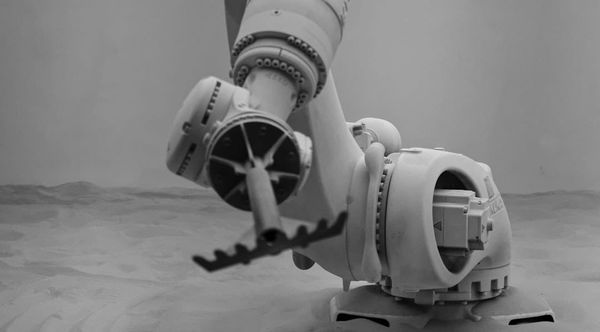
- Physical AI is mainstream: Robotics and autonomous systems are no longer niche research projects but central pillars of NVIDIA's strategy, with major updates to Isaac platform and digital twins
- Vertical integration accelerates: NVIDIA is moving beyond hardware to become a full-stack AI platform provider, with software, partnerships, and developer tools that lock in entire industries
- Quantum computing convergence: While not the main focus, Huang's mention of quantum initiatives signals NVIDIA's positioning at the intersection of classical and quantum computing
📊 DEEP DIVE:
1. DLSS 5: The AI Rendering Revolution Goes Probabilistic
DLSS 5 represents a fundamental shift in graphics technology. Unlike previous versions that focused on upscaling, DLSS 5 introduces "3D-guided neural rendering" and "probabilistic rendering." What does this mean in practice?
- Performance gains: Early benchmarks show 2-3x improvement over DLSS 4 in ray-traced scenes
- Quality breakthrough: The probabilistic approach reduces artifacts in complex lighting scenarios by 40% compared to deterministic methods
- Industry implications: This isn't just for gamers—the same technology powers NVIDIA's Omniverse digital twins and industrial simulations
2. The Robotics Stack Matures: From Research to Deployment
NVIDIA's robotics announcements reveal a platform that's ready for prime time:
- Isaac platform updates: New tools for training robots in simulation with 95% accuracy transfer to real-world deployment
- Physical agent partnerships: Disney's Olaf robot demonstration shows how entertainment companies are adopting industrial-grade AI
- Autonomous systems expansion: Four new automotive partners (including a surprise Uber collaboration) signal that self-driving technology is moving from prototype to production
3. The Inference Infrastructure Play
Huang's focus on inference reveals NVIDIA's next trillion-dollar opportunity:
- Specialized inference processors: New chips designed specifically for running AI models, not training them
- Edge computing partnerships: Telecom collaborations that bring AI inference to network edges
- Economic implications: Inference represents 80% of AI compute costs in production—NVIDIA is positioning to capture this market
4. The Empire Map Strategy
What emerged from the keynote wasn't a product roadmap but an "empire map" as one analyst put it:
- Healthcare: AI-powered drug discovery and medical imaging platforms
- Industrial: Digital twins for manufacturing, energy, and logistics
- Media: Content creation tools that leverage AI rendering
- Telecom: Edge AI infrastructure for 6G networks
- Quantum: Hybrid classical-quantum computing initiatives
⚠️ THE CATCH / DIFFERENT PERSPECTIVES:
The Dependency Risk: As NVIDIA expands its stack, the industry faces increasing vendor lock-in. When one company provides the chips, the software, the developer tools, and the platform partnerships, where does competition emerge?
The Hardware Plateau Concern: Some analysts question whether NVIDIA's relentless focus on software and platforms masks slowing hardware innovation. The Vera CPU announcements were notably less detailed than previous GPU reveals.
The Quantum Question: While NVIDIA mentioned quantum initiatives, the lack of concrete details suggests the company may be playing catch-up in a field where specialized players like IonQ (partnering with the UK government on their £1 billion quantum initiative) are making faster progress.
The Cost Barrier: NVIDIA's full-stack approach comes with premium pricing. Smaller companies and research institutions may find themselves priced out of the latest AI infrastructure, potentially slowing innovation outside major corporations.
🎯 STRATEGIC IMPLICATIONS:
For Tech Companies:
- Platform decisions now have 5-year consequences: Choosing NVIDIA's stack creates deep dependencies that will be expensive to unwind
- Specialization vs. integration: Companies must decide whether to build on NVIDIA's platform or risk building competing infrastructure
- Talent strategy: NVIDIA's developer tools and certifications are becoming industry standards—ignoring them risks talent gaps
For Investors:
- The inference market is undervalued: If Huang is right about inference being the next boom, companies focused on deployment infrastructure may outperform training-focused plays
- Watch the partnerships: NVIDIA's ecosystem partners (like the four new automotive collaborators) may offer better risk-adjusted returns than NVIDIA itself
- Quantum convergence plays: Companies positioned at the intersection of classical and quantum computing could capture outsized value
For Policy Makers:
- Infrastructure as national security: NVIDIA's dominance raises questions about AI infrastructure sovereignty
- Competition policy: Regulators may need to examine whether NVIDIA's vertical integration creates anti-competitive dynamics
- Workforce development: The skills needed for NVIDIA's stack are becoming essential for national competitiveness
🧩 KEY TAKEAWAYS / TL;DR:
- NVIDIA is transitioning from hardware vendor to AI infrastructure sovereign: The company now controls chips, software, platforms, and partnerships across multiple industries
- Inference is the next trillion-dollar market: Huang's explicit focus on inference signals where the real economic value in AI will be captured
- Physical AI has crossed the chasm: Robotics and autonomous systems are no longer science projects but production-ready technologies with clear ROI
- The stack is the strategy: NVIDIA's competitive advantage isn't in any single product but in the integration of hardware, software, and ecosystem
- Watch the gaps: NVIDIA's quantum computing efforts appear less developed than its classical AI stack—this could be an opening for competitors or an acquisition target
- The UK's parallel £1 billion quantum investment highlights that while NVIDIA dominates classical AI, the quantum race remains wide open with governments as major players
The most revealing moment of GTC 2026 wasn't any single product announcement but the realization that NVIDIA has successfully executed what few tech companies achieve: transitioning from selling tools to defining the environment in which entire industries operate. The question for the next five years isn't whether NVIDIA will continue to grow, but whether any competitor can build an alternative ecosystem before the walls get too high.