

NVIDIA's $1 Trillion Bet: GTC 2026 Unleashes DLSS 5, Vera Rubin, and a Robot Army
🔥 BREAKING: NVIDIA just dropped the mic at GTC 2026 with projections that would make even Wall Street blush. CEO Jensen Huang announced the company expects $1 TRILLION in orders for Blackwell and Vera Rubin systems through 2027. That's not a typo. That's trillion with a T.
The SAP Center in San Jose was packed to the rafters yesterday as Huang took the stage for what might be the most consequential tech keynote of the decade. While everyone expected big numbers, nobody expected this level of scale.
🔥 What Actually Happened
Let's break down the facts, verified from primary sources:
The $1 Trillion Projection:
- NVIDIA now expects $1 trillion in orders for Blackwell and Vera Rubin systems through 2027
- This doubles last year's $500 billion projection
- Company shares rose 2% following the announcement
- NVIDIA's market cap currently sits at $4.5 trillion (yes, still the world's most valuable company)
Vera Rubin Architecture:
- Ships later this year with 1.3 million components
- Delivers 10x more performance per watt than Grace Blackwell
- Critical for addressing AI's massive energy consumption problem
- Full rack-scale system shipping to customers in 2026
DLSS 5 Gaming Revolution:
- Fall 2026 release for major game titles
- Uses "3D-guided neural rendering" for photoreal 4K performance
- Confirmed games include:
- Starfield (Bethesda)
- Resident Evil Requiem (Capcom)
- Hogwarts Legacy (Warner Bros)
- Assassin's Creed Shadows (Ubisoft)
- The Elder Scrolls IV: Oblivion Remastered (Bethesda)
- Todd Howard personally demoed Starfield with DLSS 5: "We got it running in Starfield, it was amazing how it brought it to life"
Robotics Partnership Blitz:
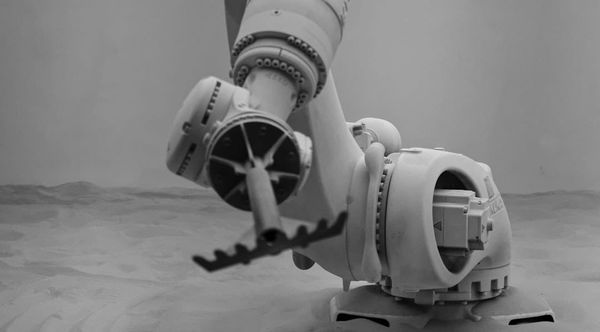
- NVIDIA is building a humanoid robot army with:
- Boston Dynamics (Atlas, Spot)
- Figure AI (humanoid workforce robots)
- 1X Technologies (NEO android)
- Agility Robotics (Digit)
- Disney (Olaf droid showcased at keynote)
- Isaac GR00T platform for general-purpose robotics
- Goal: Swap robotics' "data problem" for a "compute problem"
Groq 3 LPU Acquisition:
- NVIDIA's $20 billion Groq acquisition paying off
- Groq 3 Language Processing Unit ships Q3 2026
- Full rack holds 256 LPUs, sits beside Vera Rubin systems
- Built by creators of Google's TPU technology
🧠 Why This Matters (The Deep Analysis)
1. The Scale is Unprecedented
A trillion dollars in orders isn't just a big number—it's a fundamental shift in how we think about computing infrastructure. To put this in perspective:
- NVIDIA's entire 2025 revenue was "only" $280 billion
- This projection suggests 3.5x growth in just two years
- Every major cloud provider, AI startup, and enterprise is betting their future on NVIDIA silicon
2. Energy Efficiency = Survival
The Vera Rubin's 10x performance-per-watt improvement isn't a nice-to-have—it's existential. AI data centers already consume more electricity than some small countries. Without these efficiency gains, the AI revolution literally can't scale. NVIDIA isn't just selling chips; they're selling the ability to run AI at planetary scale without melting the grid.
3. Gaming's AI-Powered Future
DLSS 5 represents the complete AI-ification of gaming graphics. We're moving beyond upscaling to full neural rendering. The implications:
- Local hardware can now deliver what required cloud rendering 5 years ago
- Game development costs could plummet as AI handles more visual heavy lifting
- The line between pre-rendered CGI and real-time graphics is vanishing
4. The Robot Economy is Real
NVIDIA's robotics partnerships aren't science fiction—they're deployment schedules. When you combine Boston Dynamics' hardware with NVIDIA's AI stack, you get robots that can:
- Work in factories today
- Handle logistics tomorrow
- Eventually enter homes and workplaces
The Disney partnership is particularly telling. If NVIDIA can power adorable Olaf droids for theme parks, they can power anything.
📊 The Numbers That Matter
NVIDIA's Current Dominance:
- 11 straight quarters of >55% revenue growth
- Q1 2026 revenue projection: $78 billion (77% YoY growth)
- AI inference token generation growing exponentially
- Market cap: $4.5 trillion (more than Apple + Microsoft combined in 2024)
What $1 Trillion Buys:
- Approximately 2 million Vera Rubin systems at $500k each
- Or 20 million Blackwell systems at $50k each
- Enough compute to run ChatGPT-scale models for every person on Earth
- The hardware foundation for AGI development through 2030
🤖 Who's Affected (Everyone)
Winners:
- Cloud Providers: AWS, Google Cloud, Azure get more efficient infrastructure
- AI Startups: More accessible, powerful compute
- Gamers: Photoreal graphics on current hardware
- Robotics Companies: Finally have the compute they need
Challenges:
- Competitors: AMD, Intel, Google TPU teams playing catch-up
- Regulators: How do you govern trillion-dollar tech ecosystems?
- Energy Grids: Even 10x efficiency might not be enough
The Big Question: Can anyone catch up? NVIDIA now has:
- The best chips (Blackwell/Vera Rubin)
- The best software (CUDA, DLSS)
- The best ecosystem (robotics, gaming, cloud partnerships)
- The best financial position ($1 trillion backlog)
🎯 The Bottom Line
NVIDIA isn't just winning the AI race—they're redefining what winning means. A trillion dollars in orders isn't a prediction; it's a statement of inevitability.
The implications cascade through every layer of tech:
- Hardware → Everything gets an AI accelerator
- Software → Everything gets AI-powered features
- Economy → Everything gets more productive (or automated)
- Society → Everything changes, faster than we expect
Huang closed with what might be the understatement of the decade: "We're just getting started." Given what we saw yesterday, he might be right.
One final thought: When historians look back at 2026, they might mark GTC as the moment AI stopped being a technology and started being the infrastructure of everything. The trillion-dollar question isn't whether NVIDIA will hit their target—it's what we'll build with all that compute once they do.
Tech Arcade will be tracking every development. Stay tuned for deep dives on Vera Rubin architecture, DLSS 5 gaming benchmarks, and the robotics revolution.