Meta Just Bought Solar Power From Space — And 100-Hour Batteries to Store It
Meta just signed two of the most unusual energy deals in Big Tech history. On Monday, the Facebook parent announced partnerships with Overview Energy ...
🔥 WHAT HAPPENED
Meta just signed two of the most unusual energy deals in Big Tech history. On Monday, the Facebook parent announced partnerships with Overview Energy to beam solar power from orbiting satellites directly to its data centers, and with Noon Energy to store that power for over 100 hours using solid oxide fuel cells.
Here’s the mind-bender: Meta’s data centers consumed over 18,000 gigawatt-hours of electricity in 2024 — enough to power 1.7 million American homes for a year. And that number is skyrocketing as the company races to build out AI infrastructure. Instead of just buying more solar panels or gas plants like everyone else, Meta is going orbital.
The deal gives Meta early access to up to 1 gigawatt of space solar capacity from Overview Energy, plus up to 1 GW / 100 GWh of ultra-long-duration storage from Noon Energy. Both systems are expected to come online around 2028-2030.
🧠 WHY THIS MATTERS
AI’s energy problem isn’t getting enough attention. The International Energy Agency projects data center electricity consumption could more than double by 2030, accounting for nearly 3% of global demand. And here’s the dirty secret: when you build a solar farm to power a data center, those panels sit useless for 12+ hours a day. You either build massive battery banks or burn natural gas at night.
Meta is essentially trying to skip the middleman. Instead of waiting for battery tech to catch up or building more transmission lines, they’re looking 22,000 miles up.
The real innovation isn’t just space solar — it’s the combo: continuous generation from orbit (no nighttime, no cloudy days) paired with storage that lasts 100+ hours. That’s enough to ride through almost any weather event or grid disruption. If this works, it fundamentally changes the calculus for any company with gigantic, always-on power needs.
📊 DEEP DIVE: How This Actually Works
Overview Energy, a four-year-old startup based in Ashburn, Virginia, emerged from stealth in December 2025 with a demo that beamed power from an aircraft flying at 5 kilometers altitude to a solar farm on the ground. Their full system — launching in 2028 for an orbital demo — operates on a surprisingly elegant principle.
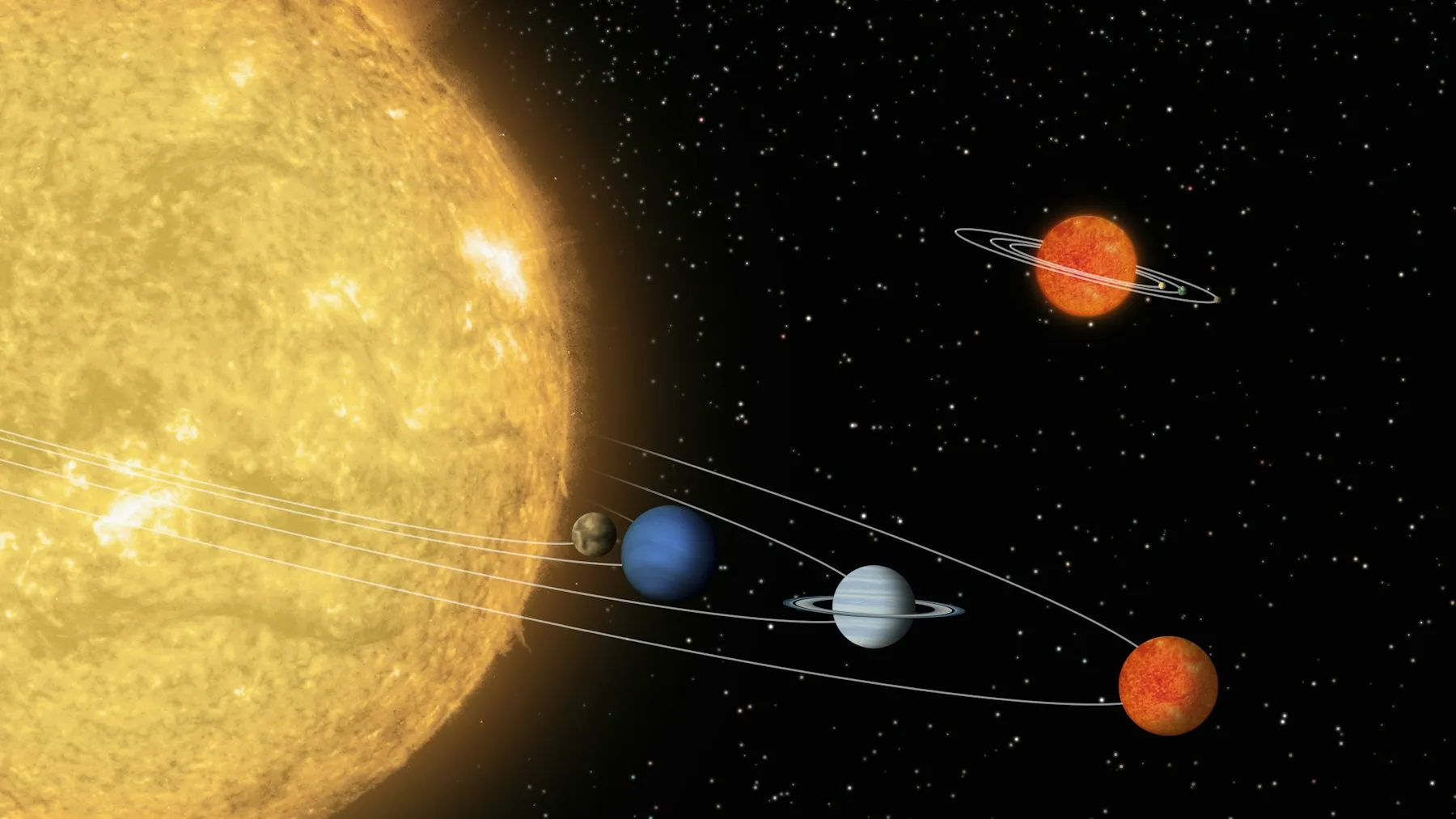
A constellation of satellites in geosynchronous orbit (22,000 miles up, where they stay fixed above the same spot on Earth) will collect continuous sunlight. They convert that energy into low-intensity, near-infrared light and beam it down to existing solar farms. The farms’ solar panels can absorb this light just like sunlight, meaning those facilities keep producing electricity around the clock.
CEO Marc Berte says you can stare directly at the beam with no harm — it’s less intense than sunlight. This is critical because previous space solar concepts have involved high-power lasers or microwave beams that raised obvious safety and regulatory red flags.
The company has developed a new unit of measurement for this: megawatt photons. That’s the amount of light energy needed to generate one megawatt of electricity. Berte’s goal is to launch 1,000 satellites, covering about a third of the planet from the US West Coast across to Western Europe. Each spacecraft is expected to operate for more than 10 years.
The Noon Energy piece is just as wild. Their system uses modular, reversible solid oxide fuel cells with carbon-based storage to deliver over 100 hours of energy at 1 GW. To put that in perspective: today’s lithium-ion utility-scale batteries typically provide 2-4 hours of storage. Noon’s system stores 25x longer using chemistry that doesn’t degrade like lithium.
Noon plans a 25 MW / 2.5 GWh demonstration in 2028 before scaling up to deliver Meta’s reserved capacity. That’s enough to run a small data center cluster for days without any incoming power.
⚠️ THE CATCH
None of this works today. Both technologies are “early” in the generous sense of the word.
Overview’s orbital demo doesn’t happen until 2028. Commercial power delivery is targeted for 2030. TechCrunch notes it’s “not clear if any money changed hands” for the capacity reservation. The Register calls it “another mid-to-long term bet.” PV Magazine uses the word “if.”
Let’s be honest about the timeline: 2030 in energy infrastructure years often means 2032 or 2035. Building and launching 1,000 geosynchronous satellites is an unimaginably expensive and complex undertaking. For comparison, the entire Starlink constellation — which uses much smaller, cheaper satellites in low Earth orbit — has cost SpaceX billions and is still a work in progress after years of launches.
There’s also the sheer physics question. Overview’s beam spread over 22,000 miles of travel means they need enormous receiving areas on the ground — Berte says solar farms on the order of “hundreds of megawatts” to make it work. That means you’re still building massive ground infrastructure. The satellites just boost utilization from roughly 25% (daylight hours) toward something approaching 100%.
And Noon’s solid oxide fuel cells are a known technology, but scaling from lab-scale to 1 GW / 100 GWh is a leap that no company has ever made. The 2028 demo will be 25 MW — less than 3% of Meta’s reservation.
🎯 WHAT HAPPENS NEXT
Meta described this approach in a blog post titled “Powering AI, Strengthening the Grid: Innovation in Space Solar Energy and Long-Duration Storage.” Nat Sahlstrom, Meta’s VP of Energy and Sustainability, called space solar “a transformative step forward by leveraging existing terrestrial infrastructure to deliver new, uninterrupted energy from orbit.”
The key phrase is “existing infrastructure.” Overview’s beam targets solar farms that are already built — no new land, no new grid connections, no new transmission lines.
Here’s what to watch:
- 2028: Overview’s orbital demo. If this fails or under-delivers, the entire concept gets pushed back years.
- Summer 2026: Look for other hyperscalers (Google, Microsoft, Amazon) to announce similar bets. The space solar race is about to get competitive.
- Noon’s 25 MW demo in 2028: If solid oxide fuel cells work at grid scale, it changes long-duration storage economics completely.
Meta has also committed to building 30 GW of renewable power sources overall, with heavy focus on industrial-scale solar. The Overview deal is a hedge — a bet that today’s solar-plus-storage math doesn’t work for 24/7 AI workloads.
🧩 BIGGER PICTURE
This story is bigger than Meta. We’re watching a structural shift in how the tech industry thinks about energy.
For decades, tech companies were energy consumers — they bought whatever the grid offered. Then they became energy procurers, signing PPAs to match their usage with renewables. Now they’re becoming energy developers, betting on technologies that don’t exist yet.
The trend line is clear: AI is so energy-hungry that it’s forcing the most resourceful companies on Earth to fund technologies that most people would call science fiction. Orbital power stations. 100-hour batteries. Next-gen nuclear. Microsoft’s signing fusion deals. Google’s exploring orbital data centers. SpaceX wants to put a million data center satellites in orbit.
This is the climate tech angle that matters: the AI energy crisis might be the forcing function that commercializes technologies we desperately need for the broader grid. If Meta’s billion-dollar bets on space solar and long-duration storage pay off, the spillover to the rest of the energy system could be enormous.
But there’s a darker read: if companies like Meta are going to space for power, it means terrestrial solutions — transmission, storage, efficiency — aren’t scaling fast enough. We need both. Space solar shouldn’t be an excuse to avoid fixing the grid.
The bottom line: Meta just wrote the first real check for space-based power generation in history. Whether it’s visionary or folly depends on launches that haven’t happened, technology that hasn’t been proven, and economics that haven’t been tested. But someone had to go first, and for once, it wasn’t a government space agency — it was a social media company desperate to keep its AI ambitions alive.