

🔥 What happened
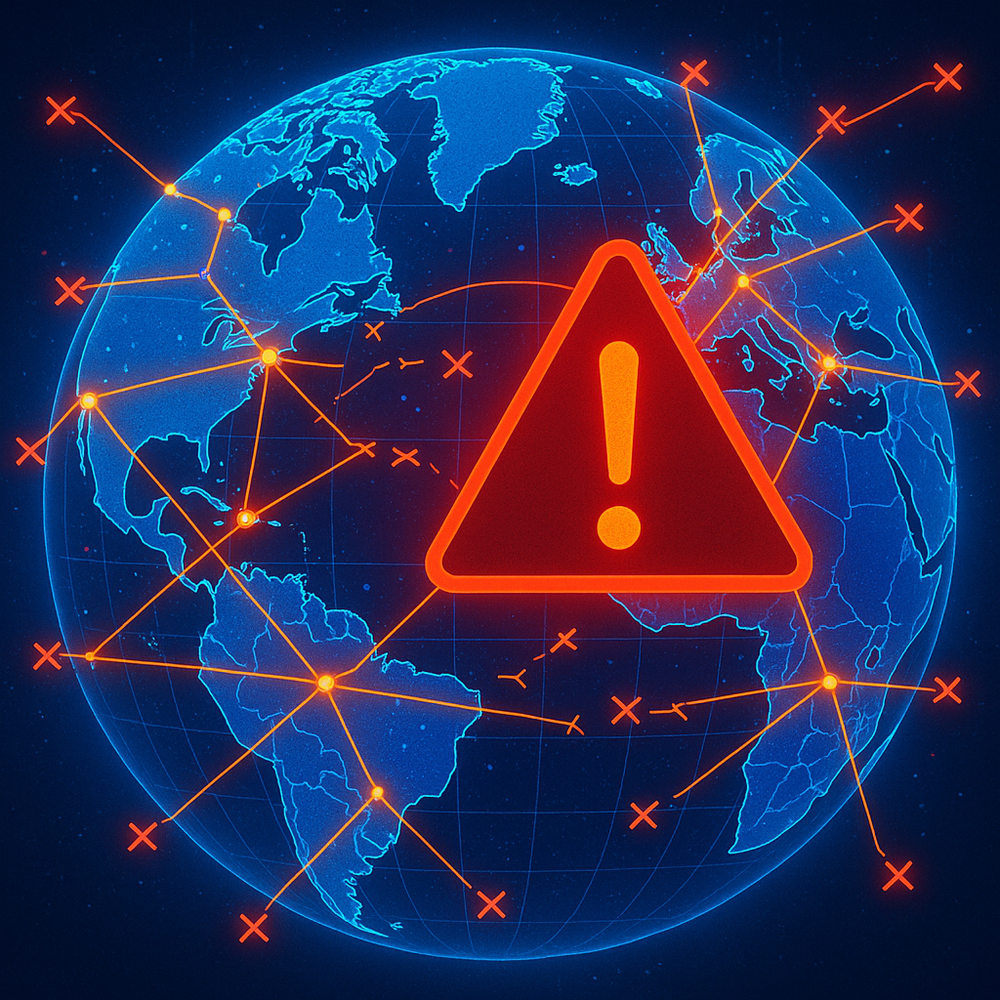
Cloudflare suffered a major global outage that knocked out a huge portion of the internet. Websites depending on Cloudflare for DNS, CDN, or routing started returning 500 and 503 errors. ChatGPT, X, Canva, government portals, and even public transit systems went down or slowed to a crawl.
This wasn’t a hack. Cloudflare traced the problem to its own system: an auto-generated configuration file ballooned far beyond expected size and crashed part of their network. One oversized file triggered global chaos.
⚙️ How it went down
- A runaway config file
Cloudflare’s automated tools created an internal file so large that their routing software couldn’t parse it. It’s like giving Excel a spreadsheet with millions of rows and watching it freeze instantly. - Routing collapse
Once that core system failed, Cloudflare’s edge network began returning errors. Any site using Cloudflare’s DNS, CDN, WAF or proxy layers immediately showed failure messages. - Not an attack
Cloudflare saw unusual traffic before the incident but confirmed no malicious activity. This was purely an internal failure. - A domino effect
Cloudflare handles roughly one fifth of the world’s web traffic. When their infrastructure breaks, thousands of services fail simultaneously.
🧠 What you can actually learn from this
- One provider is not a strategy
If your whole architecture relies on a single infra vendor, you inherit all their risks. - Auto-generated configs need guardrails
File size limits, warnings, and automatic rollbacks are essential for preventing runaway configurations. - Graceful failures matter
Many platforms had no offline fallback, no cached pages, and no redundancy. They simply died the moment Cloudflare did. - Distributed systems magnify tiny problems
Small internal issues can easily escalate into internet-scale failures.
💡 Why you should care
- For daily users
When Cloudflare breaks, everyday apps, tools, and websites fail. It’s the hidden backbone most people never notice. - For your career
Understanding infrastructure dependencies is a core skill now. Products are only as reliable as the providers behind them. - For engineering teams
Multi-CDN, multi-DNS, caching, and failover strategies are not luxuries. They are protection against exactly this type of event. - For the internet as a whole
The outage showed how fragile the global web is. One internal misstep at one company can disrupt millions of people.
⚠️ The reality check
Redundancy is expensive, so many teams avoid it until disaster forces their hand.
Cloudflare still has one of the best reliability records, but trust takes a hit after an outage of this scale.
Competitors like Fastly and Akamai will leverage this incident in their sales pitches.
👀 What’s next
Cloudflare will publish a detailed post-mortem and add stricter controls on automatic config generation. Enterprises will reevaluate their architecture, especially DNS and CDN redundancy. We’ll likely see more companies adopt multi-provider setups to avoid similar failures.
🧩 The bottom line
A single configuration file took down large parts of the internet. The Cloudflare outage is a blunt reminder of how interconnected and fragile our digital world has become. If the backbone breaks, everything above it collapses. This wasn’t a minor glitch. It was a lesson in infrastructure risk that every builder should take seriously.