
🔥 WHAT HAPPENED
Cerebras Systems (CBRS) exploded onto the Nasdaq on Thursday with a 68% first-day pop — the biggest tech IPO since Uber hit the public markets in 2019. The AI chipmaker sold 30 million shares at $185, well above its initial $115–125 target range, raising $5.55 billion in the process. If underwriters exercise their option to buy an additional 4.5 million shares, total proceeds could hit $6.38 billion.
The stock opened at $350 — an instant 89% gain — briefly touched $386 intraday, before settling at $311.07. That gives Cerebras a market cap around $95 billion. Not bad for a company that withdrew its IPO filing just seven months ago.
The day also minted two new billionaires: CEO Andrew Feldman (stake worth ~$3.2 billion) and tech chief Sean Lie (~$1.7 billion). Early investors Benchmark and Foundation Capital are sitting on stakes valued at $5.5 billion and $4.8 billion respectively.
🧠 WHY THIS MATTERS
Cerebras' debut isn't just a feel-good IPO story. It's a stress test for the public market's appetite for AI infrastructure — and the results are emphatic.
The VanEck Semiconductor ETF has already jumped 58% in 2026. Intel, AMD, and Micron have all posted triple-digit gains. But those are established players. Cerebras is the first pure-play AI chip IPO to hit the public markets, and its reception tells Wall Street one thing: institutional and retail investors alike are desperate for AI exposure that isn't just "buy Nvidia."
This matters because a wave of even bigger AI IPOs is forming. SpaceX (now merged with xAI) could file its prospectus as early as next week, with a June 8 roadshow penciled in. OpenAI and Anthropic are circling the public markets at trillion-dollar private valuations. Cerebras just proved there's plenty of appetite to absorb all of them.
📊 DEEP DIVE
Let's talk specifics, because the numbers here are wild:
- Revenue: $510 million last year, up 76% year-over-year
- Profitability: $88 million net income — swinging from a $481.6 million loss the year prior
- Revenue concentration: Cerebras' biggest customer, G42 (the Microsoft-backed UAE AI firm), dropped from 85% of revenue in 2024 to just 24% last year. But the Mohamed bin Zayed University of Artificial Intelligence in the UAE accounted for 62% of 2025 revenue — so it's not exactly diversified yet.
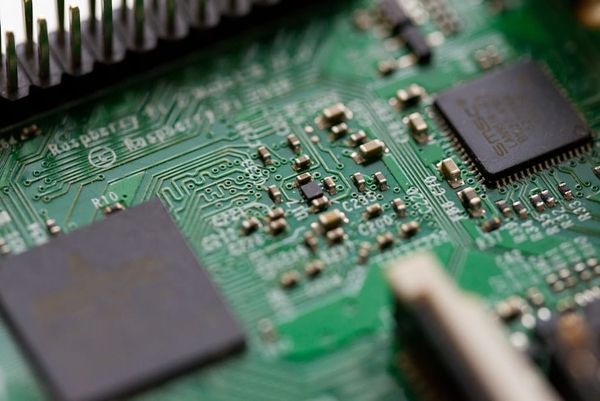
- What they actually make: Wafer-scale processors. While Nvidia stitches together multiple GPU dies, Cerebras builds a single chip the size of a whole silicon wafer — packing 850,000 cores and 2.6 trillion transistors. Data travels shorter distances, which means faster inference speeds. Think of it like a single sprawling metropolis versus a network of suburbs connected by highways.
The company also scored a $20 billion multi-year deal with OpenAI in January for computing capacity. OpenAI founders Sam Altman and Greg Brockman were early Cerebras investors — their stakes are now worth $27.8 million and $24.2 million respectively.
⚠️ THE CATCH
For all the fireworks, Cerebras faces real headwinds.
Customer concentration is still a risk. One university represents 62% of revenue. If that relationship sours or the UAE's AI ambitions cool, Cerebras is in a vulnerable spot.
Nvidia isn't standing still. The $3 trillion gorilla paid $20 billion for Groq in December — a startup whose chips more closely resemble Cerebras' architecture. Nvidia has already announced Groq-based products and could use its enormous ecosystem advantage to squeeze competitors on price and developer mindshare.
Valuation whiplash. Cerebras was valued at $23.1 billion in a private fundraising round just three months ago. Now it's trading at ~$95 billion. That's a 4x markup in a quarter. The stock opened at $350, surged to $386, then drifted to $311 — suggesting some profit-taking from the initial euphoria. Early investors who've been waiting a decade are now liquid, and some selling pressure is natural.
IPO market context: There were only 31 tech IPOs in all of 2025, down from 121 four years earlier. Cerebras succeeded spectacularly, but it's the exception, not the rule. The broader IPO pipeline is still healing.
🎯 WHAT HAPPENS NEXT
The immediate sequel is already writing itself.
SpaceX is the main event. The company's IPO prospectus could drop as soon as next week, with a roadshow targeting June 8. Elon Musk's empire — now integrating xAI's models with Starlink, Starship, and X — would be the most anticipated listing in years. Cerebras' strong debut suggests the market won't blink at SpaceX's $200B+ valuation.
OpenAI and Anthropic are further out but actively preparing. If the momentum from Cerebras carries through SpaceX, 2026 could be the year the AI industry fully migrates from private fundraising to public markets.
For Cerebras specifically, the next milestone is proving it can diversify beyond the UAE. CEO Feldman told CNBC: "There's some whales out there, there's some really big customers. That is one of the characteristics of this market." But whales are also a risk when you only have a few of them.
🧩 BIGGER PICTURE
Cerebras' IPO is a canary in the AI infrastructure coal mine — and the canary is thriving.
The story here isn't just about one chip company. It's about the recognition that AI infrastructure — the actual physical hardware running models — is the most capital-intensive buildout since the interstate highway system. Companies like Cerebras, Nvidia, and AMD aren't just selling chips. They're selling the pipes that power the entire AI economy.
What's fascinating is the geographic dimension. Cerebras' biggest customer is in the UAE — a country betting billions on becoming an AI superpower. The US may lead in design, but the buildout is global. That's both an opportunity and a risk in a world of escalating chip export controls.
For investors: Cerebras at $95B vs Nvidia at ~$3T is a 30x gap. Cerebras doesn't need to "beat" Nvidia to be a massive success — it just needs a slice of a rapidly expanding pie. The wafer-scale approach has genuine technical advantages for inference workloads, and inference is where the AI industry's compute demand is growing fastest.
For everyone else: this IPO is a reminder that the AI boom isn't just a software story. The real money — and the real volatility — is in the physical layer. The chips, the data centers, the power grids. Cerebras just became the public market's newest proxy for that thesis.
Welcome to the public markets, CBRS. Buckle up.