🔥 iPronics Raised $125 Million to Rewire AI Data Centers With Light — in Under a Millisecond
Spanish startup iPronics raised a $125M Series B, with Nvidia participating, to swap copper for light and rewire AI data centers in sub-milliseconds.
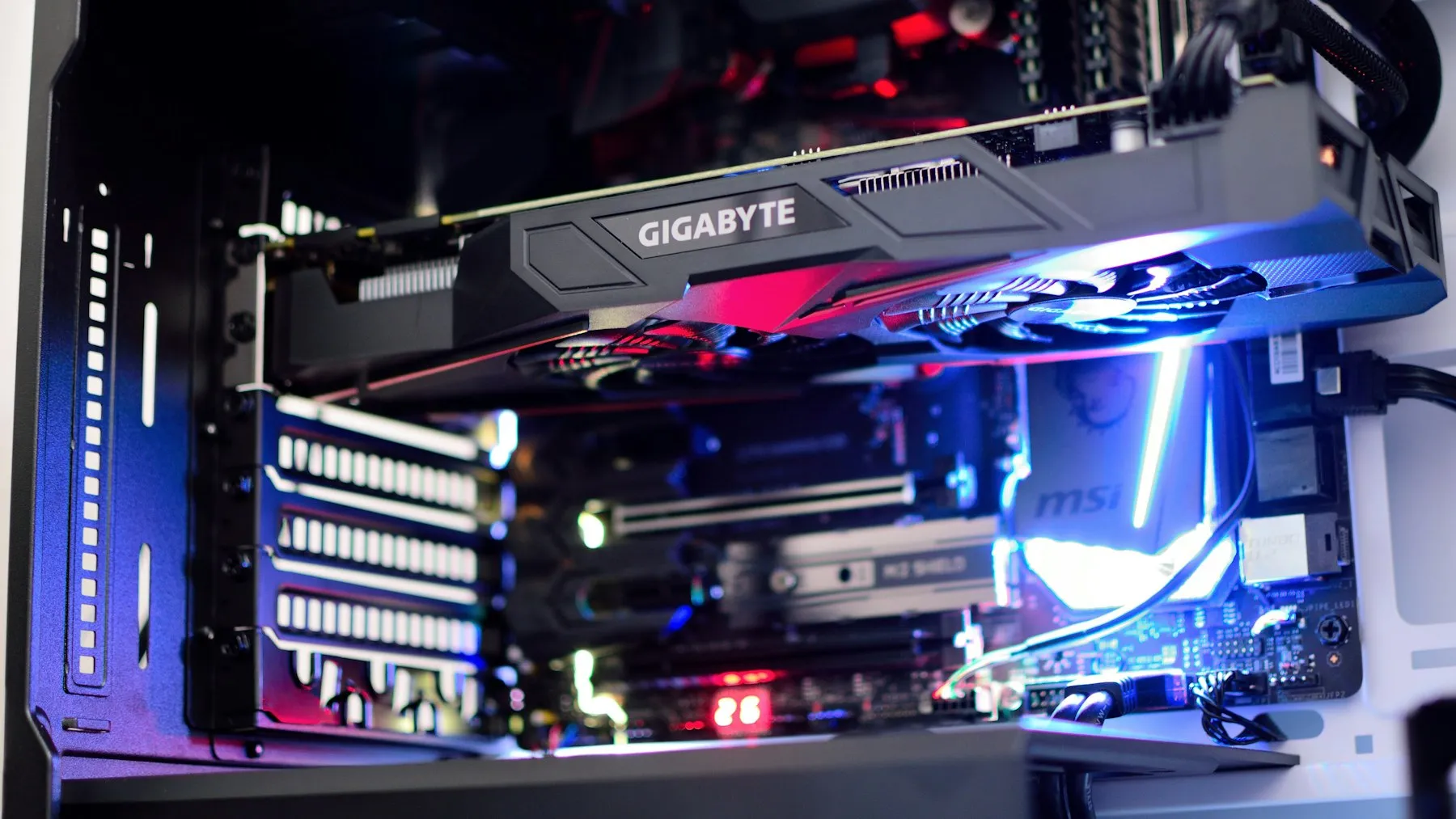
The most expensive machines in the world right now are Nvidia GPUs, and a shocking amount of the time, they’re doing nothing. They sit there — $30,000 to $40,000 apiece, stacked by the tens of thousands — waiting for data to arrive over wires that can’t move it fast enough. The bottleneck in modern AI isn’t the chip. It’s the plumbing between the chips.
On September 2, a Spanish startup called iPronics raised $125 million to replace that plumbing with light. The Series B was co-led by Maverick Silicon and Light Street Capital, and one of the names on the cap table is Nvidia — the same company whose GPUs are starving (GlobeNewswire).
iPronics builds an optical switch that can rewire the connections inside a cluster of GPUs in sub-milliseconds, using silicon photonics instead of electronics. The pitch is simple: keep the GPUs fed, and you stop lighting money on fire.
🧠 Why This Matters
Every AI training run is a giant coordination problem. Thousands of GPUs have to shuttle enormous amounts of data between each other, constantly, and the network that connects them decides how fast the whole thing goes. For years that network ran on copper and electrical switches. Copper is now running out of room — it can’t carry enough bandwidth over enough distance without the signal falling apart (Tom’s Hardware).
Light doesn’t have that problem. Photons move more data, over longer distances, with less heat. The hard part has always been building an optical switch that’s programmable — one that can change which GPU talks to which on the fly, fast enough to matter. That’s the trick iPronics says it has cracked. When the network can reconfigure itself in a fraction of a millisecond, idle GPUs go back to work instead of waiting.
📊 Deep Dive
The company was founded in 2019 as a spin-off from the Universitat Politècnica de València, and it’s still headquartered in Valencia, Spain, with a new office opening in Santa Clara — a short drive from Nvidia’s front door. The $125 million brings its total raised to $177 million (CryptoBriefing).
The product is called iPronics ONE, a rack-mounted optical circuit switch built on silicon photonics. Here’s how the company frames its edge:
- Speed: reconfigures the network in sub-milliseconds, versus the slow mechanical switches used in some data centers today.
- Size: roughly 20× smaller footprint than existing optical circuit switch equipment (CryptoBriefing).
- Power: lower energy draw than traditional electrical networking, because you’re not converting signals back and forth as often.
- Payoff: higher GPU utilization — fewer chips sitting idle waiting for data.
It’s not a lab demo. iPronics has been shipping product for about a year and struck a manufacturing deal with Fabrinet, the Thai contract manufacturer that already builds optical gear for much of the industry, to move toward high-volume production. The Series B is, in the CEO’s telling, about pouring fuel on that.
“This funding allows us to significantly accelerate our commercialization, delivering the scale customers need.” — Christian Dupont, CEO, iPronics
⚠️ The Catch
iPronics didn’t disclose a valuation, which usually means the number wasn’t the headline the company wanted. More to the point, it’s walking into a brawl. Google has run its own home-grown optical circuit switches inside its data centers for years. Ayar Labs, Celestial AI, Lightmatter and a stack of others are chasing the same “replace copper with light” prize. And silicon photonics has a long, humbling history of companies that nailed the physics and then choked on manufacturing yield when it was time to make thousands of the things.
The performance figures — the sub-millisecond switching, the 20× footprint claim, the power savings — all come from iPronics. They haven’t been independently benchmarked in public, and the company’s biggest customers are unnamed. “Working with large AI infrastructure providers” is the kind of phrase startups use when they can’t yet say who, or how much.
🎯 What Happens Next
Watch the Santa Clara move. Opening an office next to Nvidia, right after Nvidia joins your round, is not a coincidence — it’s positioning to get designed into the next generation of AI racks. If iPronics ONE shows up inside a named hyperscaler’s cluster in the next year, this raise looks cheap. If it stays stuck at “large unnamed providers,” the $125 million buys runway to keep proving it.
The tell will be volume. The Fabrinet partnership only matters if the orders are real. Optical startups die in the gap between a working prototype and a factory that can ship at yield and price. That’s the wall iPronics is spending this money to climb.
🧩 Bigger Picture
Nvidia is quietly building an optical portfolio. In March, it and AMD backed Ayar Labs’ $500 million Series E at a $3.75 billion valuation — a bet on co-packaged optics, putting light right next to the chip (Data Center Dynamics). iPronics is a different layer of the same problem: not light inside the chip, but light rewiring the network between the racks.
Nvidia has said co-packaged optics may become mandatory for next-generation AI data centers. When the company that sells the GPUs starts writing checks up and down the optical supply chain, it’s telling you where it thinks the next decade of cost and performance will be won — and it isn’t in the silicon everyone’s already fighting over.
Copper got AI this far. The next trillion parameters are going to travel on a beam of light — and a startup out of Valencia just raised $125 million betting it can be the one bending it.
Sources
- iPronics Raises $125 Million to Scale Programmable Optical Networking for AI Data Centers — GlobeNewswire
- iPronics raises $125M from Nvidia and others for chips that rewire data centers in sub-milliseconds — CryptoBriefing
- Nvidia outlines plans for using light between AI GPUs — Tom’s Hardware
- Ayar Labs closes $500m round backed by Nvidia and AMD — Data Center Dynamics