

🔥 What happened
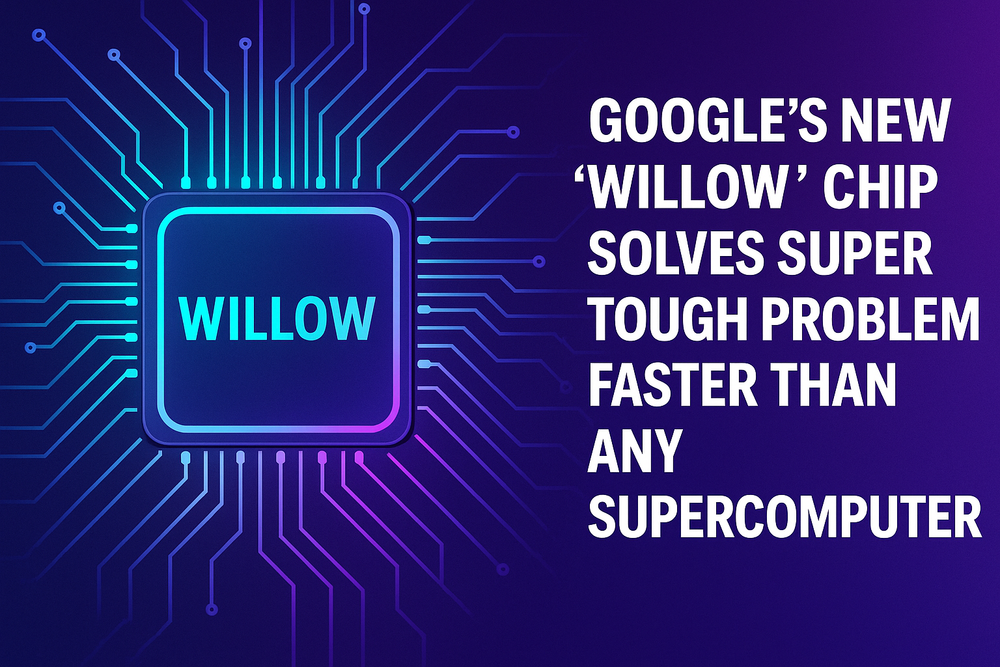
Google just announced their latest quantum computer chip, called 'Willow', has cracked a problem that even the fastest supercomputers couldn't handle. This is a big deal because it shows quantum computers are starting to do things regular computers can't.
⚙️ How it works
- Think of a quantum computer as a super-powered calculator that uses tiny particles to do math in new ways.
- Regular computers use bits (like tiny switches) that are either on or off. Quantum computers use qubits, which can be on, off, or both at the same time—kind of like a spinning coin.
- This lets them process a ton of possibilities all at once, making them super fast for certain tasks.
- Google's 'Willow' chip has 105 qubits and managed to keep errors low, which is a big step forward.
💡 Why you should care
- For you personally: In the future, this could lead to better medicines, more accurate weather forecasts, and even stronger online security.
- For your work: Industries like pharmaceuticals and finance might see faster research and data analysis, changing how businesses operate.
- For the world: Quantum computing could tackle big problems like climate modeling and complex simulations that are too tough for today's computers.
- Bottom line: This breakthrough brings us closer to a future where quantum computers can solve real-world problems.
⚠️ The reality check
- Quantum computers are still in the early stages, so don't expect them to replace your laptop anytime soon.
- They're great for specific tasks but not for everyday computing yet.
- Building and maintaining them is tricky and expensive, so it'll be a while before they're widely available.
👀 What's next
- Researchers will keep working to make quantum computers more reliable and practical.
- In the coming years, we might see them used for specialized tasks in industries like healthcare and logistics.
- Keep an eye out for more breakthroughs as companies like Google, IBM, and others race to improve this technology.