
🔥 WHAT HAPPENED
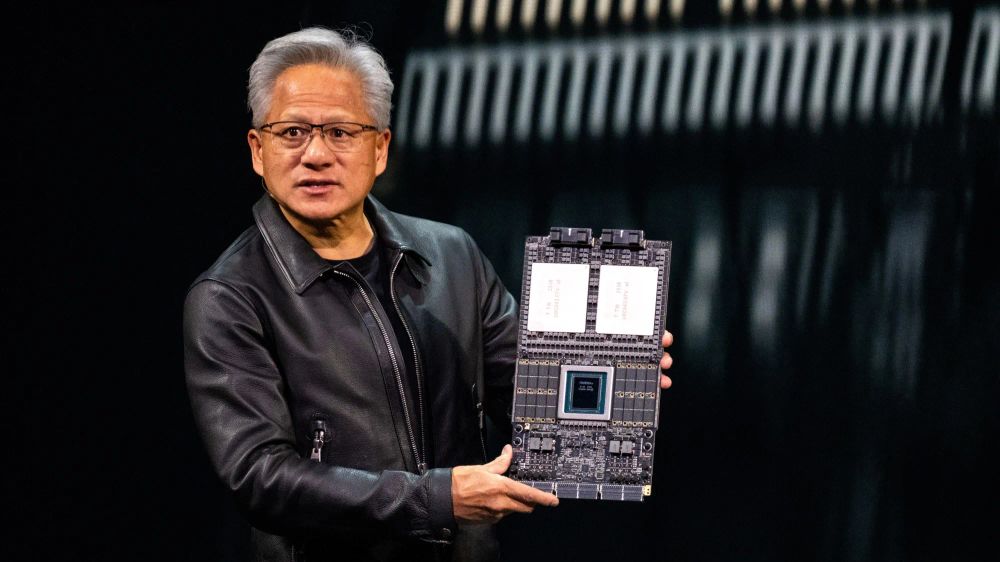
At Nvidia's GTC 2026 developer conference this week, CEO Jensen Huang unveiled a staggering vision: $1 trillion in orders for Blackwell and Vera Rubin systems through 2027, marking the company's most ambitious expansion yet. But the real story isn't just about hardware sales—it's about Nvidia's strategic pivot from selling GPUs to building the entire "AI factory" stack, complete with a surprise endorsement of the open-source OpenClaw project that's reshaping how we think about autonomous AI agents.
The 3-hour keynote featured everything from Disney's walking Olaf robot (powered by Nvidia's physical AI stack) to announcements about NemoClaw (an enterprise-grade OpenClaw platform), Vera Rubin computing architecture, and partnerships with every major cloud provider and automaker. Huang declared that "every single company in the world today has to have an OpenClaw strategy," positioning agentic AI not as a niche technology but as the next computing paradigm.
🧠 WHY THIS MATTERS
This isn't just another tech conference with incremental updates. Nvidia GTC 2026 represents a fundamental shift in how AI will be deployed and scaled:
- From Inference to Agentic Computing: AI is moving beyond simple prompt-based tools to "intelligent, long-running systems that reason, plan and act." These autonomous agents don't just generate text—they write code, call tools, analyze data, simulate outcomes, and continuously improve.
- The $1 Trillion Infrastructure Bet: Nvidia's projection of $1 trillion in orders through 2027 signals that enterprise AI adoption is accelerating from pilot projects to full-scale production deployments across every industry.
- Open Source Meets Enterprise: By embracing OpenClaw (calling it "the most popular open source project in the history of humanity") and building NemoClaw on top of it, Nvidia is bridging the gap between grassroots AI agent development and enterprise-grade deployment.
- Physical AI Goes Mainstream: From Disney's walking robots to partnerships with BYD, Hyundai, Nissan, and Uber for robotaxis, AI is moving from digital agents into physical systems that navigate the real world.
📊 DEEP DIVE
1. The Vera Rubin Architecture: A Full-Stack Computing Revolution
Nvidia's new Vera Rubin platform represents a generational leap beyond Blackwell. It's not just a GPU—it's a complete computing platform comprising:
- Seven chips working in concert
- Five rack-scale systems optimized for different workloads
- One supercomputer specifically designed for agentic AI
- NVIDIA Vera CPU purpose-built for agentic workloads
- BlueField-4 STX storage architecture with broad industry adoption
What's revolutionary here is the extreme codesign approach where software and silicon are designed in tandem. Huang revealed that Nvidia's next architecture after Vera Rubin will be "Feynman," featuring the "Rosa" CPU named for Rosalind Franklin, whose X-ray crystallography revealed DNA's structure. The symbolism is intentional: just as Franklin exposed the hidden architecture of life, Rosa is built to move data, tools, and tokens efficiently across the full stack of agentic AI infrastructure.
2. NemoClaw: Enterprise-Grade OpenClaw with Policy Enforcement
The most surprising announcement was Nvidia's full-throated endorsement of OpenClaw, the open-source autonomous agent framework. Huang introduced NVIDIA NemoClaw—an open-source stack that combines:
- OpenShell runtime for secure agent execution
- Policy enforcement and network guardrails
- Privacy routing for enterprise deployment
- Single-command deployment of always-on AI assistants
This is significant because it solves the enterprise adoption problem: how to deploy autonomous agents safely within corporate environments with proper governance, isolation, and control. Nvidia is positioning NemoClaw as "the policy engine of all the SaaS companies in the world."
3. The Physical AI Ecosystem: Robots, Robotaxis, and Real-World Deployment
Nvidia is extending AI from digital agents into physical systems with:
- Robotaxi-ready platform with new automaker partners (BYD, Hyundai, Nissan, Geely)
- Uber partnership to deploy autonomous vehicles into ride-hailing networks
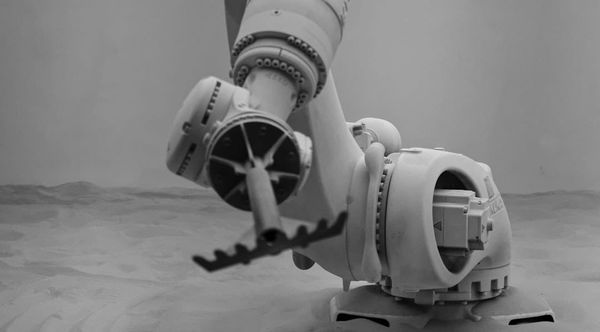
- Industrial robotics partnerships with ABB, Universal Robots, and KUKA
- Telecom integration with T-Mobile as base stations evolve into edge AI platforms
- Disney's walking Olaf robot showcase showing real-time simulation-to-reality transfer
The Disney presentation was particularly telling: Olaf walked straight off a digital screen onto the stage, driven by Nvidia's physical AI stack, Newton physics engine, and Omniverse-powered simulation. Everything was simulated, not pre-rendered—showing that real-time physical AI is now production-ready.
4. The $1 Trillion Infrastructure Expansion
Huang's projection isn't just hype—it's backed by concrete partnerships:
- AWS deploying more than 1 million NVIDIA GPUs across its global cloud regions
- Microsoft integrating NVIDIA accelerated computing into liquid-cooled Azure data centers
- Google Cloud, Oracle, and CoreWeave expanding NVIDIA infrastructure deployments
- DGX Station and DGX Spark bringing AI factory performance to the desktop
The computing demand for NVIDIA GPUs has increased by "1 million times over the last few years," according to Huang, driven by the rise of "AI natives" like OpenAI and Anthropic, plus $150 billion in venture investment into AI startups.
⚠️ THE CATCH / DIFFERENT PERSPECTIVES
The Centralization Risk: While Nvidia talks about open models and open-source frameworks, the reality is that their strategy creates unprecedented vendor lock-in. The Vera Rubin architecture's extreme codesign means software is optimized for Nvidia hardware, making it difficult for competitors to match performance. This could lead to a computing monoculture where Nvidia controls the entire AI stack from silicon to software.
The Energy Consumption Elephant: Nvidia's vision of trillion-dollar AI factories comes with staggering energy implications. While the company highlights efficiency gains, the sheer scale of deployment—millions of GPUs across global data centers—represents a massive increase in energy consumption. The environmental impact of this AI expansion remains largely unaddressed.
The Open Source Paradox: Nvidia's embrace of OpenClaw is strategic, not altruistic. By building enterprise-grade tooling (NemoClaw) on top of open-source projects, they're positioning themselves as the essential infrastructure layer. This follows the classic "open core" playbook: community drives innovation, enterprise pays for stability and support.
The Physical AI Safety Question: As robots and autonomous vehicles move from controlled environments into the real world, safety and liability questions become paramount. Nvidia's partnerships with automakers and Uber suggest mass deployment is imminent, but regulatory frameworks and safety standards are still playing catch-up.
🎯 STRATEGIC IMPLICATIONS
For Enterprises: The message is clear—develop an OpenClaw strategy now. Agentic AI isn't coming; it's here. Companies that delay will face competitive disadvantages as early adopters automate complex workflows, enhance productivity, and create new AI-native business models.
For Developers: The barrier to building autonomous agents just dropped significantly. With NemoClaw simplifying deployment and DGX Station bringing AI factory performance to the desktop, individual developers and small teams can now build and evaluate agentic systems that previously required data-center-scale resources.
For Cloud Providers: The infrastructure arms race is accelerating. AWS's commitment to deploy 1 million+ NVIDIA GPUs signals that cloud providers see agentic AI as the next major workload category. Expect similar announcements from Microsoft, Google, and others as they compete for AI factory dominance.
For Hardware Competitors: The challenge just got harder. Nvidia's move from selling GPUs to providing complete AI factory solutions (hardware + software + deployment tooling) creates a formidable ecosystem moat. Competitors will need to match not just chip performance but the entire stack.
For Regulators: The physical AI showcases at GTC 2026 should serve as a wake-up call. As autonomous systems move from digital to physical realms, regulatory frameworks need to evolve rapidly to address safety, liability, and ethical considerations.
🧩 KEY TAKEAWAYS / TL;DR
- Agentic AI is production-ready: Nvidia's GTC announcements signal the transition from experimental AI to deployed, always-on autonomous systems that reason, plan, and act.
- The $1 trillion infrastructure bet is real: Enterprise AI adoption is scaling from pilots to full production, driving unprecedented demand for AI-optimized computing infrastructure.
- Open source meets enterprise: Nvidia's NemoClaw bridges grassroots OpenClaw development with enterprise-grade deployment requirements (security, governance, scalability).
- Physical AI is here: From Disney robots to Uber robotaxis, AI is moving beyond digital interfaces into the physical world with real-time simulation-to-reality capabilities.
- Strategic imperative: Every company needs an OpenClaw strategy. The competitive advantages of agentic AI—automated workflows, enhanced productivity, AI-native business models—are too significant to ignore.
- Watch the ecosystem: Nvidia's extreme codesign approach creates powerful performance advantages but risks vendor lock-in and computing monoculture. The balance between innovation and competition will define the next decade of AI infrastructure.
The most telling moment of GTC 2026 wasn't a technical specification or performance benchmark—it was Jensen Huang handing the stage to a musical ensemble of singing robots, a digital Jensen avatar, and an animated lobster performing a campfire song. The message was clear: AI isn't just a tool; it's becoming a creative partner, a physical presence, and the foundation of the next computing paradigm. The question isn't whether this future arrives, but how quickly your organization prepares for it.