🔥 A 100-Kilowatt Reactor Just Powered an Nvidia Chip in Utah — and Turned a 27-Year-Old Dropout Into a $6 Billion Founder
Valar Atomics used a 100-kilowatt reactor to power an Nvidia Blackwell chip in Utah — and Sequoia is reportedly in talks to lead a ~$1B round at a $6B valuation, triple its March mark.
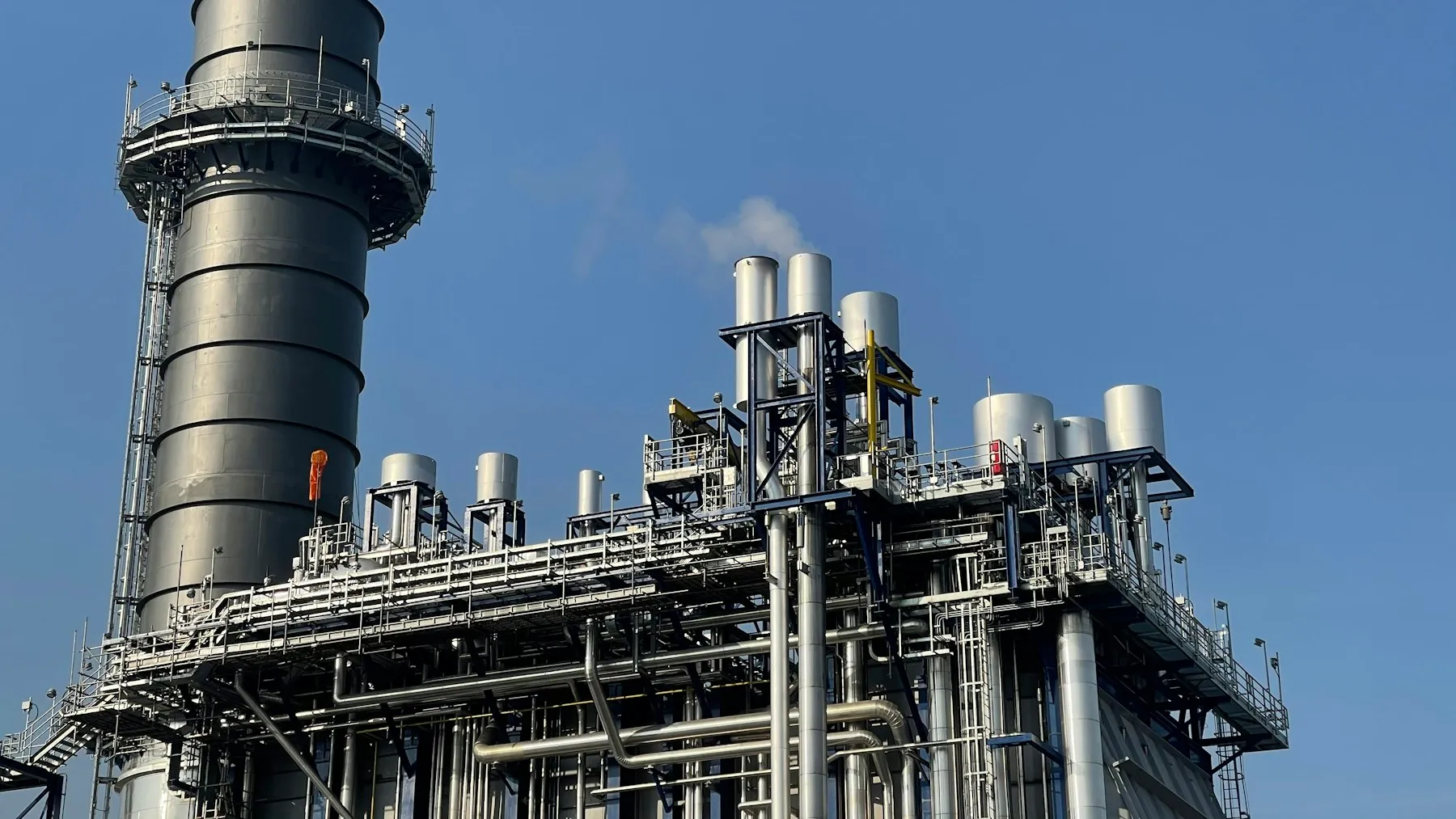
For three years, “nuclear power for AI data centers” was the most expensive slideware in Silicon Valley — a great line for a pitch deck, a terrible thing to actually deliver. Then, on July 1, 2026, a startup called Valar Atomics wheeled a reactor into a data center in Emery County, Utah, flipped it on, and used it to power an Nvidia Blackwell AI chip. Actual fission. Actual electrons. Actual silicon doing math.
Here’s the number that matters: the reactor put out just 100 kilowatts — roughly enough to run a handful of homes, not a hyperscale campus. It is almost comically small. And it may be the most important 100 kilowatts in the AI build-out, because it moved nuclear-for-compute from PowerPoint to a wire you can touch (CryptoBriefing).
Investors noticed. Two weeks later, Sequoia Capital is reportedly in talks to lead a ~$1 billion round that would value the company at $6 billion — up from a $2 billion valuation just four months earlier (TechCrunch, The Information).
The thesis: the AI boom’s binding constraint has quietly shifted from chips to electrons — and the first company to make electrons at a data center just tripled its price tag.
🧠 Why This Matters
You’ve been told the AI race is about GPUs. It was. But every one of those GPUs is a tiny space heater, and the industry is now stacking millions of them into buildings that draw more power than mid-sized cities. The bottleneck isn’t the chip anymore — it’s whether you can find a grid connection to feed it.
That’s why the demo lands harder than its size suggests. Valar didn’t announce a plan to power AI with nuclear. It did it — the first time a next-generation reactor has fed electricity directly into AI compute infrastructure on American soil. As founder Isaiah Taylor put it, this was the first advanced reactor “built on American soil outside of the national lab system.” When the constraint is power, the company that proves it can make power — even a little — suddenly looks like it owns the missing puzzle piece.
“We like to take small steps quickly. So this is a small demonstration. We’re going to go build another reactor. The next one is going to be a lot more powerful.” — Isaiah Taylor, founder & CEO, Valar Atomics (StartupHub.ai)
📊 Deep Dive
Valar builds small modular reactors (SMRs) — factory-built, miniaturized power plants meant to be cheaper and faster to stand up than the gigawatt-scale monsters that take a decade and a lawsuit to permit. Its demo unit, Ward 250, is a high-temperature, helium-cooled gas reactor running on TRISO-coated low-enriched uranium — a fuel design that’s notoriously hard to melt down and needs almost no water, which matters when your customer is a desert data center.
The trajectory is the story. Look at how fast the money has moved:
- 2025 seed: $19 million to get off the ground
- November 2025: $130 million raised — and Ward 250 hits zero-power criticality
- March 2026: a $450 million round ($340M equity + $110M debt) at a $2 billion valuation
- July 1, 2026: Ward 250 powers an Nvidia Blackwell chip in Utah — a US first
- July 2026 (reported): ~$1 billion at a $6 billion valuation, Sequoia in talks to lead
That’s a 3x valuation jump in roughly four months, catalyzed by a single working demo. The backer list reads like a MAGA-adjacent hard-tech supergroup: Palmer Luckey (Anduril), Shyam Sankar (Palantir’s CTO), and now, potentially, Sequoia. The whole thing was founded in 2023 by Taylor, who is 27 and dropped out of high school at 16 (Interesting Engineering).
⚠️ The Catch
Breathe. This is a 100-kilowatt demonstration, not a power plant. A single rack of top-end AI servers can pull more than that; a real data center wants hundreds of megawatts — four or five orders of magnitude beyond what Ward 250 produced. Calling this “powering AI” is technically true and practically a science-fair project scaled to a garage.
The $6 billion tag is also still “in talks” — reported, not closed, and an earlier version of the same reporting pegged it at $5 billion (CryptoBriefing). And the regulatory wall is real: US regulators have not certified any next-generation advanced reactor for standard commercial sale. Valar got here by going critical under a fast-tracked Department of Energy pilot program tied to a July 4, 2026 deadline — a runway, not a commercial license (POWER Magazine). SMRs have been “five years away” for about fifteen years.
🎯 What Happens Next
Watch three things. First, does the round close at $6 billion? Sequoia leading a nuclear-hardware deal at that price would be a signal flare to every energy-starved hyperscaler. Second, how big is reactor number two? Taylor says the next one will be “a lot more powerful” — the leap from 100 kilowatts toward a megawatt-class unit is the difference between a demo and a product. Third, does the Nvidia relationship deepen from a one-off Utah demo into a real co-development deal for on-site data-center power.
🧩 Bigger Picture
Zoom out and a pattern snaps into focus. This morning’s headline was TSMC booking a record quarter on AI-chip demand; the constraint there is fabrication. But the constraint one layer down — the one nobody can fab their way around — is electricity. Every frontier lab, every hyperscaler, every “we’ll just build more GPUs” plan eventually hits a substation that says no.
That’s why a 27-year-old with a 100-kilowatt reactor is worth $6 billion on paper: he’s selling the one input the entire AI economy is short on, and he’s the first to prove it works at a data center at all. Whether the bet pays off depends on scaling a nascent technology through a regulatory gauntlet that has humbled far bigger players. But the direction is unmistakable — the AI arms race just added a nuclear wing.
The GPU era made compute the new oil. The next era might make the reactor the new drill — and right now, a high-school dropout in Utah is holding the only one that’s actually pumping.
Sources
- TechCrunch — Nuclear startup Valar Atomics in talks to raise new funding at $6B valuation
- The Information — Nuclear Startup Valar Atomics in Talks for $6 Billion Valuation After Power Milestone
- CryptoBriefing — Valar Atomics powers Nvidia AI chip with nuclear microreactor in US first
- Interesting Engineering — US first: Nuclear reactor generates electricity to power Nvidia chip
- StartupHub.ai — Valar Atomics Powers Nvidia Chip with Nuclear Reactor
- POWER Magazine — Ward 250 Becomes Second Reactor to Go Critical Under DOE Pilot Program
- Deseret News — Valar Atomics and Nvidia announce data center collaboration in Utah
- CryptoBriefing — Valar Atomics seeks $1B financing with Sequoia in talks to lead